

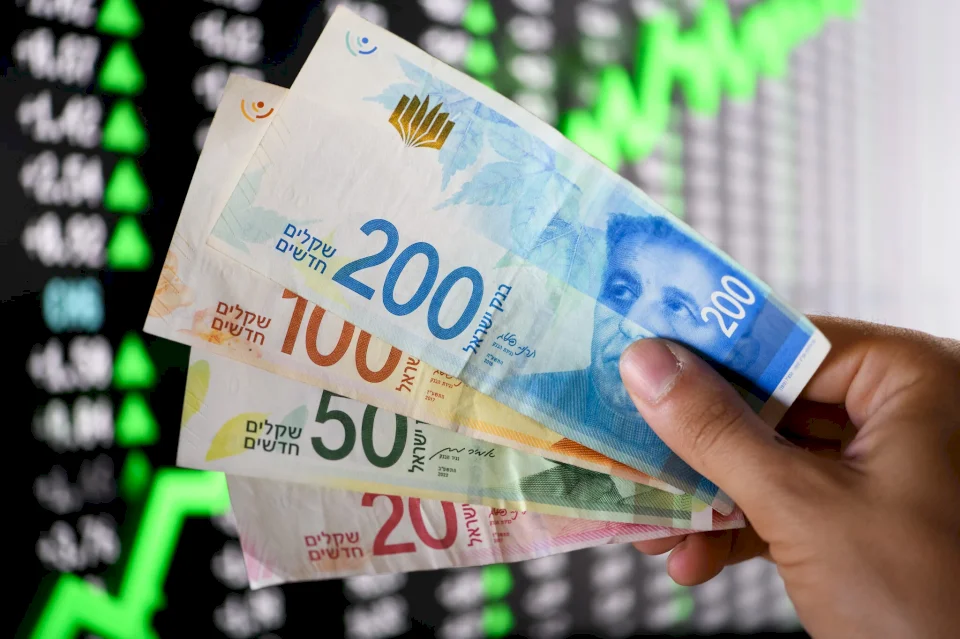
The Strong Shekel and Import Prices: Why Has Inflation Not Decreased in Israel?
SadaNews - The Israeli Central Bureau of Statistics published the Consumer Price Index for April, which has been described as "historic" after prices recorded a sharp increase of 1.2% in just one month, an unprecedented leap not seen in 18 years. This exceptional rise was driven by a sharp increase in airline ticket prices and the repercussions of the ongoing war.
This index is considered historic for another reason due to the included declines; in the April index, the prices of tradable goods (excluding energy) fell below zero for the first time in five years, which means a decrease of 0.4% in the prices of tradable goods over the past year, according to a report published by the Hebrew newspaper "Calcalist" and translated by Sada Economies.
Tradable goods are generally defined as products that can be imported from abroad, and it is not surprising that their prices might decline there, as imported products were supposed to be sold at discounted prices due to the significant increase in the value of the shekel over the past year. Looking at the details, we find that 45 out of 115 goods included in the index (representing about 19% of the consumer basket) saw a price drop over the past 13 months. This period was chosen because the value of the shekel began to actually rise in April 2025, hence it was included in the economic calculations.
The data indicates that most of the goods that saw a price decrease (89%) are tradable goods; among the examples are: a 16.9% drop in women's outerwear prices, a 1.5% decrease in toy prices, and a more than 4% drop in the prices of various electrical appliances. Nonetheless, there are many tradable goods whose prices continued to rise, and the annual decrease in the prices of tradable goods as a whole was only recorded last month; for example, jewelry, watches, and accessories prices rose by 12.2% during the past 13 months, coffee and cocoa by 5.8%, and men's footwear by over 4.3%.
The strength of the shekel curbs inflation significantly and makes price fluctuations more moderate. However, the effect of the strong currency is not yet over, and it is expected to continue reducing prices and curbing inflation to eventually extend to the prices of non-tradable goods and services (domestic); for instance, wages in the high-tech sector remain stable due to the strength of the shekel, which weakens purchasing power in the market, which will reflect as a curb on rental prices and local services such as haircuts and others, which will not be able to continue to rise, as translated by Sada Economies.
"When relying on the distinction between tradable and non-tradable goods, a more accurate picture of inflation emerges; in the sector of tradable goods (excluding energy), there is a decline in prices, while in the sector of local goods and services, inflation is higher than it seems, reaching 2.81% over the past 12 months, which is very close to the upper inflation target. Among local goods, the housing sector continues to rise by 3.3% annually, and the miscellaneous goods sector by 3.8%. There is now a historical gap of about 3.23% between the inflation of tradable goods and the inflation of local goods, and this gap should narrow in the future in favor of curbing local goods prices. Based on this picture, the "Bank of Israel" may take the risk of lowering interest rates as early as next week, assuming the shekel remains strong and continues to curb inflation,"
This is not the complete picture of the economic situation; the variable that brings about a radical change is energy prices, which have driven the index of tradable goods to rise again. Increases in energy prices alone have raised the rate of tradable goods prices by 0.7% (changing it from a 0.4% decrease to a 0.3% increase). The annual energy prices index also jumped from a decrease of 0.2% in March's index to an annual increase of 5.3% in April's index. This means that the prices of imported products are under the influence of two opposing forces: the shekel pushing prices down and energy prices pushing them up.
This point gains great importance due to its economic and psychological dimensions; there is currently strong popular pressure on importers to lower prices and transfer the impact of cost reductions to consumers (since importers buy in dollars, which has become cheaper for them as their income is in shekels). Conversely, importers hesitate to lower prices, justifying that global prices are likely to rise, and if they lower prices now, they will not be able to raise them later.
From another perspective, the mechanism for lowering prices is primarily linked to competition and importers' fear of their competitors lowering prices or new importers entering the market. In the current climate of uncertainty surrounding energy prices, the fear of competitive behavior decreases, as investors wonder: who would dare to start a new import project now or take the risk of lowering prices without knowing what tomorrow holds?
Although the "Bank of Israel" previously indicated that global energy prices have less impact on the local market due to having natural gas, it is now clear that energy prices have become very important as they directly affect imported goods that rely on inflation-curbing plans. Central banks usually focus on local inflation (non-tradable goods) because it indicates entrenched inflation, which remains high. However, the relationship between imported inflation and local inflation is very strong; the current wave of inflation that began in mid-2021 resulted partially from rising global commodity and energy prices, which later transmitted to local prices, according to Sada Economies translation.
"Complex Calculations for the Bank of Israel"
The "Bank of Israel" will face great difficulty in lowering interest rates in its next meeting, primarily due to the uncertainty surrounding energy prices and the possibilities of military escalation. However, the central bank finds itself for the first time in a long time in a very complex position regarding economic activity; previously, the bank's messages indicated that the economy was strong and capable of bearing high interest based on low unemployment and encouraging growth indicators, but now the situation is more complicated, and recently published growth figures for the first quarter may indicate room for slight economic stimulus, especially concerning export data.
The data from the first quarter of 2026 carried a surprise that was considered "pleasant" despite being negative, as it was expected that the economic damage resulting from the "Raging Harry" war would be much larger; the Ministry of Finance previously estimated a drop in growth in the first quarter by 9.5% year-on-year, but it only declined by 3.3%. This data shows that sectors of the economy have learned to adapt and function under war conditions, not because a new growth driver has emerged.
The "Bank of Israel" will need to study the export sector carefully; service exports have shown a notable decline (the statistics office did not publish the exact number for the decline in advanced technology exports alone but stated that total service exports, which advanced technology is fundamentally composed of, fell by 13.2% year-on-year). This raises a fundamental question: Has the strength of the shekel already started to hurt the main economic driver? It is difficult to determine this in light of a noticeable increase in investment in the "high-tech" sector. Nevertheless, these warning indicators will remain under scrutiny and in-depth study by the central bank in the coming period," as stated in the translation by Sada Economies.
 Follow the latest Sada News via Google News
Soaring Oil Prices Burn the Pockets of the Palestinian Citizen "The Poor"

Millions of Dollars in Losses.. "SadaNews" Reveals Shocking Figures for Traders from Pales...

The Problem of Shekel Overcrowding Worsens.. Fuel Station Owners Threatened with Closure o...

The Palestinian Economy at a Crossroads: 4 Files Awaiting Resolution

National Economy: Referral of 6 Violators to Prosecution and Seizure of 76 Tons of Violati...

Israel's Foreign Currency Reserves Rise to $238.7 Billion

Exchange Rates of Currencies Against the Shekel on Wednesday (July 8)
