

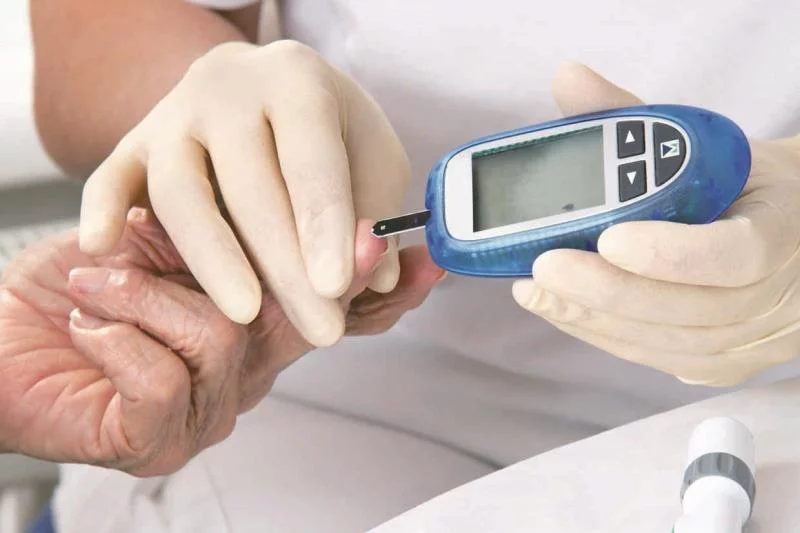
Prediabetes.. The Silent Bomb Carried by Millions Without Their Knowledge
SadaNews - How many people today carry a ticking bomb inside them without knowing? Type 2 diabetes does not knock on the door suddenly; it enters through small cracks and settles for many years before announcing its presence, leaving behind a series of faint signals that are easily ignored.
This continues until the result finally appears on paper, and the doctor reads the numbers and says in a seemingly reassuring tone: "You do not have diabetes.. but you are in the prediabetes stage." A short sentence, but it actually summarizes a silent battle that has been taking place inside the body for some time, between a pancreas trying to withstand the pressure and cells that have started to lose their ability to respond to insulin.
As for type 1 diabetes, its story is fundamentally different; it arises from a direct immune attack targeting the insulin-producing beta cells, quickly assaulting the body without giving it a chance for a prior warning, and there is no warning phase similar to that of prediabetes.
Pancreatic Cells.. The Art of Precision
Within the pancreas, there are tiny islands that cannot be seen by the naked eye, but they function as an incredibly precise control room. When blood sugar rises, beta cells become active to secrete insulin, allowing glucose to enter the cells; and if blood sugar drops, beta cells calm down and alpha cells awaken to secrete glucagon, prompting the liver to release its stored glucose. All this happens in seconds, unconsciously, to keep blood sugar within a narrow range that maintains life’s balance.
Moreover, the response of the beta cells themselves goes through two consecutive phases; as soon as food is consumed, a quantity of stored insulin is released in a rapid phase that absorbs the initial rise in sugar, followed by a slower phase in which additional insulin is manufactured as needed.
This first rapid phase is the first to be affected when the silent imbalance begins to emerge, as beta cells lose their ability for immediate response before any clear trace appears on the sugar level itself.
This delicate balance works non-stop for a lifetime, without the owner feeling it, and when it begins to wobble, it usually does not issue any audible warning.
Why Do We Not Feel Any Symptoms?
At this stage, the pancreas exerts a tremendous effort to compensate for the imbalance, keeping sugar levels close to normal, so a person feels almost nothing.
This is why diabetes is sometimes called the "silent disease," and the prediabetes stage is referred to as "the silence that precedes it."
However, the absence of symptoms does not mean the absence of effects; even at this stage, some blood vessels begin to be affected, increasing the risk of heart diseases, high blood pressure, fatty liver, and lipid disorders.
HOMA-IR Index: An Early Window to Detect Insulin Resistance
Not everyone with normal fasting blood sugar levels has normal insulin sensitivity; the body may maintain normal sugar levels by secreting larger amounts of insulin to overcome early stages of insulin resistance.
Here lies the importance of the HOMA-IR index, which is a mathematical model that estimates insulin resistance and beta cell function based on two simple analyses: fasting blood sugar and fasting insulin. It was developed by Matthews and his colleagues in 1985 at Oxford University to serve as a practical alternative to the complex reference tests used in research.
If the body needs larger amounts of insulin to maintain normal sugar levels, the HOMA-IR value increases, indicating that the cells have begun to lose their sensitivity to insulin, even before blood sugar rises significantly.
The value of this index lies in the fact that it does not only measure blood sugar levels but also reveals the extra effort the pancreas expends to maintain this level as normal. This provides a scientific angle explaining to the patient why their analyses may appear "normal" while the imbalance has already begun to emerge behind the scenes.
However, there is currently no unified, conclusive value for this index globally; some studies consider 2.0 a threshold for suspecting insulin resistance, while major American survey studies like NHANES use a higher threshold of 2.5, and these thresholds vary with age, ethnicity, and studied populations.
Therefore, HOMA-IR is always interpreted within a broader context that includes medical history, waist circumference, body mass index, fasting blood sugar, HbA1c, and blood lipids, because insulin resistance is a complex condition that cannot be reduced to a single number, and there are currently no standardized therapeutic protocols based solely on this number for decision-making.
How Do We Detect the Prediabetes Stage?
The American Diabetes Association (ADA) relies on three main laboratory tests to identify this silent intermediate stage.
Fasting blood sugar levels between 100 and 125 mg/dL (5.6–6.9 mmol/L) indicate prediabetes, while diabetes is diagnosed when levels reach 126 mg/dL or more in two separate tests.
As for HbA1c, prediabetes is between 5.7% and 6.4%, while 6.5% or more supports the diagnosis of diabetes.
The Oral Glucose Tolerance Test (OGTT), which measures blood sugar levels two hours after consuming 75 grams of glucose, reveals the same range when results fall between 140 and 199 mg/dL (7.8–11.0 mmol/L).
In addition to these tests, other physical and clinical indicators help estimate risk before any imbalance in sugar itself appears, the first of which is waist circumference. The International Diabetes Federation (IDF) sets a risk threshold at 94 cm for men and 80 cm for women in European, Middle Eastern, and Arab populations alike, while some older American standards (NCEP-ATP III) use a higher threshold of 102 cm for men and 88 cm for women. In Asian populations, the threshold drops to 90 cm for men and 80 cm for women.
Following that is the Body Mass Index (BMI), where a reading of 25 kg/m² or more indicates overweight, while 30 kg/m² or more indicates obesity, with a clear increase in diabetes risk at this point.
Blood pressure readings of 130/85 mmHg or more are considered one of the risk factors within the metabolic syndrome criteria, which is a lower and more sensitive figure than the conventional threshold used for diagnosing hypertension alone.
The picture is completed with two indicators from lipid analysis: triglycerides if they reach 150 mg/dL or more, and HDL cholesterol if it drops below 40 mg/dL in men or 50 mg/dL in women.
Because these indicators collectively reflect a broader picture than any individual number, the convergence of several factors within the same individual, rather than one in isolation from the others, calls for serious medical evaluation for the prediabetes stage.
Who Is Most at Risk?
The risk of developing prediabetes increases when several factors come together, most notably obesity, especially abdominal obesity, which is considered one of the strongest risk factors. This is compounded by genetic predisposition; the risk clearly increases for those with a direct family history of diabetes.
Lack of physical activity and advancing age also play significant roles; as age increases and activity decreases, the body’s ability to deal efficiently with sugar weakens.
In women specifically, the risk increases with a previous history of gestational diabetes or with the presence of polycystic ovary syndrome, both factors directly related to insulin resistance.
Nutrition in the Prediabetes Stage
Dietary recommendations for the prediabetes stage fully align with those recommended for diabetes patients, based on the 2026 recommendations from the American Diabetes Association (ADA), which emphasize an integrated dietary pattern instead of focusing on one element in isolation.
Focus on High-Fiber Foods
The guidelines recommend consuming non-starchy vegetables, legumes, minimally processed whole grains, whole fruits (not juices), nuts, and seeds as part of a comprehensive daily diet. These fiber-rich foods slow down the absorption of sugar into the blood and comprehensive scientific reviews demonstrate that they improve blood sugar control specifically in individuals with prediabetes, in addition to their positive effects on blood lipids and insulin resistance itself.
Choose Healthy Proteins and Fats
It is advised to include lean proteins like fish, chicken, and legumes, alongside low-fat dairy products and olive oil within the daily dietary pattern. These choices increase the feeling of fullness and help reduce sharp spikes in blood sugar after meals, especially when replacing sources of refined carbohydrates.
Reduce Foods That Rapidly Raise Sugar
The guidelines recommend minimizing the consumption of added sugars, sweetened beverages, refined grains, red meats, and highly processed foods to the greatest extent possible. These foods are linked to a rapid increase in blood sugar right after meals, and recent studies indicate that increased consumption of them correlates with poor blood sugar control independently of other dietary factors.
Your Daily Rhythm... A Silent Guardian of Your Blood Sugar
The body does not deal with food, movement, and rest in isolation from timing; insulin sensitivity in cells is not constant throughout the day but changes according to an internal biological clock controlled by a main clock in the brain and sub-clocks distributed in the liver, pancreas, and muscles.
Recent studies in this field, scientifically known as "Chrononutrition," indicate that disrupting this daily rhythm, as happens with night shifts, staying up late, or eating at late hours, weakens insulin sensitivity and disrupts the balance of hormones responsible for sugar metabolism.
In other words: when you eat, when you move, and when you sleep is just as important as what you eat or how much you move.
Intermittent Fasting... What Does Science Say?
Among the most popular intermittent fasting patterns are: 12/12, 14/10, 16/8, 18/6, in addition to the 5:2 pattern (five days of regular eating and two days of low calories).
Recent scientific reviews show that intermittent fasting may improve insulin sensitivity and help reduce weight and blood sugar, with results often comparable to the usual daily caloric restriction.
However, part of this benefit, according to research on chrononutrition, may be specifically due to focusing on eating during early daylight hours when insulin sensitivity peaks, not just fasting itself.
Nevertheless, evidence of its decisive superiority over any balanced healthy diet is still limited, and the most important factor remains the quality of the food followed, and it is advisable to consult a physician before starting it, especially when chronic diseases are present.
Muscles... A Massive Factory That No One Notices
Medical guidelines recommend engaging in at least 150 minutes of moderate-intensity physical activity per week, along with muscle-strengthening exercises two to three times a week.
After eating, glucose molecules seek a place to enter, and here muscles play a pivotal role; they are the largest consumers of glucose in the body and are considered the first line of defense against insulin resistance, which is why some researchers describe them as a "natural medicine".
The greater the muscle mass and strength through resistance exercises, the better the body’s insulin sensitivity becomes, increasing its ability to draw glucose from the blood without needing large amounts of it.
Sleep... The Treatment Many Forget
Lack of sleep directly affects appetite hormones, increasing levels of ghrelin, which stimulates hunger, and lowering levels of leptin, which is responsible for the feeling of fullness, increasing the desire to consume sugary foods.
Several studies also indicate that sleeping fewer than seven hours is associated with nearly a 30% increased risk of developing type 2 diabetes.
Additionally, chronic stress and lack of sleep raise cortisol levels, which drives the body to increase sugar production from the liver.
Do We Need Medication?
Lifestyle modification remains the foundation for treating prediabetes, often surpassing the effectiveness of any medication alone. However, scientific guidelines, led by the American Diabetes Association's recommendations for 2026, advise considering pharmacological treatment in certain high-risk categories, notably:
Individuals aged 25 to 59 with obesity having a BMI of 35 kg/m² or more, as studies have shown that medication in this specific category is equivalent in efficacy to lifestyle modification itself.
This also includes those with clearly elevated fasting blood sugar or HbA1c values despite adhering to a healthy lifestyle for a sufficient period and women with a previous history of gestational diabetes, as medication in this specific case achieves a reduction in diabetes risk comparable to that achieved with intensive lifestyle modification.
Additionally, it takes into account the presence of multiple combined cardiovascular and metabolic risk factors, such as high blood pressure, lipid disorders, and a strong family history of diabetes.
In these high-risk categories, Metformin is considered the most well-documented pharmacological option in terms of efficacy and safety for preventing the progression of prediabetes to full-blown disease, while lifestyle modification remains the essential cornerstone that cannot be overlooked even with medication use.
How Do We Know We Have Returned to the Safe Zone?
Reanalyzing HbA1c and fasting blood sugar levels, along with monitoring weight, waist circumference, and blood pressure, allows the physician to evaluate the extent of improvement and determine whether the body has returned to its normal levels.
The Diabetes Prevention Program (DPP) Study, one of the most significant reference studies in this field, shows that losing a small portion of weight alongside regular physical activity significantly reduces the risk of developing diabetes, and this benefit persists for many years. Moreover, more recent studies have found that many do not just reduce the risk, but actually return to complete normal blood sugar levels, with the chances of this recovery increasing the more weight is lost.
The reassuring news for many facing this diagnosis for the first time is that prediabetes is not a one-way street; rather, it is a stage fully reversible when the required changes are adhered to.
Prediabetes, then, is not just a number on a test result; it is a quiet message sent by the body before it raises its voice... So, are we improving our listening to it? In this stage, the decision still rests in the hands of its owner.
Source: Al Jazeera
 Follow the latest Sada News via Google News
"Backrooms": From Digital Legend to Cinematic Phenomenon

Prediabetes.. The Silent Bomb Carried by Millions Without Their Knowledge

From Sweden 1958 to the Epic of Egypt 2026.. Argentina's History with World Cup Comebacks

After the South Africa Precedent.. Nigeria Investigates the Encroachment of Technology Com...

Argentine Admission and Global Consensus on the Referee's Injustice to Egypt's National Te...

The Danger From the Right: French Media Highlights Morocco's Key Weapons

Illness Strikes Norway's Camp Ahead of England Match in World Cup 2026
