

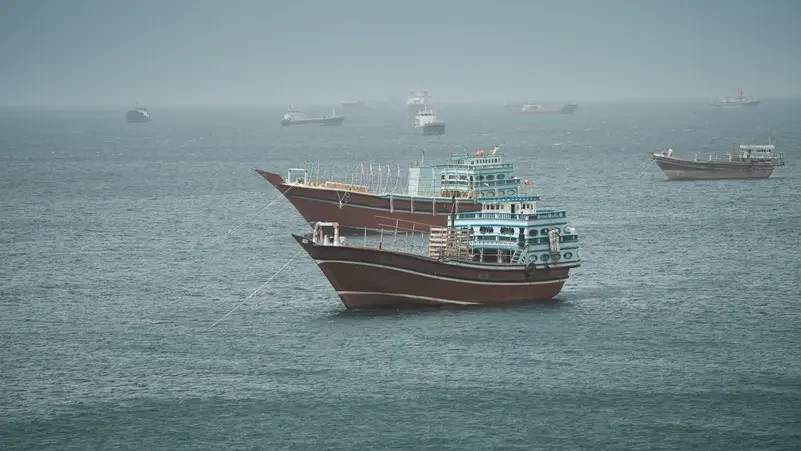
6000 Sailors Still Stranded in the Gulf
SadaNews - The International Maritime Organization, a UN agency, estimated today, Wednesday, that around 6000 sailors are still stranded in the Gulf, in a statement condemning the renewed confrontations in the region and the Strait of Hormuz.
The Secretary-General of the organization, Arsenio Dominguez, stated in a statement that: "These attacks only serve to exacerbate the condition of fear... and the psychological anxiety already suffered by around 6000 sailors who are still stranded on ships unable to leave the Gulf safely," and advised various stakeholders to avoid "passing their ships through this strait."
Earlier today, U.S. President Donald Trump declared that the truce between the United States and Iran has ended, although he left the door open for further discussions, following the renewed exchanges of strikes after Iranian attacks on ships in the Strait of Hormuz.
The strategic strait remains a hotspot in the war that began at the end of February with extensive U.S. and Israeli strikes against Iran.
Since the outbreak of the war, Tehran has insisted on controlling the waterway, announcing its intention to impose transit fees and threatening to attack ships that deviate from the single route it allows.
The Iranian army has already launched attacks on at least three ships in recent days, prompting the United States to conduct extensive strikes against Iranian targets yesterday, Tuesday, followed by retaliatory attacks launched by Iran on Gulf countries.
Dominguez stated: "I condemn the attacks that occurred over the past two days targeting several vessels transiting the Strait of Hormuz," adding that "innocent sailors" face "serious danger."
He called on "all concerned countries to exercise the utmost restraint, work toward de-escalation without delay, and facilitate the safe departure of ships still stranded in the Gulf since the onset of the crisis," emphasizing the need for "the safety of sailors to remain our top priority."
 Follow the latest Sada News via Google News
6000 Sailors Still Stranded in the Gulf

Floating Iranian Oil Faces Uncertain Fate After U.S. Exemption Cancellation

Brent Surpasses $76 After U.S. Strikes on Iran

Gold prices register close to $4,128 per ounce

China Buys Largest Amount of Gold Since 2023 Despite Price Fluctuations

Bloomberg: Unusual Delays in Bank Transfers Between Saudi Arabia and the UAE

Aramco Considers Increasing East-West Pipeline Capacity by Two Million Barrels
