

Media Security Between the Sanctity of Truth and the Noise of Exclusivity: The Battle for Palestinian National Awareness
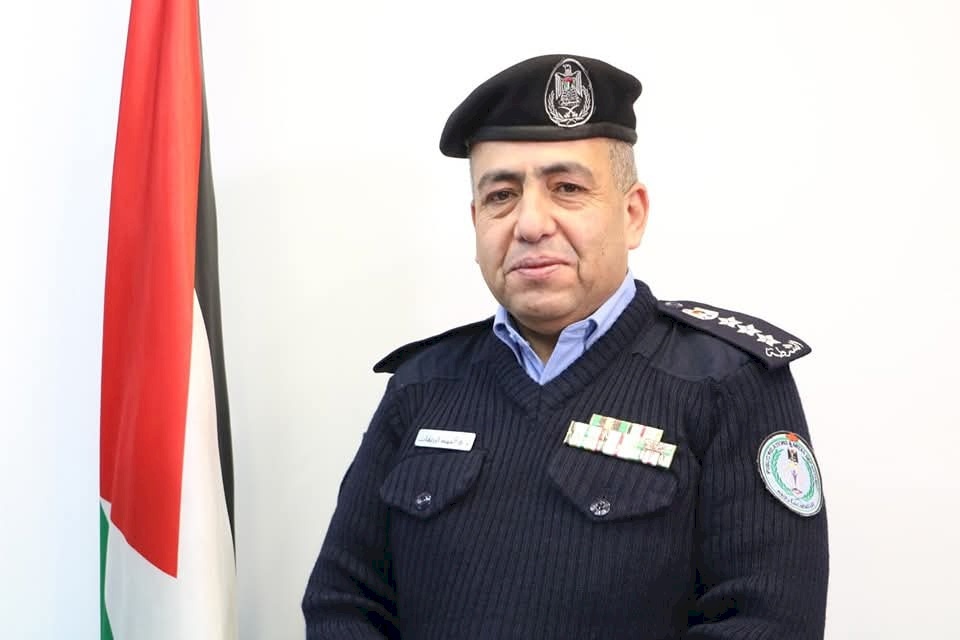
Spokesperson for the Palestinian Police
In Palestine, security is not a neutral technical concept, nor is media merely a profession practiced independently of the national context; both are laden with a history of challenges, burdened by a complex reality, and tied to an open battle titled the Palestinian collective consciousness. Thus, media security emerges as one of the most essential pillars of societal resilience and one of the most dangerous arenas of engagement with disinformation campaigns, in an era where words sometimes take precedence over events, and news can turn from a tool of revelation into a tool of distortion if misused.
Media security is a relatively modern concept and term, often misunderstood and mistakenly reduced to security media, while the difference between them is fundamental and critical. Security media is discourse emanating from security agencies and ministries of interior directed at citizens, aiming to raise awareness, instill reassurance, and clarify procedures related to public security issues. In contrast, media security is a comprehensive national responsibility that rests on the shoulders of media institutions, journalists, and content creators, as they are the first line of defense for the authentic national narrative and the guardians of truth in the face of systematic disinformation.
Generally, media security is rooted in deep national belonging and, in Palestine, is based on a conscious understanding that Palestine is not merely a transient news venue but rather a central issue facing complex challenges, chief of which is the media and psychological warfare. Misleading information, rumors, and unverified news are not merely professional mistakes; they can, in the Palestinian context, become tools that threaten civil peace, confuse the internal front, and inadvertently serve disinformation narratives and agendas.
In this context, combating fake news, countering rumors, and exposing psychological warfare become the essence of media security. How many hasty news reports have deepened fear, how many out-of-context images have ignited strife, and how many "scoops" have served disinformation narratives more than they have served the truth? Here, the exclusivity does not retain its absolute value but rather comes with a responsibility conditioned by the scales of national awareness and societal impact.
The challenges become increasingly complex with the dominance of digital media and social networks, where many countries and communities, including Palestine, have turned into one of the most targeted arenas for rumors, content manipulation, and the dissemination of false news, amid the rise of unregulated citizen journalism. The mobile phone has become a news room, quick posts have become scoops, and the number of likes is a false criterion for success, at the expense of accuracy, truth, and national responsibility. In this scene, media security becomes an existential necessity, not merely a professional option.
No discussion of Palestinian media security is complete without mentioning the role of the security institution in establishing it by providing a truthful, balanced, and unhurried narrative that respects the sensitivity of the Palestinian moment and mitigates rumors without exaggeration or concealment. Long silence breeds a vacuum, and the vacuum is filled with rumors, while responsible words at their timing and phrasing protect society and enhance trust.
However, the relationship between the Palestinian media and security personnel has not always been ideal, as some security personnel view journalists as seekers of exclusivity at any cost, indifferent to the psychological and social impacts of the news in a society facing compounded pressures. Conversely, some journalists see security personnel as individuals inclined towards censorship and restrictions; nonetheless, the Palestinian experience has proven that overcoming this issue is no longer a luxury but a national necessity, imposed by the sensitivity of the phase and the accuracy of the scene.
It has become clear that coordination and integration between the media and security institutions is the only option capable of protecting the Palestinian internal front, without compromising press freedom or professionalism. The optimal use of media by the security institution has also become a key factor in enhancing trust, confronting disinformation campaigns, and building responsible national discourse. This indicates a gradual shift towards a relationship that is closer to professional reconciliation, based on mutual understanding of roles and integration of responsibilities.
In developing the Palestinian security sector, media plays a pivotal role that is just as important as any institutional development, provided it adheres to a set of professional and ethical standards. Foremost among these is obtaining information legally without impersonation or disinformation, respecting the rule of law, including appearing before the judiciary, while earnestly striving to develop Palestinian media legislation and advocating for the establishment of civil courts specializing in publishing issues. Moreover, it is essential to avoid obstructing the judiciary and to refrain from publishing any information that might impede the progress of cases and investigation procedures, which the security institution has committed to in respect of the presumption of innocence and the protection of human dignity.
Additionally, respecting the confidentiality of sources and verifying the accuracy of information from more than one reliable source, without prioritizing the logic of "journalistic exclusivity" over truth, is crucial. Exclusivity based on incomplete information in Palestine can become a tool for internal disintegration. Likewise, respecting citizens' private lives, adhering to professional standards, and rejecting arbitrary censorship are indispensable pillars, except regarding matters of public interest and the higher national interest.
In conclusion, media security is not a constraint on press freedom but rather a fortification against slipping into the chaos of disinformation. It is not an adversary of journalistic exclusivity, but its ethical and national regulator. It is a conscious call to reorder priorities and a profound understanding that news, exclusivity, and likes hold no value unless harnessed to protect humanity, preserve civil peace, and defend the national narrative. In the Palestinian context, media is not merely a profession but a stance, and the word is not neutral, but rather a historical and national responsibility.
 Follow the latest Sada News via Google News
What Does the Supreme National Interest Mean for Palestinians? And How Can It Be Achieved?

The Wronged Ramallah

Between Pragmatism and Survival Management: Where Does Hamas Go After the Election of Khal...

Khalil Al-Hayya as President of Hamas.. Continuation of the Founders' Approach

The Annihilation of Sportsmanship

Until When Will the Palestinian Citizen Pay the Price of an Endless Phase?

7-10 Billion Shekels.. The Bill for the Absent Worker from Brussels
