

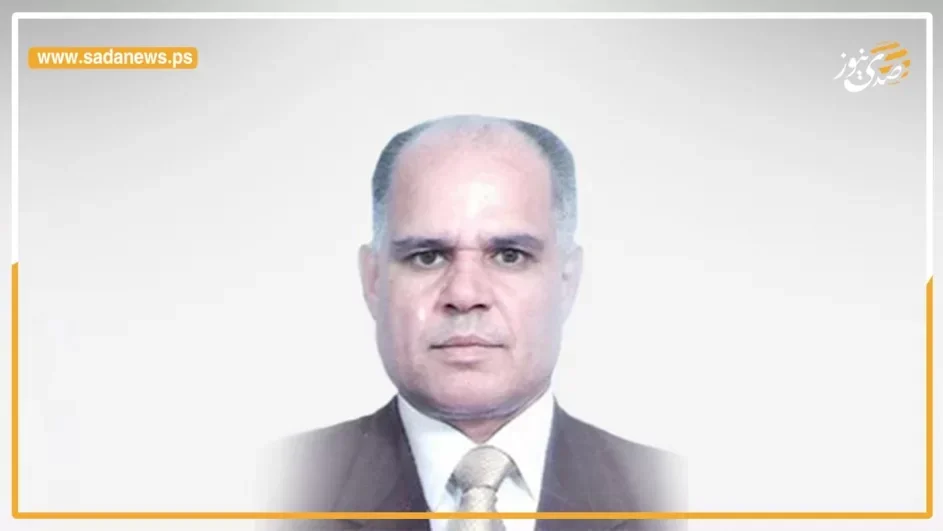
Two Mini-States and Two Palestinians
Wherever one looks in the Arab countries experiencing internal turmoil and wars, from Syria and Libya to Sudan, Yemen, Somalia, and Palestine, one finds the hand of the UAE and Qatar. These two mini-states do not intervene for their own benefit or in defense of their national security, but rather as tools for Washington and Tel Aviv.
I do not know if it is a coincidence or a planned strategy that in both cases there exists a Palestinian figure or tool who had a notable position in Palestine before making a significant and questionable leap to work for one of these two states to implement schemes related to the Palestinian cause and sometimes to regional roles.
In Qatar, there is Azmi Bishara from Palestinian 48 who holds Israeli citizenship and is of Christian faith. He is an academic, thinker, and political writer, and he was the president of the National Democratic Assembly, playing a crucial role in its establishment in Israel. He also served as a former member of the Knesset (Israeli parliament) before the latter voted to strip him of his parliamentary immunity on charges of espionage with Hezbollah and supporting terrorist groups, as they claim. Bishara decides to leave Israel and settles in Qatar, the home of the American military base Al Udeid, where the leadership of Hamas also resides, and he becomes close to its emir, who provides him with vast funds to perform security and media tasks for the Qatari regime and its operators.
Azmi Bishara heads the Arab Center for Research and Policy Studies and was one of the main media figures at Al Jazeera before establishing his private channel, Al Arabi, and becomes one of the theorists and planners of chaos and sedition in the Arab world, especially in the Palestinian arena, where he staunchly supports division and looks for an alternative to the Palestinian Liberation Organization.
In the United Arab Emirates, there is a Palestinian figure who has been and continues to be controversial, Muhammad Dahlan from the Gaza Strip. He assumed several high-ranking positions within the Palestinian Authority at a young age, including the presidency of the Preventive Security Service in Gaza at the beginning of the Authority, advisor for national security, deputy in the Palestinian council, and a member of Fatah's central committee. He had a confrontational relationship with the top leadership, differing with President Arafat and later with Abbas, where he faced corruption charges and was expelled from Fatah's central committee and his home was raided in Ramallah. He settles in the UAE through American mediation and becomes a security and political advisor to the President of the State, playing security and media roles at the regional level, with the UAE establishing his TV channel, Al Ghad.
Dahlan was strict in confronting political Islam groups, including Hamas, before changing his stance and allying with Hamas, even extricating them from their predicament after the fall of Mohammed Morsi's Brotherhood regime in Egypt in 2013 in exchange for permitting his faction (the reform stream in Fatah) to operate in Gaza and finding a foothold for the UAE in the sector, competing with Qatar's position and influence.
Despite their Palestinian origins and differences in their social and cultural backgrounds, both figures play roles that serve the policies of Qatar and the UAE and their personal interests more than serving their people and the Palestinian cause.
 Follow the latest Sada News via Google News
The Tale of a People Who Refused to Believe the Well

What Does the Supreme National Interest Mean for Palestinians? And How Can It Be Achieved?

The Wronged Ramallah

Between Pragmatism and Survival Management: Where Does Hamas Go After the Election of Khal...

Khalil Al-Hayya as President of Hamas.. Continuation of the Founders' Approach

The Annihilation of Sportsmanship

Until When Will the Palestinian Citizen Pay the Price of an Endless Phase?
