

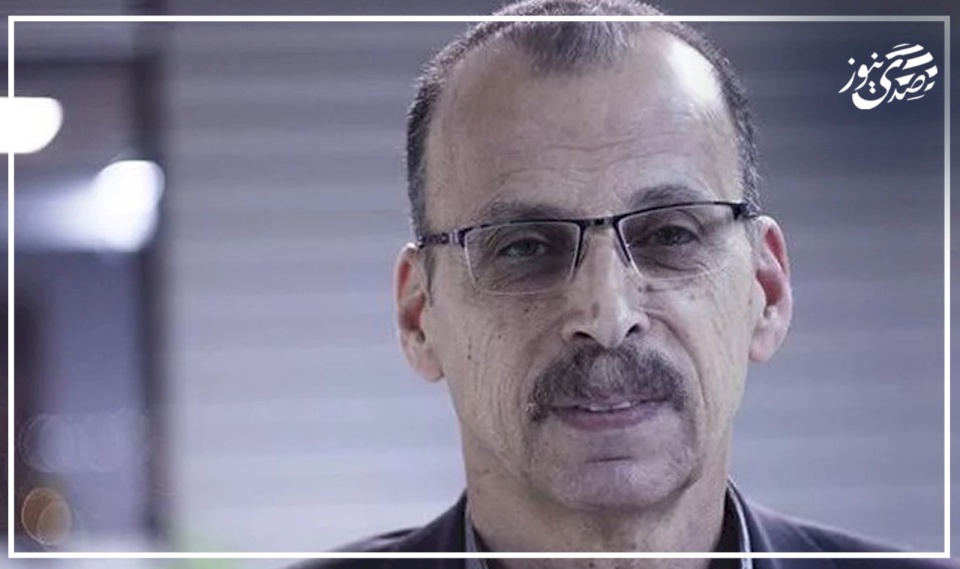
In the Moral Confrontation with Israeli Brutality
Since the late 1960s, especially after the occupation of the West Bank and Gaza Strip in 1967, voices emerged within Israeli society described at the time as "rational," such as Yeshayahu Leibowitz and Israel Shahak, who warned of the moral and political consequences of colonial violence and its inevitable backlash on Israeli society itself. These warnings focused on the occupation as a source of internal disintegration, not merely a transient moral crisis.
However, these voices, including those associated with what is called the Zionist left, regardless of their limitations, failed to identify the true root of the violence. They, despite their criticism of the occupation, did not see in the Zionist project itself, nor in the Nakba as an act of comprehensive and ongoing colonial uprooting, the origin of this violence and its foundational structure. Therefore, they could not foresee, or imagine, the transformation of this violence into absolute violence, into genocide perpetrated with cold-bloodedness, with the participation of both the state and society together, under a clear Torah-political cover. Nor did they realize the extent of the shameful Western alignment alongside the war of extermination, in stark contrast to the Western stance on Nazism, whose regime was overthrown and prosecuted, not justified or protected.
In the first weeks of the genocide against Gaza, many in the West - except for those with a humanitarian and radically progressive stance - believed that what Israel was doing was "self-defense," or a natural reaction to an unexpected blow. But shocking realities soon emerged. The first truth was the vast destruction and systematic large-scale killing. The second truth, and the more dangerous one, was represented in the popular ideological structure, based on Torah interpretations that permit the killing of the young and the old indiscriminately and mercilessly.
The shock intensified with images of popular jubilation at the killings, and the spread of statements and images from soldiers, officers, and citizens reflecting bare fascism, without any disguise.
Israeli opinion polls confirmed this image, showing that more than 80% of Israelis support the "physical elimination" of Palestinians. All Palestinians, including those living under Israeli citizenship, have become burdened under a comprehensive system of control, ethnic cleansing, and terror. This is evident in the intense political repression, and in the repeated assaults by settlers and Israeli citizens in public spaces, as occurred recently in Jaffa, when a pregnant woman was subjected to a racist attack. These events do not represent isolated incidents but rather a general societal state, and they herald a persistent and escalating threat. The dignified stance of the people of Jaffa in facing this assault, which continues a routine of attacks, exemplifies popular civil resistance, with a human dimension capable of providing a long breath, achieving cumulative impact and confirmed results.
All of this reaffirmed that we are not facing a fleeting outburst of madness, nor a temporary escape, but rather a deeply rooted genocidal mentality, shaped over decades of consciousness engineering since the Nakba, through literature, official educational curricula, the military institution, and various authorities of the entity. This reality is now revealed on a global scale, not because "Israel's enemies" are waging a propaganda war, but because Israel itself has unveiled it through its criminal actions, its toxic media discourse, and its daily practices. These truths were previously uncovered by what is known as "the new Jewish historians," but they remained confined for a long time within narrow academic frameworks.
Here arises the fundamental question: How can this inhumane ideological mobilization be dismantled? Can it be eradicated at all? Is it possible to rehabilitate a settler society that has undergone a systematic upbringing and long-term brainwashing, adopting a blood-soaked superior view towards the Palestinian and the Arab? And can education be redirected towards liberatory human values? Progressive academic Ronit Bild, in her important study on Israeli educational curricula, shows how a child's consciousness is built on colonial and inhuman values, which means that this deep mobilization cannot fade in a short time, nor can it be broken without official and popular international pressures, and widespread and intensive Palestinian and Arab pressures that lead to dismantling the Zionist system and replacing it with a constitutional democratic system that restores a liberated and free Palestine, ensuring justice for those living in it and for those who were expelled.
This entity no longer poses a danger only to Palestinians, nor even to itself alone, but to the entire world. It is pushing humanity towards more wars, expansion, racism, and hatred of the other, exacerbating the manifestations of poverty, misery, and refugeehood in large areas of the world.
In the face of this reality, our Palestinian people find themselves confronted with a historic moral challenge against the genocidal monster. A challenge that imposes adherence to the humanitarian and ethical stance, not as a moral luxury, but as a condition for victory, as racism ultimately rebounds on its practitioners. Hence, the necessity of continuing to clearly distinguish between Zionism and Judaism, between Israel and the Jews. The actions of the Australian citizen of Syrian descent, Ahmad al-Ahmad, when he attacked a Daesh criminal and prevented a massacre against Jews, exemplify a high humanitarian model worthy of emulation, expressing the essence of this ethical stance.
It is a long, harsh, and painful battle, requiring material, moral, and ethical perseverance, and planning that takes into account the local power balances, international conditions, and the humanitarian and ethical dimension of the Palestinian cause as an integral part of the struggle of all peoples against colonialism and capitalist exploitation.
 Follow the latest Sada News via Google News
Between Trust Deficit and Possibility of Coexistence: How Do Palestinians View the Conditi...

To Whom It May Concern

The Fuel Company: When the Absence of Answers Becomes the Biggest Question

When Indicators Fail to Narrate the Palestinian Economy

The Tale of a People Who Refused to Believe the Well

What Does the Supreme National Interest Mean for Palestinians? And How Can It Be Achieved?
The Wronged Ramallah
