

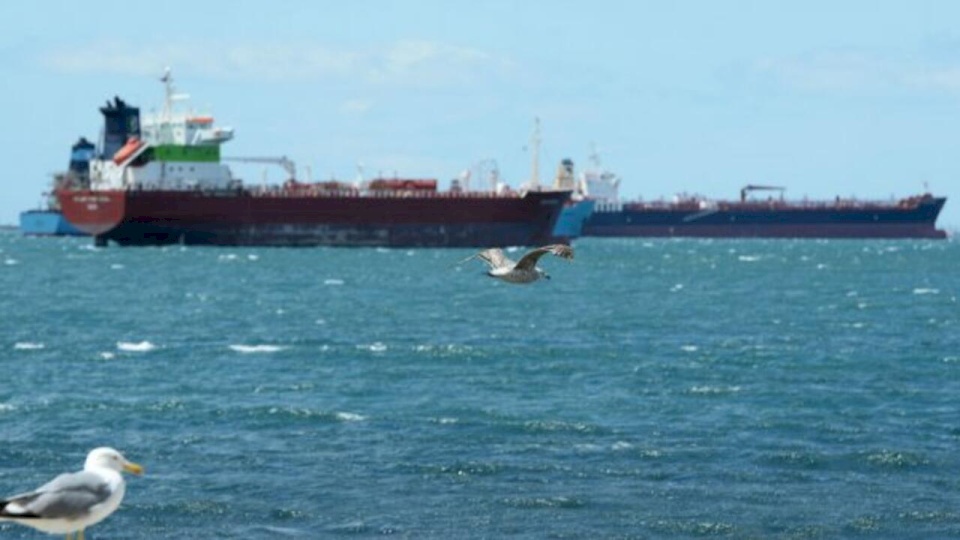
The Strait Squeeze.. What Happens to the Global Economy if the Bab-el-Mandeb Closes?
SadaNews - Current political and security developments in the Strait of Hormuz and in Yemen have brought to the forefront the possibility of escalating military tensions to reach the Bab-el-Mandeb Strait and the potential for the Houthis to close it as a pressure tactic in the political and military conflict.
The Yemeni Ministry of Defense announced on Monday that it targeted the runway of Sana'a International Airport to prevent an Iranian aircraft from landing, while the Houthi group accused Saudi Arabia of launching airstrikes on the airport and vowed to retaliate against the bombing.
On the same day, U.S. President Donald Trump stated that his country would reinstate a naval blockade on Iran following the collapse of a ceasefire agreement signed between the two sides weeks ago, adding that America would prevent Iranian ships and their clients from using the Strait of Hormuz, and declared that Washington would become "the guardian of the Strait of Hormuz".
All these developments carry the risks of extending the current disruption in the Strait of Hormuz to the Bab-el-Mandeb Strait, which Iran and the Houthis had threatened to close back in April.
The Importance of Bab-el-Mandeb
The Bab-el-Mandeb Strait is considered one of the vital economic chokepoints in the world, with an influence that is not less than any military power in regional and international conflicts.
The strait, which is around 30 kilometers wide at its narrowest point, connects Yemen in Asia to both Djibouti and Eritrea in Africa, forming a key link between the Red Sea, Aden Gulf, and the Arabian Sea, reaching the Suez Canal and the Mediterranean Sea.
Massive amounts of oil, ranging from 7 to 10 million barrels, pass through the strait daily. It also serves as a main route for about 12% to 15% of global trade heading to Europe, the United States, and Asian markets, securing about 25% of Europe's needs for liquefied natural gas.
The estimated movement of vessels through the strait is about 21,000 ships annually, equivalent to 57 ships daily, with shipments valued at around $700 billion annually.
Any disruption to the strait, especially if it coincides with a shutdown of the Strait of Hormuz, could lead to a global transport crisis, doubling travel times between Asia and Europe from 31 to 41 days, and raising the cost of a medium-sized container ship journey from $1 million to about $1.7 million, excluding additional expenses such as crew wages, fuel, and insurance premiums.
Consequences of Closing the Strait
Oil and energy markets expert Amer Al-Shobaki told Al Jazeera that while the Houthis may not have the capacity to impose a full military closure of the Bab-el-Mandeb Strait as they do not control both banks, they have demonstrated their ability to make it commercially unsafe, which is very close to closure.
The Houthis have carried out over 100 attacks on ships and have forced major companies to change their routes in recent years, leading to a decrease in oil flows through the strait from nearly 9 million barrels in 2023 to 4 million barrels in 2024.
This situation in the Bab-el-Mandeb Strait has directly impacted the Suez Canal, as its revenues dropped from $10.2 billion in 2023 to nearly $4 billion in 2024. The number of ships transiting the canal also fell from over 26,000 ships to just around 13,000, depriving Egypt of one of its most important sources of hard currency and increasing pressure on its budget and the exchange rate of the pound.
The oil expert estimates that the biggest danger appears when both threats converge: the Strait of Hormuz and the Bab-el-Mandeb. After the disruption of Hormuz following the outbreak of the U.S.-Israeli war on Iran, Saudi Arabia utilized the "East-West" pipeline to transport oil from production areas in the eastern kingdom to the port of Yanbu in the west along the Red Sea coastline, from which Saudi oil is then transported to international markets, particularly Asian ones.
Al-Shobaki explained to Al Jazeera that the capacity of the "East-West" pipeline can reach up to 7 million barrels per day, but during the peak of the crisis in recent weeks, approximately 4.7 million barrels were recorded, half of which went to China alone.
Oil exported from the port of Yanbu to Asia needs to cross the Bab-el-Mandeb, while oil heading to Europe, for example, can head north towards the Suez. From here, adds the speaker, the Houthi card of closing the Bab-el-Mandeb is able to threaten one of the most important alternatives that Saudi Arabia has used to bypass Hormuz, which is the East-West pipeline.
The Most Affected Parties
The oil and energy market expert Al-Shobaki says that China will be at the forefront of those affected if the Bab-el-Mandeb Strait is closed, as it needs Gulf and particularly Saudi energy, while at the same time China's trade with Europe relies on the Red Sea and Suez route.
The alternative route that Saudi Arabia adopted to ensure the continuity of its oil exports away from Hormuz will also be at risk, while Egypt will face an additional loss in Suez Canal revenues.
These developments come after global shipping companies such as "Maersk" and "Hapag-Lloyd" stated that they have begun to consider a gradual return to the Red Sea and Suez, but these events may push towards delaying the resumption of navigation in that area.
Al-Shobaki concludes that the convergence of both threats (the closure of Hormuz and Bab-el-Mandeb) expands the scope of the war and necessitates greater international maritime arrangements, as the interests of Egypt, Saudi Arabia, Europe, China, India, Japan, and South Korea will be at the heart of the crisis.
The Cape of Good Hope
According to the United Nations Conference on Trade and Development (UNCTAD), the redirection of shipping from the Bab-el-Mandeb Strait to the Cape of Good Hope has increased global demand for ships by 3% and for container ships by 12% until mid-2024, reflecting the growing pressure on the capacity of global ports and rising shipping prices.
Energy affairs expert Laurie Hitayan pointed out that the biggest impact of the closure of the strait is not limited to oil and gas but extends to other supply chains, as the tightening on the Bab-el-Mandeb leads to a delay of 15 to 20 additional days in the arrival time of goods from Asia to Europe, increasing transportation costs and putting pressure on the economies of neighboring countries.
In this context, "Reuters" warned that the mere ongoing threat of closing the strait could paralyze global trade, as increasing insurance premiums and changing risk assessments by shipping companies lead to rerouting ships along longer paths, which raises prices and affects supplies and basic commodities before any actual attack occurs on the strait.
The Bab-el-Mandeb Strait is not just a geographical point; it is a vital artery for energy and global trade, and any threat to its closure translates directly into global economic shocks that go beyond oil to include all sectors of transport, supply, and international trade.
Source: Al Jazeera
 Follow the latest Sada News via Google News
Iraq's Water Stock Rises by 580% Supported by Rainfall

The Strait Squeeze.. What Happens to the Global Economy if the Bab-el-Mandeb Closes?

The European Union Imposes Restrictions on Sudanese Gold Trade

Oil Prices Continue to Rise Following Trump's Announcement of Reimposing Blockade on Irani...

Gold Prices Near $4022 an Ounce

Financial and Banking Expert: Markets Perceive Gulf Tensions as 'Unusual Escalation Within...

New European Support Worth 41.7 Million Euros for the Palestinian Authority