

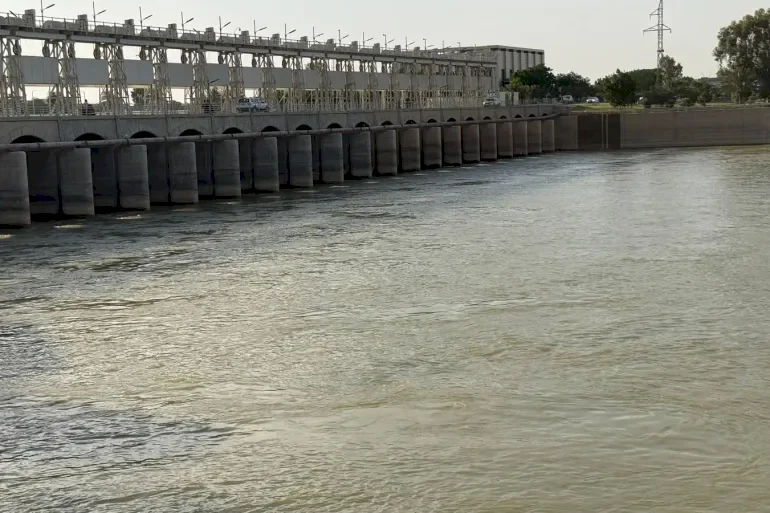
Iraq's Water Stock Rises by 580% Supported by Rainfall
SadaNews - Iraq's water stock has increased to 34 billion cubic meters after reaching its lowest level of 5 billion cubic meters at the beginning of 2026, supported by heavy rainfall, according to Minister of Water Resources, Muthana Al-Tamimi, who called for maintaining these levels to ensure the success of the agricultural season. With this increase, Iraq's water stock has risen by 580%.
Al-Tamimi stated in remarks to the Iraqi News Agency (INA) that Iraq experienced the most difficult water situation since 1933 at the end of 2025 and the beginning of 2026, before rainfall contributed to raising the stock to its current level.
The Iraqi minister clarified that the current stock is still less than half of its level in 2021 when it was around 60 billion cubic meters, emphasizing the importance of managing water resources efficiently to maintain the stock and meet the agricultural sector's needs.
Supporting the Agricultural Season
The Minister of Water Resources affirmed that his ministry coordinated with the Ministry of Agriculture before launching the agricultural plan for the current season, aiming to provide the necessary water for farmers who have been deprived of summer seasons in recent years, thus supporting increased agricultural production and improving the incomes of those working in the sector.
In this context, the Ministry of Agriculture previously predicted that Iraq's wheat production during the 2025-2026 season would reach about five million tons, after cultivating nearly eight million dunams (800,000 hectares), allowing the country to achieve self-sufficiency for the fourth consecutive year without the need to import wheat.
Deputy Minister of Agriculture, Mahdi Sahar Al-Jubouri, explained that a large part of the crop depended on rainfall and wells rather than river irrigation, which helped raise production despite ongoing challenges of water scarcity.
Al-Jubouri indicated that the improvement in rainfall and the rise in water reserves provided the government with greater flexibility in managing water resources during the summer and contributed to supporting the agricultural plan.
Challenges of Climate Change
The Iraqi Minister of Water Resources explained that the country is one of the most affected by climate change, noting that the water sector has not received adequate attention over the past decades, while most irrigation projects still rely on old systems compared to what upstream countries implement.
He added that the ministry is working on preparing a modern water policy, with a move towards transitioning to closed and modern irrigation systems when financial allocations are available, which would help preserve water resources and improve their efficient use.
He also noted that the ministry seeks to invest in the current water stock to secure drinking water, support the agricultural season, and ensure the needs of the upcoming winter season, as well as improve the environmental situation in the marshes, within a framework of a strategy for rationalizing water consumption and adapting to climate challenges.
Source: Al Jazeera + Reuters
 Follow the latest Sada News via Google News
Iraq's Water Stock Rises by 580% Supported by Rainfall

The Strait Squeeze.. What Happens to the Global Economy if the Bab-el-Mandeb Closes?

The European Union Imposes Restrictions on Sudanese Gold Trade

Oil Prices Continue to Rise Following Trump's Announcement of Reimposing Blockade on Irani...

Gold Prices Near $4022 an Ounce

Financial and Banking Expert: Markets Perceive Gulf Tensions as 'Unusual Escalation Within...

New European Support Worth 41.7 Million Euros for the Palestinian Authority