

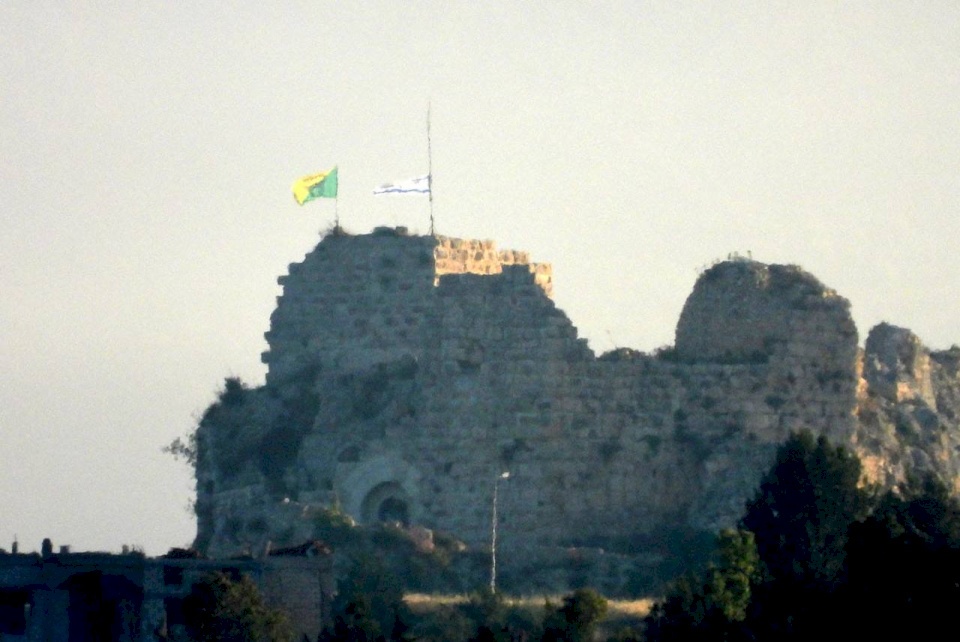
Israeli Army Announces Occupation of "Al-Shuqif Castle" in Southern Lebanon
SadaNews - The Israeli army announced this morning the occupation of Al-Shuqif Castle, also known as "Boufoor Castle," located on a rocky hill near Marjeyoun in southern Lebanon.
The historical castle, which overlooks the Litani River and clearly reveals the Upper Galilee, is considered one of the most significant strategic sites in the region. Throughout history, it has been a point of conflict between local and regional powers due to its commanding location over the heights and vital routes.
The castle, which traces its roots back to the Roman era, was expanded by the Crusaders in the 12th century, who named it "Boufoor," meaning "the beautiful fortress." It was later captured by Salah al-Din al-Ayyubi after a long siege, before control shifted to the Mamluks led by al-Zahir Baybars in 1268.
In the 17th century, Prince Fakhr al-Din al-Ma'nī II restored it to become a prominent defensive center. In recent decades, the castle has played a notable military role, as it was a headquarters for the Palestinian Liberation Organization in the 1970s and witnessed fierce battles during the Israeli invasion in 1982, before remaining under occupation until Israel's withdrawal from southern Lebanon in 2000.
Today, with the Israeli occupation army announcing its control once again, concerns about the fate of this heritage site, which is protected under international law according to the Hague Convention on the protection of cultural property in times of armed conflict, have resurfaced. International organizations, including UNESCO, had previously condemned the targeting of the castle through shelling, asserting that such actions constitute a violation of international laws and threaten Lebanese cultural identity.
In statements made this morning, the spokesperson for the occupying army confirmed that its forces have begun a wide operation in the heights of Al-Shuqif and the Saluqy Valley, aimed at "destroying military infrastructure and eliminating militants to remove the threat from northern towns." He added that the operation, which started a few days ago, witnessed the forces crossing the Litani River and expanding attacks against Hezbollah to the north of the river, indicating that military operations in southern Lebanon are expanding to include additional areas.
 Follow the latest Sada News via Google News
US Military Ends Latest Round of Strikes on Iran

Trump: Iran Will Pay the Price for Killing American Soldiers

Global Warning to Americans Due to Rising Tensions in the Middle East

The Occupation Targets Al-Mughayer with Hundreds of Soldiers: Closure, Raids, and Arrests

Exchange Rates of Currencies Against the Shekel on Tuesday (July 21)

Weather: Extremely Hot Conditions in All Regions

Public Petroleum Authority: Fuel supply continues daily and we urge citizens not to rush t...
