

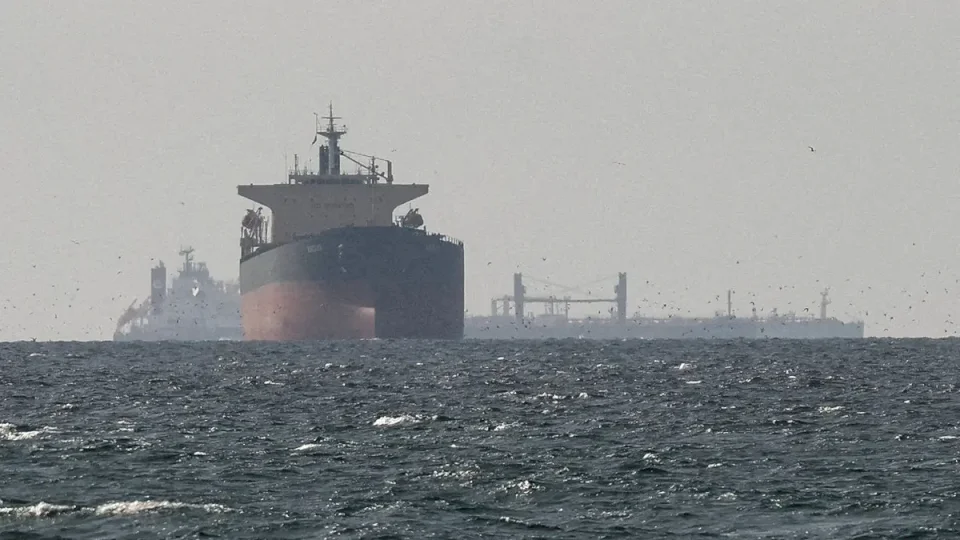
Giant Chinese Oil Tanker Attempts to Exit the Strait of Hormuz
SadaNews - A giant Chinese oil tanker is reportedly headed out of the Arabian Gulf, making a rare crossing attempt through the Strait of Hormuz, ahead of anticipated talks between U.S. President Donald Trump and Chinese President Xi Jinping.
Tracking data showed the giant tanker "Yuan Hua Hu" moving through the waterway on Wednesday morning, passing by Iran's Lark Island on the eastern side of the channel, heading south.
The vessel is owned and operated by units affiliated with "Cosco Shipping," according to the shipping database "Equasis." This crossing would mark only the third for a Chinese supertanker since the outbreak of the war, occurring at a highly sensitive time.
Files on the Table at the Trump-Xi Summit
The expected summit between Trump and Xi this week is anticipated to address issues including the war in the Middle East and the support that Beijing is believed to be providing to Tehran. Chinese private refining companies have remained among the top buyers of Iranian oil for years, providing Tehran with a financial lifeline.
While the U.S. position on Iranian oil fluctuated during the conflict, Washington has subsequently intensified its pressure on this trade with China, imposing sanctions on entities including the giant "Hengli Petrochemical Dalian Refinery." The company has denied the allegations against it.
The ship is currently broadcasting signals indicating its affiliation with Beijing by announcing its ownership and Chinese crew, a strategy widely used as a safety mechanism, especially among vessels approved by Tehran for passage through the strait.
Estimating the Load Capacity of the Chinese Oil Tanker
The draft of the "Yuan Hua Hu" indicates that it is fully loaded with oil, or close to its maximum capacity of two million barrels.
It was spotted loading its shipment at the Iraqi port of Basra in early March, according to tracking data.
It remains unclear whether the vessel will succeed in exiting the Gulf, given the erratic movements of other tankers, including reverse maneuvers and failed crossing attempts in recent days.
Signals from ships in that region are often affected by electronic jamming or what is known as "spoofing," which can complicate monitoring and lead to inaccurate displays of their locations. Captains can also turn off transponder devices onboard for security reasons.
 Follow the latest Sada News via Google News
Wall Street Banks Intensify Hiring in the Gulf to Keep Up with "War Deals"

Oil Continues to Decline with Increased Flows through Hormuz and Progress in Iran Talks

Gold Recovers After Waller's Speech and Easing Tension Over U.S. Rate Hike

Aluminum Prices Drop to Lowest Level Since February Amid Dollar Strength

Bitcoin Drops Below $60,000

World Gold Council: The second half of 2026 is a critical turning point for gold prices

World Bank Approves $700 Million Loan for Jordan