

Sudanese Women Survivors of Rape Choose to Keep Their 'Innocent' Children
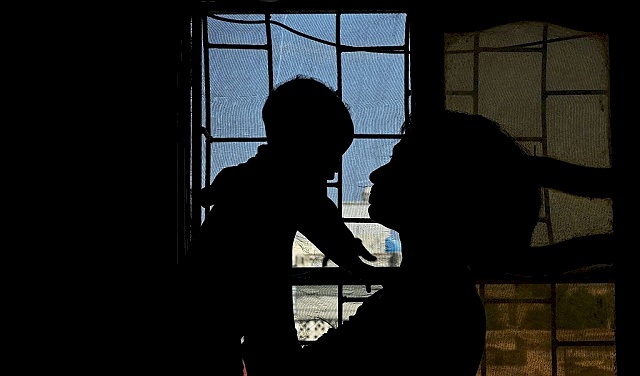
SadaNews - Nasma cradles a baby who inherited her smile and curious eyes, but he bears no resemblance to any of the three fighters from the Rapid Support Forces who gang-raped her two years ago in Sudan's capital, Khartoum.
Nasma (26) told the "France Presse" agency: "I saw their faces and I still remember them." Meanwhile, her infant approaches her for a hug as he listens to his favorite song.
Her son Yasser is one of thousands of children born to women who suffered rape during three years of war between the army and the Rapid Support Forces in Sudan.
Rape has been frequently used as a weapon "for war, domination, destruction, and genocide" in Sudan, "to destroy the fabric of society and alter its composition," according to UN Special Rapporteur on Violence Against Women and Girls, Reem Alsalem.
Nasma's family fled Khartoum at the war's onset, but a year later, she returned to retrieve the birth certificates and university graduation certificates, as well as a death certificate needed for her family to start a new life.
In the Bahri area of Khartoum, Rapid Support Forces fighters intercepted the bus she was on, ordered the passengers to disembark, and separated men from women.
As the third fighter raped her, Nasma lost consciousness, only to awaken with dawn the next day, saying: "I went outside and saw one of the men who had been on the bus shot dead."
Nasma's account matches the modus operandi of the Rapid Support Forces fighters, whom UN experts say are committing systematic sexual violence across the country, including using it as a tool for "genocide" in Darfur.
Overcome with shock, Nasma, who uses a pseudonym to protect her identity, did not realize she was pregnant until she was in her fifth month, and she made the final decision to keep the child only the night before giving birth.
She explained: "My son is innocent. Just as he is not my fault. What sin does he have to not know his mother?" Therefore, she refused to let him suffer: "Childhood trauma or end up in a bad home."
Doubled Injustice
The Minister of State for Social Affairs, Salima Ishaq Khalifa, stated that the vast majority of rape victims do not report their assaults, and a large number of abortions or adoptions are not documented.
According to UN Humanitarian Affairs Coordinator, Denise Brown, "In one town in Darfur, there are hundreds of girls who were raped, and none of them went to a medical clinic, most of them pregnant."
Alsalem noted that the shame imposed on rape survivors in a conservative society exacerbates the injustice they experience.
She added: "Families have abandoned their daughters, and husbands have divorced their wives after they were raped. We are re-traumatizing victims, and they are innocent."
While most families chose to raise the children in secrecy, other women faced ostracism or marginalization, or even accusations of complicity with the Rapid Support Forces.
In another testimony, Hayat (20) recounted her rape last year while fleeing from the Zamzam camp near El Fasher after it was stormed by the Rapid Support Forces, in a straw shelter in the town of Tallouja in Darfur, which has become home to hundreds of thousands of displaced people.
The Rapid Support Forces attacked the camp that housed more than half a million displaced people, killing over 1,000 and committing systematic rapes targeting ethnic minorities that are non-Arab, according to the UN.
Rapid Support Forces fighters shared videos in which they stated that raping women from minority ethnic backgrounds "honors" their lineage.
The War on Women's Bodies
Hayat arrived in Tallouja in a state of shock, cradling her four-month-old baby with chubby cheeks.
She said: "I wish him a better future; I hope he doesn't live as we lived."
Violence against women has long been used as a weapon of war in the Darfur region, which has witnessed bloody battles against ethnic minorities at the hands of the Sudanese army's Janjaweed, which later transformed into the Rapid Support Forces.
The Janjaweed have been accused of committing crimes against humanity, including widespread rape during the first decade of the 2000s.
The story of Halima demonstrates the recurring violations against women, as she was first raped in her teenage years by a shepherd in one of the fields in Darfur, then raped again while fleeing to the Zamzam camp in 2022, and a third time while escaping the camp after the Rapid Support Forces attack.
Halima, aged 23, was "saved" by emergency contraceptives provided by doctors in Tallouja from having a third child due to rape.
The agency met several rape survivors in Tallouja, who became pregnant as a result, during their escape from the fall of El Fasher, the capital of North Darfur, to the hands of the Rapid Support Forces in October 2025, an incident that resulted in no less than 6,000 deaths within three days.
While trying to flee from El Fasher with a group of civilians, Rawya (17) witnessed the Rapid Support Forces "kill many who were with us. Then they took 3 girls, including me, and raped us," and she is now five months pregnant.
Aliyah (25) was forcibly returned to El Fasher with 4 other girls after being raped while trying to escape, and they were held for 6 weeks "until we managed to escape at midnight," later miscarrying her child.
Majda (22) lost her husband in a rocket attack on El Fasher and then witnessed her brother being shot on the way to Tallouja before she was raped.
Majda considered the child that formed inside her for 5 months until she decided to keep it; because "if I lost the child, it would be an additional loss and sorrow for me. But if it arrives safely, that would be divine destiny," affirming, "I will raise him."
However, many of those trying to escape the stigma of rape end up at Gloria Andrew, a licensed midwife with the "Doctors Without Borders" organization in Tallouja, and they arrive bleeding "after attempting unsafe abortions."
Andrew has seen hundreds of survivors over two months spent in Tallouja, "some of whom could not even speak about what happened."
She adds: "Some women who gave birth against their will feel resentment and detachment. They cannot show love or affection for their children, and they are forced to raise these children, who become a constant reminder of what happened."
Mother and Father at Once
In Khartoum, Fihah jokingly talks about her 5-month-old baby who sleeps peacefully in the midday heat, saying he "stays awake all night."
Fihah (30) adds while her son is fast asleep: "I have to be his mother and father."
With tear-filled eyes, Fihah recounts how a man in civilian clothes raped her while his friend, a soldier in the Sudanese army, stood watch, wearing military attire and holding a weapon, saying: "I was very scared they would shoot me."
The UN has warned that sexual violence against women by the army goes unreported for fear of retaliation, yet it pales in comparison to the systematic strategy of the Rapid Support Forces, according to observers.
A activist, who requested anonymity, says: "The Rapid Support Forces rape women to subjugate, displace, and control the community, while army soldiers rape because they know they will escape punishment."
Fihah, which is a pseudonym, did not discover her pregnancy until the end of the third month, and has hardly slept since then.
She said: "I sometimes feel distressed and angry at him. When it's time to breastfeed, I feel bored," adding that she only felt motherhood "when he turned two months. But motherhood is very difficult."
Fihah, Nasma, and others face significant challenges in obtaining birth certificates for their children, which are essential for healthcare, education, or social services.
However, according to Khalifa, the activist who is now the Minister of Social Affairs, "this should not be a problem in the civil registry," as "this matter is legally fulfilled."
Yet conservative social norms and bureaucracy harm many.
Brown questions: "What is the legal status of these children? It's a long-term problem. How will they be cared for with their families? What impact will this have on communities?"
"Before She Sees Her Mother"
In the Al-Jazeera state in southeastern Khartoum, a conservative agricultural state, several families have permanently abandoned their villages; fleeing the effects of the trauma of rape, forced marriage, and sexual enslavement by Rapid Support Forces fighters.
According to a report from the Strategic Initiative for Women in the Horn of Africa, "lighter-skinned" girls compared to the Rapid Support Forces fighters from ethnic backgrounds different from theirs would be "summoned" and treated as war spoils.
When the army regained control of central Sudan last year, the government eased the restrictions on abortion; a clear attempt to alleviate the impacts of sexual violence perpetrated by the Rapid Support Forces.
Alsalem stated: "Authorities showed leniency concerning abortion, but many were unaware of this," adding that permits were required, "and thus many refrained from obtaining one for fear of social stigma."
A volunteer in Al-Jazeera stated that she helped 26 women and girls to have abortions, most of whom were given "large amounts of dangerous medications without medical supervision."
Khalifa recalls a woman who could not get an abortion, but as soon as she gave birth, her grandmother carried the baby "before she could see her mother, and said this child of the 'dhabir' (the common term for the Rapid Support Forces) we will not take home with us."
She added: "The grandmother wanted to erase this experience entirely from her daughter's memory," allowing Khalifa's team to give the child to a family that adopted him.
Some other families have lost their daughters and grandchildren, as girls who were forcibly married to Rapid Support Forces fighters moved to Darfur with their husbands withdrawing from central Sudan, or as the girls who could not pay ransom were still being held.
In Nyala, the capital of South Darfur state, according to Khalifa, there are girls held with their children who "are a year or two old."
On the other hand, some families benefited from displacement as rape survivors were able to give birth to their children, "without neighbors asking questions" about the child's origin, according to Khalifa.
The minister states that adoption procedures "are not difficult," and often take place informally, particularly in eastern Sudan where caring for needy children is a common practice.
The government is trying to find families for as many abandoned children as possible, but Alsalem fears that this is being done "without adequate follow-up or scrutiny," which is a thought Nasma says she could not bear.
After 13 months, the age of her son Yaser, Nasma says she has not yet decided what to tell her son about his father when he grows up, but she affirms that for now she is only thinking about finding a good-paying job with her university degree, so that she can care for her son in the best way possible.
Holding her son’s hand while he tries to learn to walk, she says: "He deserves to live a decent life."
 Follow the latest Sada News via Google News
The General Secretariat of the Organization of Islamic Cooperation Affirms the Role of UNR...

Paul's Initiative in Libya: A Real Settlement or a New Division of Influence and Resources...

The Ghost of El Fasher Haunts El Obeid.. A Funding Gap Threatens the Lives of 20 Million H...

Dozens Dead and Injured in Russian Missile and Drone Attack on Kyiv

8 Dead and Injured.. Russia Launches Deadly Attacks on Kyiv

Aoun calls on those opposed to the "framework agreement" to present an alternative

The Organization of Islamic Cooperation Welcomes the UN Report on Occupation Against Child...
