

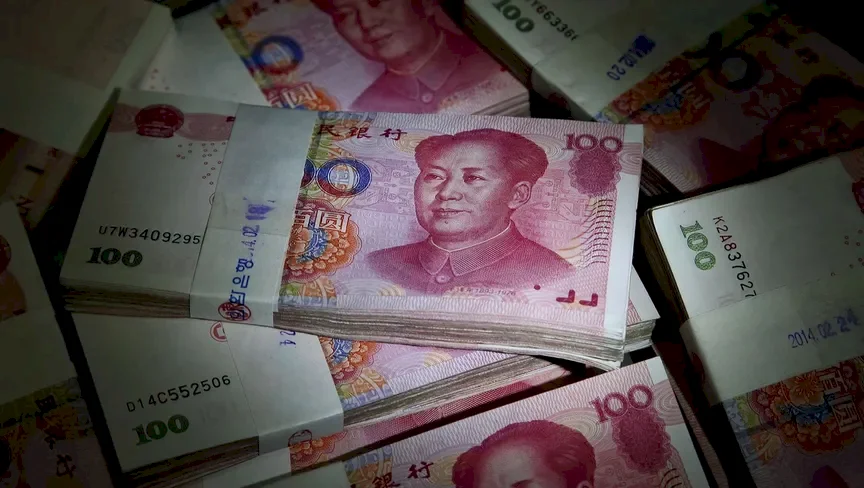
Central Banks' Use of Yuan Swap Lines Reaches Highest Level in Two Years
SadaNews - The use of global central banks of the "People's Bank of China's" swap lines reached its highest level in two years during the first quarter, reflecting the growing international demand for the Chinese currency.
By the end of March, central banks around the world had withdrawn a total of 111.6 billion yuan (16.4 billion dollars) from the foreign exchange swap lines of the "People's Bank of China", the highest level since March 2024, according to the quarterly report issued by the Chinese central bank late on Monday.
Bloomberg's calculations showed that the increase of 17.4 billion yuan compared to the previous three months represents the largest quarterly rise since 2023.
China Expands Global Yuan Network
Swap lines are a key tool for providing yuan to the global financial system, allowing local institutions to access liquidity through their central banks to support trade and investment.
The recent rise highlights China's efforts to promote the internationalization of the yuan, alongside an increasing openness of countries to reduce their dependence on the dollar.
Lin Song, chief economist for Greater China at ING Bank NV, stated, "The domestic yuan has performed well in recent months, and was among the best-performing currencies following the Iran war, likely contributing to attracting confidence and interest from foreign countries."
He added that "the expansion in the use of swap lines reflects positive progress in the efforts to internationalize the renminbi, although this path is still considered a long-term project in progress."
The yuan has risen by about 2.9% against the dollar in the domestic market since the beginning of the year, despite the increasing demand for safe-haven assets due to tensions related to the Iran war, coinciding with the growing use of the Chinese currency in settling international transactions.
Growth of International Payments in Yuan
Although the dollar continues to dominate trading during March, the yuan advanced one position to become the fifth most used currency in international payments by value, with a share of 3.10%, according to data from the "Swift" service, known as the "Global Financial Messaging Association".
In the same context, the Chinese cross-border payment system "CIPS" recorded a daily transaction value of 1.22 trillion yuan, according to a report by "Shanghai Securities News" at the beginning of April.
Stephen Chew, chief foreign currency and interest rate strategist in Asia at Bloomberg Intelligence, clarified that the demand for yuan liquidity has increased significantly amid geopolitical tensions, including the repercussions of the Iran war, alongside rising dollar financing costs.
He added that "the demand may come from the central banks of countries allied with China, which seek liquidity to cope with the repercussions of the oil price shock."
By the end of 2025, China had signed agreements for currency swap lines with 32 countries and regions, totaling 4.52 trillion yuan, according to data from the Chinese central bank.
Meanwhile, markets are closely following the prospects of the United States expanding the scope of its currency swap lines. The UAE Minister of Foreign Trade revealed earlier this month that his country was in talks with Washington regarding a currency swap agreement, in an attempt to join the few countries that have access to the liquidity lines of the Federal Reserve.
 Follow the latest Sada News via Google News
Wall Street Banks Intensify Hiring in the Gulf to Keep Up with "War Deals"

Oil Continues to Decline with Increased Flows through Hormuz and Progress in Iran Talks

Gold Recovers After Waller's Speech and Easing Tension Over U.S. Rate Hike

Aluminum Prices Drop to Lowest Level Since February Amid Dollar Strength

Bitcoin Drops Below $60,000

World Gold Council: The second half of 2026 is a critical turning point for gold prices

World Bank Approves $700 Million Loan for Jordan