

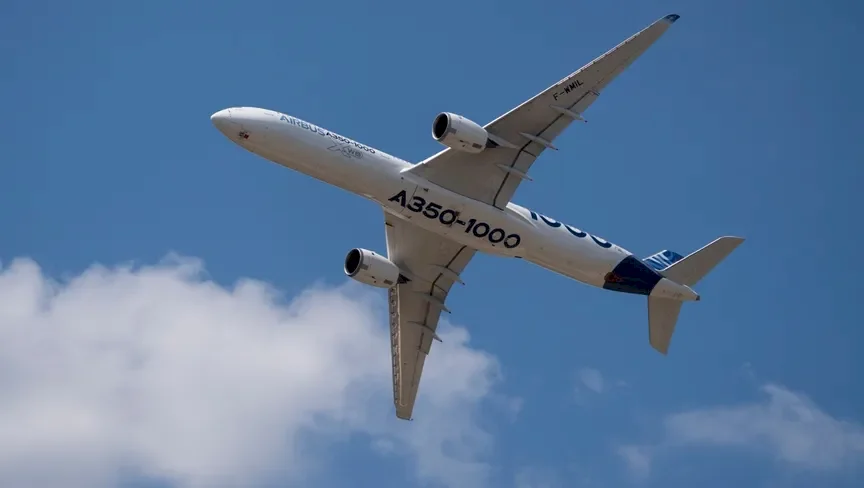
Egypt's 'Travco' to Launch Airline in November with $150 Million Investment
SadaNews - The Egyptian tourism company Travco plans to launch a new airline in November with an investment of $150 million, according to Hamid El-Shiti, Chairman of the company, in an interview with "Asharq".
This announcement comes just days after the Egyptian Minister of Civil Aviation, Samah Hefny, revealed that a private Egyptian airline owned by a prominent investor in the tourism sector will be launched to support air transport and enhance the market's capacity.
The airline is expected to start with a fleet of 3 aircraft, with plans for gradual expansion to 20 aircraft over the first five years of operation, according to El-Shiti.
This development occurs at a time when Egyptian tourism has shown strong recovery throughout 2025, driven by a mix of security stability and low costs for tourists due to the devaluation of the pound, along with unprecedented momentum from the opening of the Grand Egyptian Museum in the last quarter of last year.
Egypt aims to attract around 21 million tourists this year, compared to about 19 million tourists in 2025, with a growth of 10.5%, following a record number of visitors last year with a growth of 21%. However, in the first quarter of this year, Egypt received approximately 5.6 million tourists, according to the Egyptian Minister of Tourism and Antiquities, Sherif Fathy, speaking to "Asharq" last week, marking a jump of 43.5% compared to the same period last year when the country recorded around 3.9 million tourists.
The minister added in his conversation with "Asharq" during the inauguration of a solar power station at the Grand Egyptian Museum that Egypt's tourism revenues from January to the end of March 2026 approached $5.1 billion.
Charter Flights
El-Shiti stated in his discussion with "Asharq" that the company will rely on operating charter flights to multiple destinations, including Europe and Eastern and Western markets, which will support the incoming tourism movement to Egypt, noting that the fleet will consist entirely of "Airbus" aircraft with a capacity of approximately 180 to 220 seats per aircraft.
The civil aviation sector in Egypt witnessed unprecedented growth last year, with the total number of passengers at Egyptian airports rising by 22.3% to 28 million passengers, compared to 22.9 million passengers in 2024. Airports recorded about 210,000 flights compared to around 174,000 flights the previous year, while the number of passengers increased by 9.5% in the first quarter of 2026 to 8.1 million passengers despite the repercussions of war.
El-Shiti explained that the new airline is fully owned by the "Travco" Group without any partners, confirming that operations will commence from major tourist airports in Egypt like Sharm El-Sheikh, Marsa Alam, and Matrouh, in line with tourism flow maps.
Regarding the timeline, the Chairman of "Travco" mentioned that the licensing procedures are still being finalized, expecting to complete them within a period ranging from 80 to 90 days, according to the regulations of the relevant civil aviation authorities.
Concerns Over Ongoing Warfare May Hinder Operations
Despite the initiation of practical steps, surrounding challenges have the potential to slow down the pace of launch; the actual operation of the company may be delayed due to the current global aviation sector conditions, especially with the expected crisis in aircraft fuel in Europe starting from June, resulting from oil supply chain disruptions and the continued closure of the Strait of Hormuz, according to El-Shiti.
The tourism sector is one of the most important sources of foreign currency in the country. The sector in Egypt has withstood the war between Israel and Hamas and Iran, and during four years of conflict between Russia and Ukraine, the citizens of which once constituted a significant proportion of visitors to Egypt.
El-Shiti also pointed out that this crisis could have a negative impact on air travel, potentially leading to a reduction in the number of flights, which would make it unsuitable to start operations for a new company under unstable operational conditions.
 Follow the latest Sada News via Google News
Wall Street Banks Intensify Hiring in the Gulf to Keep Up with "War Deals"

Oil Continues to Decline with Increased Flows through Hormuz and Progress in Iran Talks

Gold Recovers After Waller's Speech and Easing Tension Over U.S. Rate Hike

Aluminum Prices Drop to Lowest Level Since February Amid Dollar Strength

Bitcoin Drops Below $60,000

World Gold Council: The second half of 2026 is a critical turning point for gold prices

World Bank Approves $700 Million Loan for Jordan