

What is Iran's "terrifying" secret weapon and why is it being hinted at now?
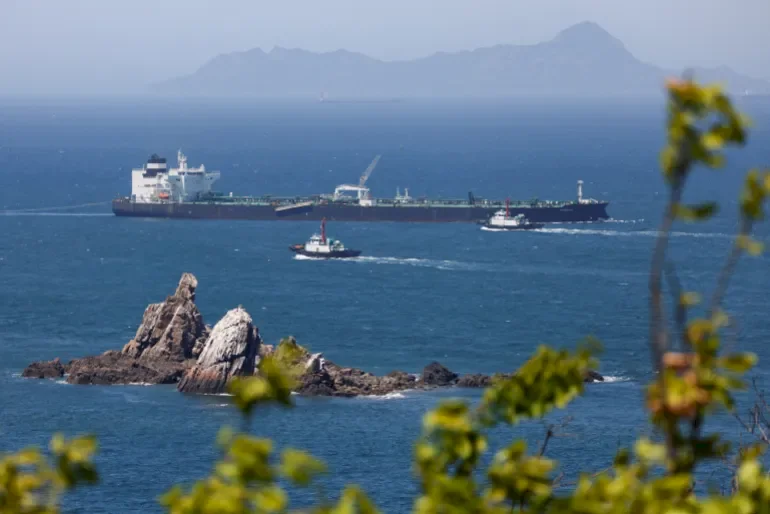
SadaNews - The commander of the Iranian Navy announced today, Sunday, that the light submarines owned by his country are operating in the waters of the Strait of Hormuz in line with the threats and needs, at a time when the possibility of renewed confrontations between Iranian and American forces in the strait remains.
At the same time, the spokesman for the Iranian army stated that if "the enemy attacks Iran again, they will be surprised by weapons, methods of warfare, and new battlefields."
Strategic and maritime security expert Major General Mohammed Abdul Wahid mentioned that Iran relies on what he termed "asymmetrical warfare" through the use of small fast boats known militarily as "mosquito swarms," which are unable to engage in traditional confrontations with American destroyers, but can confuse oil tankers and civilian ships and threaten navigation within the strait.
Abdul Wahid further noted, in the military analysis segment on Al Jazeera, that Tehran also possesses small submarines of the "Ghadir" class, which he described as "mini submarines" that have a high capability for maneuvering and stealth in shallow waters.
Additionally, it has other submarines of the "Fateh" class capable of staying underwater for periods extending up to six weeks, as well as manned submarines that operate remotely and can be used for laying naval mines or conducting torpedo attacks.
The strategic expert indicated that the submarine weapon represents a "strategic and terrifying weapon" due to its difficulty in detection, explaining that a single torpedo could be enough to sink a naval destroyer if it accurately hits its target, adding that Iran has been delaying the demonstration of this card for use in "severe responses or major naval operations."
Significance of Timing
In response to a question about the reasons for Iran raising the submarine issue at this time, the military expert said it relates to sending a deterrent message, explaining that the success of submarines does not only depend on their technical capabilities but also on the skills of their commanders in exploiting what he called the "dead zones" away from the acoustic detection waves used by ships and mine sweepers.
He added that submarines can benefit from factors such as water salinity, transparency, and the right timing for movement to maneuver and remain hidden, pointing out that detecting a submarine represents a "critically dangerous" moment, as its destruction becomes easy once its location is determined.
In his assessment of the capabilities of the U.S. Navy, Abdul Wahid mentioned that it is "the largest in the world," but it was primarily designed for offensive operations in open seas, not for operation in narrow passages like the Strait of Hormuz, considering that using aircraft carriers and large destroyers in that geographical environment faces significant challenges.
He explained that any potential naval confrontation in the Gulf would drive Iran to employ various military tools, including small tactical submarines, mobile missile platforms that can be hidden within Iranian territory and then quickly moved to the coast, as well as drones and naval mines that could cause widespread disruption to American maritime traffic and formations.
He pointed out that small fast boats may not be effective against large military vessels, but they represent a real threat to oil tankers and commercial ships, given the narrow and sensitive nature of the strait through which a significant percentage of global energy exports pass.
Preventing Ships
Commenting on recent Iranian statements regarding preventing countries applying U.S. sanctions from passing through the Strait of Hormuz, Major General Mohammed Abdul Wahid stated that they carry "military, political, and legal implications," reflecting Tehran's efforts to demonstrate its capability to impose new deterrent equations in one of the world's most important maritime passages.
Abdul Wahid added that the statements made by the Iranian army spokesperson about the possibility of obstructing ships' passage in the Strait of Hormuz indicate the existence of a "strong Iranian readiness" relying on unconventional combat means suited to the narrow nature of the strait.
The strategic expert emphasized that Iran possesses "disturbing" naval capabilities, even if they are not decisive in direct confrontation with the U.S. fleet.
Following the stalled first round of negotiations between both sides in Pakistan, U.S. President Donald Trump announced on April 13 that he was imposing a blockade on Iranian ports and on any ship passing through the Strait of Hormuz after obtaining permission from Tehran.
The Strait of Hormuz is considered one of the most vital arteries for global energy transport, with about 20 million barrels of oil passing through it daily, in addition to nearly 20% of the world's liquefied natural gas trade.
Source: Al Jazeera
 Follow the latest Sada News via Google News
Casualties in Explosion in Damascus

The General Secretariat of the Organization of Islamic Cooperation Affirms the Role of UNR...

Paul's Initiative in Libya: A Real Settlement or a New Division of Influence and Resources...

The Ghost of El Fasher Haunts El Obeid.. A Funding Gap Threatens the Lives of 20 Million H...

Dozens Dead and Injured in Russian Missile and Drone Attack on Kyiv

8 Dead and Injured.. Russia Launches Deadly Attacks on Kyiv

Aoun calls on those opposed to the "framework agreement" to present an alternative
