

Trump Gives Europe Until July 4 to Implement Trade Agreement
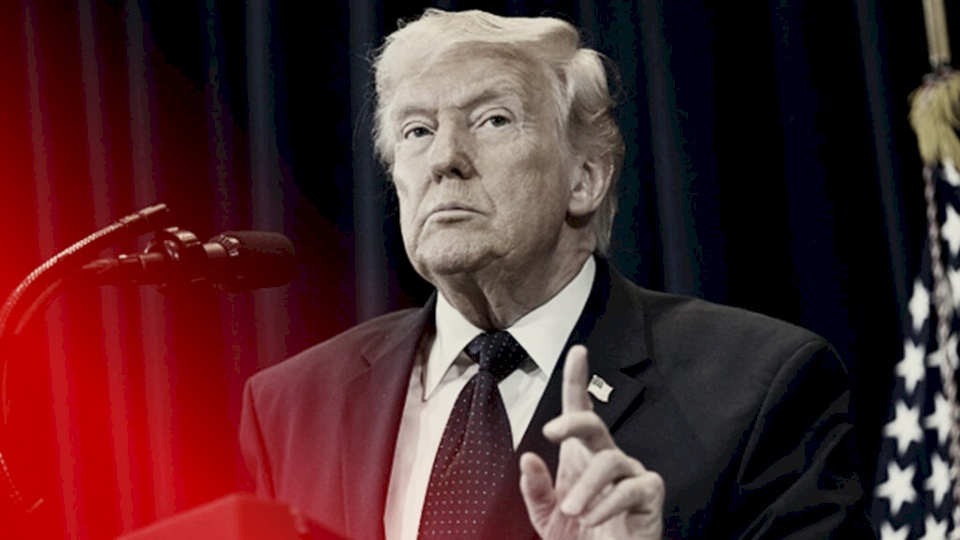
SadaNews - U.S. President Donald Trump stated that he had a "great call" with European Commission President Ursula von der Leyen on Thursday and granted the European Union a deadline until July 4 to implement what he referred to as the trade agreement; otherwise, Washington will raise tariffs to much higher levels.
Trump wrote on his platform "Truth Social" that he has "patiently" awaited the EU fulfilling what he sees as its commitments in the "historic trade agreement" reached in Turnberry, Scotland, adding that a promise was made to reduce EU tariffs to zero.
The U.S. president said he agreed to give von der Leyen until the 250th birthday of the United States, referring to July 4, stating that tariffs will "immediately rise to much higher levels" if the EU does not comply with the agreement.
Last Friday, Trump threatened to increase tariffs on European cars and trucks to 25% this week, up from the current 15%, accusing the EU of not adhering to the terms of the trade agreement made in Scotland last July.
New Threat
Trump's threat comes at a time when the trade agreement between the U.S. and the EU has entered a sensitive phase, as the European Parliament approved the deal last March after amendments, but it requires negotiation and ratification from member states to complete its implementation.
Under the agreement, the EU agreed to eliminate tariffs on American industrial goods in exchange for a ceiling of 15% on most European products; however, Brussels argues that Washington has not adhered to some parts of the agreement, especially after the U.S. expanded tariffs by 50% on EU steel and aluminum last August to include hundreds of new products.
Earlier, the European Commission President stated that the EU is in the final stages of implementing the remaining tariff commitments but also mentioned that there are U.S. commitments that still need alignment with the agreed-upon ceiling.
The recent U.S. threat has led European capitals to reassess the timing of the final ratification of the agreement, although several countries within the union believe it is necessary to move forward to demonstrate the bloc's reliability in fulfilling its trade obligations.
According to previous European discussions, the talks focused on two main clauses:
The first allows the EU to reduce tariffs on American exports only after Washington reduces its tariffs to a ceiling of 15%.
The second allows for the termination of the agreement if Trump imposes new tariffs by March 31, 2028, without the need for a new vote.
European Concerns
Europe faces a dilemma between trying to maintain the trade agreement with Washington and avoiding a new tariff war, along with increasing internal pressures to respond to Trump's threats, especially if they affect strategic sectors like automobiles, steel, and technology.
Germany is the most exposed European party to the repercussions of any new tariff increase, as the proposed increase to 25% would hit the German automobile sector, particularly companies like "Volkswagen," at a time when the German economy is already suffering from prolonged stagnation.
The German "Ifo" economic institute warned that turning the dispute into a new trade war could push Germany into economic recession this year, especially as raising tariffs from 15% to 25% would severely impact the automobile manufacturing sector, one of the pillars of the German economy.
German Finance Minister Lars Klingbeil stated earlier that Europe does not want any escalation and seeks a common path with the Americans, while French Finance Minister Roland Lescure asserted that both sides have an agreement under negotiation, and the EU is ready to move forward in good faith.
However, France has shown a more hardline stance, with French Trade Minister Nicolas Forissier stating that the EU has tools it can use if Trump makes excessive threats to strategic industries, emphasizing that Europe "will no longer be naïve."
Countermeasures
The EU has several tools to respond if Trump turns his threats into enforceable decisions, including suspending the trade agreement, activating the anti-coercion economic tool known as the "bazooka," and imposing counter-tariffs on American products, in addition to targeting major U.S. technology companies with European taxes or tariffs.
The anti-coercion economic tool allows the EU to halt the flow of certain American products to the European market, exclude American companies from public tenders, or impose taxes on American digital products; however, it requires an investigation that could last 3 months, making its application not immediate.
Brussels also has a prepared list for counter-tariffs that includes U.S. goods worth 93 billion euros (109.5 billion dollars), comprising nearly 2000 American items in a list spanning 99 pages, including washing machines, refrigerators, snow plows, boats, and agricultural products like beef, poultry, dairy, sugar, vegetables, and almonds, along with industrial products such as textiles, leather goods, household appliances, and plastic and wooden tools.
European parties emphasize that the reciprocal response is not limited to retaliation but is based on the principle of reciprocity in World Trade Organization (WTO) rules, although this option poses significant risks, the most notable being the possibility of a new retaliatory U.S. response that expands the trade dispute.
Brussels is also considering the option of imposing tariffs or taxes on giant American technology companies such as Google, Microsoft, Apple, Mastercard, and PayPal, but this route faces political obstacles within the union, especially with countries like Ireland opposed to a uniform digital tax across the bloc.
European estimates indicate that taxing the revenues of American technology companies in Europe could generate around 37.5 billion euros (44.1 billion dollars) annually for the EU, but it would not be a quickly executable option, and companies may try to pass on part of the burden to consumers.
 Follow the latest Sada News via Google News
Wall Street Banks Intensify Hiring in the Gulf to Keep Up with "War Deals"

Oil Continues to Decline with Increased Flows through Hormuz and Progress in Iran Talks

Gold Recovers After Waller's Speech and Easing Tension Over U.S. Rate Hike

Aluminum Prices Drop to Lowest Level Since February Amid Dollar Strength

Bitcoin Drops Below $60,000

World Gold Council: The second half of 2026 is a critical turning point for gold prices

World Bank Approves $700 Million Loan for Jordan