

British Newspaper: Israel Deployed Advanced Defense Systems in the UAE
SadaNews - The British newspaper Financial Times reported last night that Israel has sent advanced weapon systems, including a sophisticated laser system, to the United Arab Emirates.
According to the British newspaper, these systems were transferred to help the UAE defend itself against Iranian missile and drone attacks.
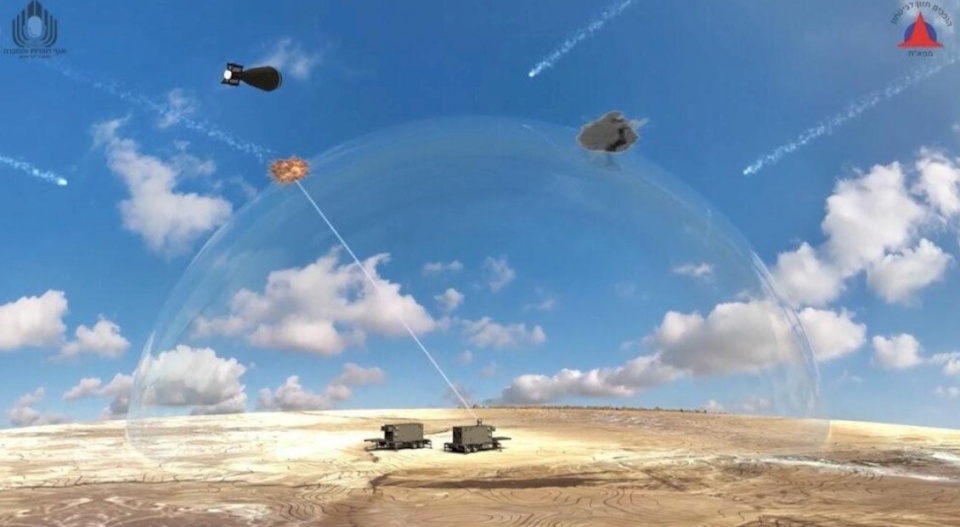
According to two sources familiar with the matter, Israel quickly supplied a lightweight detection and monitoring system called "Spectro," which helped the UAE identify approaching drones, especially of the "Shahid" type, from a distance of up to 20 kilometers, and also sent the UAE a version of its laser defense system "Maginor."
Israel deployed this laser, capable of intercepting short-range missiles and drones, for the first time earlier this year to protect its cities from rocket launches by Hezbollah from Lebanon.
It was not previously announced that the "Maginor" and "Spectro" systems were deployed in the UAE, while other reports indicated earlier this week that the Iron Dome was stationed in the Arab state.
A source familiar with the matter indicated that additional weapon systems were deployed in the Gulf state, along with additional reinforcements of Israeli forces. The source added, "This is not a small number of troops on the ground."
According to the Financial Times, Israel also provided significant and immediate intelligence regarding preparations for short-range missile launches in western Iran towards the United Arab Emirates.
The British newspaper noted that the United Arab Emirates bore the brunt of the Iranian counterattack during the war waged by the United States and Israel against the Islamic Republic.
Iran launched more than 500 ballistic missiles and over 2,000 drones at the UAE, with the vast majority of launches intercepted due to air defense systems deployed, including Israeli ones.
According to one of the sources familiar with the matter, to maintain the pace of the war, the Israeli armed forces transferred weapons that were in experimental stages or not fully integrated into Israeli radar systems, moving them from the lab to the UAE.
The Iranian attacks, which included swarms of drones and thousands of missiles, drained the stockpiles of the United States, Israel, and Gulf countries of expensive interceptors, some of which cost millions of dollars per unit and take months to produce.
The Center for Strategic and International Studies (CSIS) estimated that by the time Iran and the United States agreed to a ceasefire, the U.S. military had exhausted half of its stockpiles of THAAD and Patriot missiles, the latest interceptors in the U.S. arsenal.
This situation led to increased demand for inexpensive and flexible interception systems, including those developed by Ukraine to counter Russian drones based on the Iranian "Shahid" models, which have been deployed in several countries. The "Shahid" drones have proven difficult to detect on their way to their targets due to their small size and low thermal signature.
According to the Financial Times, the UAE is currently considering a project to convert its current stock of thousands of old Sidewinder air-to-air missiles into ground-launch versions. This step will enable the UAE to replace the thermal guidance capabilities of the old missiles with passive laser guidance heads, operating in coordination with Elbit's Spectro tracking system to locate the Shahid drones for interception.
 Follow the latest Sada News via Google News
4 Martyrs in the Gaza Strip

Hebrew Channel: Egypt Offered Hamas to Hand Over Its Weapons to Cairo as a Custody

Katz: We Rose After 1000 Days of War and Became a Major Power

Journalist Union: We Reject Doubts About the Status of Martyr Journalists and Warn Against...

Jordanian King Issues Order to Transfer Kingdom's Ambassador to Israel to Amman

Zamir: The War We Are Fighting is the Longest in Israel's History

Gaza Health: Over 73,000 Martyrs in the Strip
