

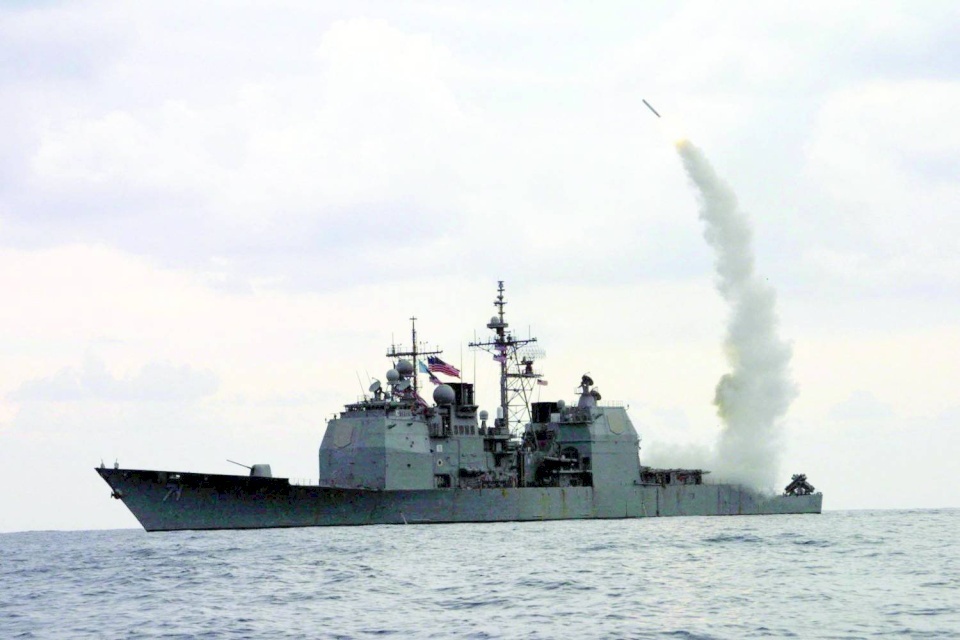
20 - 30 Billion Dollars Monthly Costs of War with Iran
SadaNews - Wayne Sanders, Senior Analyst for Aviation and Defense at Bloomberg Intelligence, told Defense One that a prolonged conflict with Iran could cost up to $20 billion per month.
As military capabilities increase, the cost could rise to $30 billion.
Some costs are included in annual budgets, such as the operation and maintenance of platforms, regardless of whether they continue their operations.
Costs of the Naval Blockade of the Strait of Hormuz
For example, with the U.S. Navy blockading the Strait of Hormuz, the ongoing operation and maintenance budget—an already existing amount—will remain, whether the ships are docked in the Arabian Gulf or near Norfolk (headquartered in the U.S.).
"There will also be operational costs for an aircraft carrier amounting to $10 million daily, so to speak," said Sanders.
The Air Force
He added that "the air wing, the setup of the missiles used, and the amount of aircraft fuel—of course—will start to affect these costs, especially as the duration of the war extends. So, I believe the cost will range between $20 and $25 billion per month for this period."
Intelligence and Reconnaissance
Additionally, there are likely to be "very high" costs for intelligence, surveillance, and reconnaissance "due to continuous sorties around the clock" and air support.
Images of 'Shadow Fleets'
The U.S.-Israeli war against Iran has reignited concerns about jamming and manipulating the Global Positioning System (GPS), making it difficult to track ships accurately. Therefore, the company 'Vantore,' specialized in spatial imaging, is working to integrate its technology with the 'Windward' platform for marine data analysis, to provide ultra-clear satellite images with ship tracking data, aiming to identify ships and their movements more accurately.
Amy Daniel, CEO of 'Windward,' stated to Defense One: "It is not enough to use low or medium-resolution satellite images to monitor ships, as they provide no information. They only tell you: (here is something that looks like an oil tanker)."
He added: "We need to know who the ship is, what it was doing, and what it will do... We probably have only 10 minutes to make a decision; we might find ourselves facing 5 ships attempting to breach the blockade, and we have to decide now. I believe that this is the essence of the partnership with (Vantore) and its visual library."
Tracking the Ship's 'Signature'
Peter Wilkinski, Chief Product Officer at 'Vantore,' stated that the company's images can track ships over time, while 'Windward' adds additional context.
He added: "We have no idea of the actual arrangement of the fleet from a military perspective, or its ownership structure, especially in a gray and dark fleet environment," including ships that intentionally disrupt Automatic Identification System (AIS) data to conceal their location.
'Vantore' will integrate its continuous monitoring technology with 'Windward' analytics to answer the following question: "How can a ship be visualized and given a unique signature? Then we work to ensure that this signature smoothly integrates with the ship's history, who is operating it, what its patterns are, and what it tends to do – and this adds a greater predictive dimension."
 Follow the latest Sada News via Google News
High-level sources reveal to SadaNews: Washington seeks to hold a Gaza Reconstruction Conf...

Iraqji Reveals Details of the Attack on the Iranian Supreme Leader's Headquarters

صراع على إرث خامنئي وسط غياب مجتبى.. والمتشددون يتهمون قادة إيران بـ«الانقلاب»

The European Union Reiterates Its Call for Israel to Refrain from Expanding Settlements in...

"Mamdani Berlin".. The German Left Bets on a Politician of Turkish Descent to Lead the Cap...

Hebrew Channel: Kushner Pushing to Enhance Communication Between the United States and the...

SadaNews Report: Israeli Elections with a Settlement Flavor!
