

Russian Writer: Purely Civilian Technologies May Provide Better Protection than a Nuclear Shield
SadaNews - The Russian writer Evgeny Fedorov believes that some countries can protect themselves with purely civilian technologies if they involve unique competencies, citing the so-called "silicon shield" of Taiwan as an example.
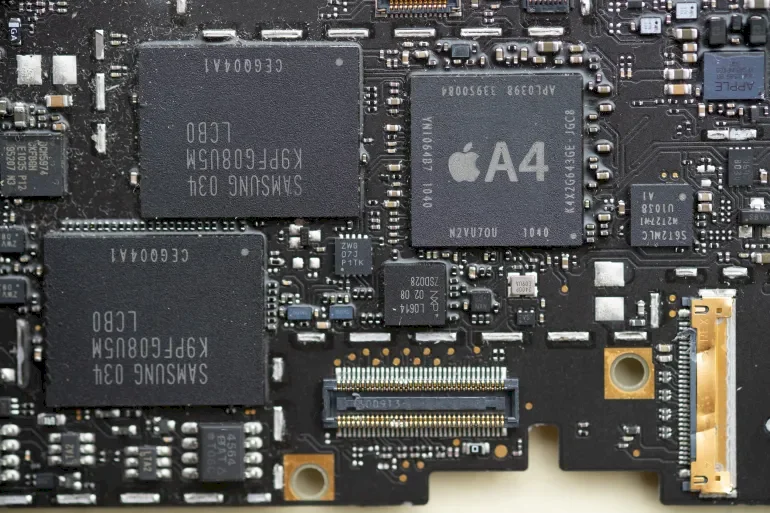
In an article on the Voyenoye Obozreniye military affairs website, the writer explained that the people of Taiwan have mastered the production of electronic chips to such an extent that any military conflict with them would cause worldwide panic.
In this context, the writer considered that the ability to produce semiconductors - efficiently and at low cost - is more important than possessing nuclear weapons, because many can make a bomb if allowed, but not everyone can manufacture a 5-nanometer electronic chip with precision.
The writer cited Russia as an example, noting that it possesses the strongest nuclear arsenal in the world, but it is unable to produce electronic chips at the same level it did 10 years ago.
Fedorov pointed out that if it weren't for the data available in Taiwan, it would have long returned to China, either by force or agreement. However, the United States, according to him, is striving to control the semiconductor industry on the island and is practically prepared to wage a nuclear war with Beijing over this issue.
He mentioned that the example of the Netherlands is noteworthy, as it is the only country in the world that produces modern photolithography machines—exceptionally expensive devices essential for printing electronic chips.
The United States tightly controls who sells these machines and the number of devices sold, according to the writer, which means that the Netherlands is safeguarded against any attack due to the NATO umbrella and the "light shield," thus being doubly secure.
The Disaster Complex
On another front, the writer noted that the essence of the problem for Russia lies in its inability to cut off electricity from Ukraine for four years, despite missile strikes and drone attacks that have led to severe damage or disruption to most thermal power stations and a large part of hydroelectric plants.
However, gas generators deployed by Ukraine in populated areas have significantly contributed to this. When you have four nuclear power plants similar to Chernobyl nearby, few dare to cut off electricity from them.
Instead, Russian forces target high-voltage electrical substations, energy transmission lines, and transformers, and these strikes have forced almost all Ukrainian reactors to reduce their loads and disconnect some from the grid. However, the reactors have not been destroyed.
The writer explains that any direct attack entails the risk of radioactive material leakage, which would immediately turn a local incident into a global disaster with dire consequences for the state's territory, its allies, and its international standing.
Fedorov affirms that losing nuclear energy equates to losing sovereignty, stating that the United States wanted this and forced Europe to purchase its own liquefied natural gas to compensate for the Russian gas supplied via pipelines.
If Washington had wished, according to the writer, it could have left the old world (Europe) without any fuel at all. Thus, nuclear energy is not only environmentally friendly, but it is also independent, unlike coal and gas, where supply and storage mechanisms represent a major weakness.
The writer explains that nuclear power plants operate at base load, not dependent on daily fuel supplies in industrial quantities, with a single load of a reactor core providing power for 12 to 18 months.
While the destruction of infrastructure creates an imbalance, allowing the opponent to cripple gas or coal imports, they cannot disable a nuclear power plant quickly without catastrophic escalation.
This is precisely why Russia has resorted to an indirect pressure strategy, namely attacks on network infrastructure, unlike Ukraine, which the writer describes as practicing "systematic nuclear terrorism" by continuously shelling the Zaporizhia Nuclear Power Plant, despite the risks of radiation to itself.
Prospects for Nuclear Energy
The writer sees global calculations changing as there is an increasing awareness that nuclear energy is not merely an environmentally friendly resource but also a strategic military resource. Therefore, countries that have hesitated to develop nuclear power plants now view it as a "window of opportunity" to achieve independence in an era of hybrid warfare.
Moreover, the shift to small modular reactors is accelerating, as distributed generation reduces concentration risks and facilitates defense, according to the writer.
Additionally, the writer mentions changes in the economic geography of the nuclear fuel cycle, where control over uranium, its enrichment, and reprocessing has become a national security issue comparable to controlling oil.
Source: Russian Press
 Follow the latest Sada News via Google News
Jordanian Army Intercepts 4 Iranian Missiles and 4 Drones

Death of a Moroccan Man During His Arrest in Italy Sparks Calls for Investigation

Due to Trump's Sanctions.. Canada Cancels Joint Ceremony with the US for Bridge Opening

Trump: We will make great progress with Beirut.. Aoun: It is time for Lebanon to be stable

The Lebanese Army Deploys in the South and Comes Under Gunfire; Israel Clarifies

Bezhkian: Directives from the Leader to End the State of No War, No Peace

Meeting Between Aoun and Trump Expected Alongside 'Experimental Areas'
