

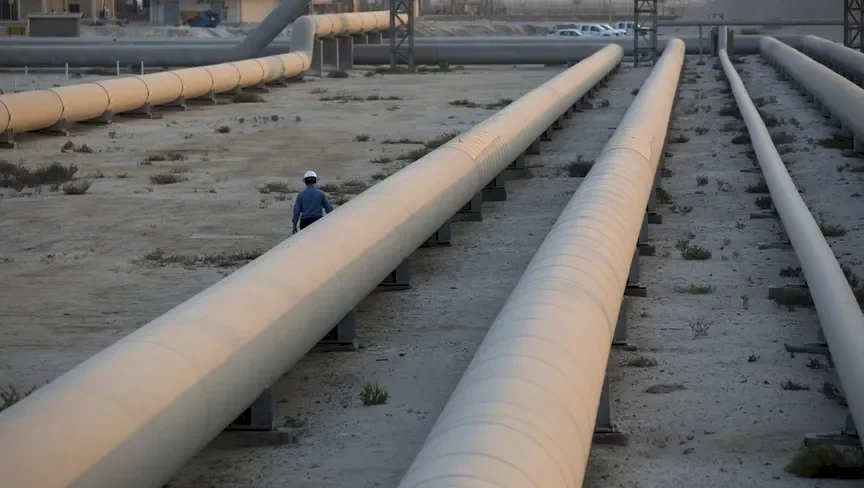
Saudi Arabia: Recovery of Manifa Oil Field and East-West Pipeline from Iranian Attacks
SadaNews - The "Manifa" oil facility and the East-West pipeline in Saudi Arabia have restored their operational capacity after being damaged due to Iranian strikes, according to the Saudi Ministry of Energy.
The statement from the ministry, issued today, clarified that the repair and rehabilitation works at the two facilities have been completed, allowing operations to return to normal levels, reaffirming the readiness of the energy sector's infrastructure and the continuous flow of supplies without interruption, in a move that enhances the stability and reliability of supplies.
This comes at a time when the reliability of supplies has become increasingly important amid regional tensions, reflecting that the swift recovery demonstrates the operational response efficiency and the system's ability to handle emergency challenges, as noted in the statement.
The Most Significant Alternative Route Globally
The Saudi East-West pipeline, which extends from the major oil fields located in the eastern region of the Kingdom to the port of Yanbu on the Red Sea, currently holds great importance for the global crude supplies, as it serves as the most significant alternative route away from the Strait of Hormuz, which has been closed since the outbreak of the Iranian war.
The collapse of negotiations between the United States and Iran without reaching a conclusion has led to a decline in optimism regarding the possibility of a permanent ceasefire being achieved soon, as U.S. Vice President J.D. Vance departed early this Sunday morning from Islamabad, Pakistan, which hosted these negotiations, announcing that Tehran "chose not to accept U.S. conditions."
The announcement last week of a temporary ceasefire and the initiation of a peace process between the two sides mediated by Pakistan resulted in a drop in oil prices, the largest weekly decline since 2020, with West Texas Intermediate crude prices falling by 1.3% to below $97 a barrel. Futures contracts plummeted by about 13.4% over the week, and Brent crude dropped to $95 a barrel.
Crude oil markets have been experiencing significant disruptions since the onset of the Iran war at the end of February, with prices still over 30% higher than pre-conflict levels.
The U.S. Navy is currently attempting to secure a safe shipping route through the strait, away from sea mines and the reach of Iranian missiles, but the outcome of this operation remains unclear.
Saudi Arabia Fully Restores Pumping Capacity
The Saudi Ministry of Energy's announcement regarding the recovery of energy facilities and the East-West pipeline came after a series of prior attacks that led to partial disruptions in the sector's infrastructure, which directly affected production capacity and supplies.
Those attacks caused a reduction in oil production capacity by about 600,000 barrels per day, following the targeting of the "Manifa" and "Khursaniyah" facilities, each losing about 300,000 barrels per day. The damages also affected a pumping station on the East-West pipeline, leading to a loss of approximately 700,000 barrels per day from one of the key alternative export routes to the Strait of Hormuz.
According to the Saudi Ministry of Energy, operational and technical efforts successfully restored full pumping capacity through the East-West pipeline, which is 7 million barrels per day, in addition to restoring the affected production quantities from the "Manifa" field, which amount to 300,000 barrels per day, all within a short period.
As for the "Khursaniyah" field, work is still ongoing to restore full production capacity, and an announcement will be made upon its completion.
Saudi Aramco has temporarily reorganized crude oil shipments by redirecting quantities to the port of Yanbu on the Red Sea to ensure supplies, amid challenges some tankers face entering the Arabian Gulf, following Iran's announcement to close the Strait of Hormuz, which accounts for about one-fifth of global maritime supply.
According to Bloomberg, Saudi oil exports via the Red Sea have remained stable for now, despite the repercussions of the attacks that occurred last Wednesday.
 Follow the latest Sada News via Google News
Dollar Steadies Near One-Week High Amid War Developments

Trump Imposes Tariffs on Canadian Imports... Ottawa Vows to Respond

Oil Prices Drop After Reports of Mediation Efforts Between the U.S. and Iran

Gold Price Rises Supported by Increased Buying Amid Lower Prices

Due to "Hazardous and Counterfeit Products".. Europe Fines "AliExpress" $627 Million

Gasoline Prices Exceed $4 Again in America Amid Resumed War

What was the financial reward for Spain after winning the World Cup?
