

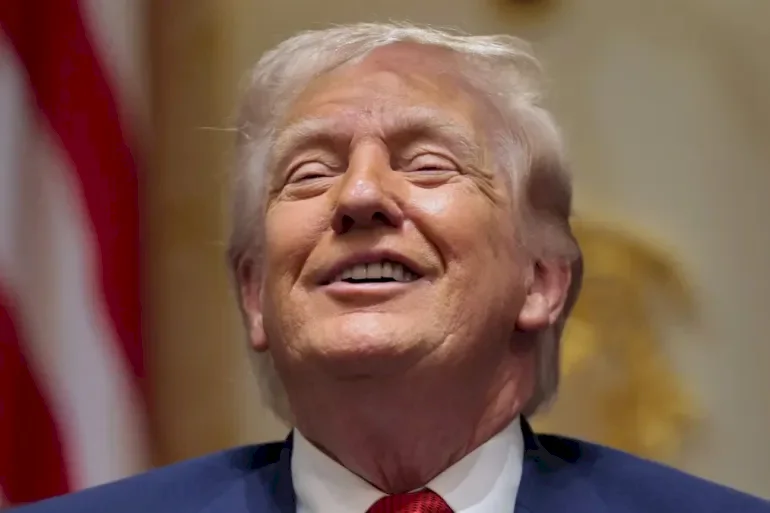
British Writer: Trump’s Amateur Negotiators Will Face Difficulty in Rescuing Him from Humiliation
SadaNews - In an analysis on the British website iPaper, the crisis between the United States and Iran does not appear to be merely a geopolitical confrontation but a decisive testing moment for the prestige of President Donald Trump, as the ceasefire shifts from a potential achievement to an attempt to avoid significant political embarrassment.
The author at the site, Paul Wood, argues that the real challenge lies not in reaching an agreement as much as in "saving Trump from humiliation," given the administration's reliance on a negotiating team that lacks experience compared to their Iranian counterparts.
Wood encapsulates the essence of the impasse with a fundamental question: "Will Iran allow Trump to save face?"
The analysis portrays an unconventional American team that includes Trump’s son-in-law Jared Kushner, his special envoy to the Middle East Steve Witkoff, and his deputy JD Vance, facing "skilled and experienced" Iranian negotiators, according to the author.
Wood believes that this disparity in experience among the delegations reinforces the idea that negotiations could turn into a severe test for the American side, especially with reports indicating that Witkoff's knowledge of the nuclear file is "limited," with some describing it as "superficial."
The author points out that the escalation itself may not have been the result of precise calculations but rather misunderstandings in previous negotiation rounds, which opens the door to a dangerous hypothesis that war may have partially erupted due to a breakdown in negotiation understanding.
In this context, Trump appears in the narrative as he threatens Iran and warns the negotiators before carrying out a military strike that destroyed one of the most important bridges in Iran, which suggests a style based more on exhibition and pressure than on traditional diplomacy, according to the author.
The analysis also highlights the conflicts of interest, especially in the case of Kushner, who has financial ties to Gulf countries directly invested in the course of the conflict, raising an implicit question about who actually influences the American decision?
In contrast, Vance, a former U.S. Marine who served in Iraq, emerges as a figure with a different motivation, having previously expressed his rejection of "perpetual wars," making his success in reaching an agreement a political opportunity, and his failure a multiplied burden.
If he can achieve peace with Iran, this may pave the way for his candidacy in the 2028 presidential elections, thus the negotiations, according to the author, become a battleground where personal calculations intersect with strategic interests.
The author comments on the plans presented by both sides, stating that the gap between them appears deep; Washington demands a complete halt to enrichment and dismantlement of the nuclear program, while Tehran insists on its "sovereign right" and demands lifting sanctions and security guarantees. Between these positions, reaching a comprehensive agreement seems difficult within a short timeframe.
The analysis posits that American military strength has not translated into political superiority, stating that "you can win all the battles yet still lose the war," therefore, the goal is no longer to achieve a clear victory but to avoid a moral defeat in negotiations that may determine not only the future of the conflict but also the image of American leadership itself, according to the author.
 Follow the latest Sada News via Google News
Syrian Foreign Minister Meets with Yasser Abbas in Damascus

Al-Hayya: Our Priority is to Completely End the War and Restore National Unity

A Citizen Martyred by Occupation Forces in Khan Younis

Government Media in Gaza: The Occupation Controls 65% of the Gaza Strip Area

Unusual... The US Embassy Warns Its Citizens About Organized Crime in Israel

Palestinian and Islamic Welcome to the Decisions of the Netherlands and Belgium to Ban Set...

Tehran Warns Against Targeting 'Mount Afs' as US Strikes Intensify
