

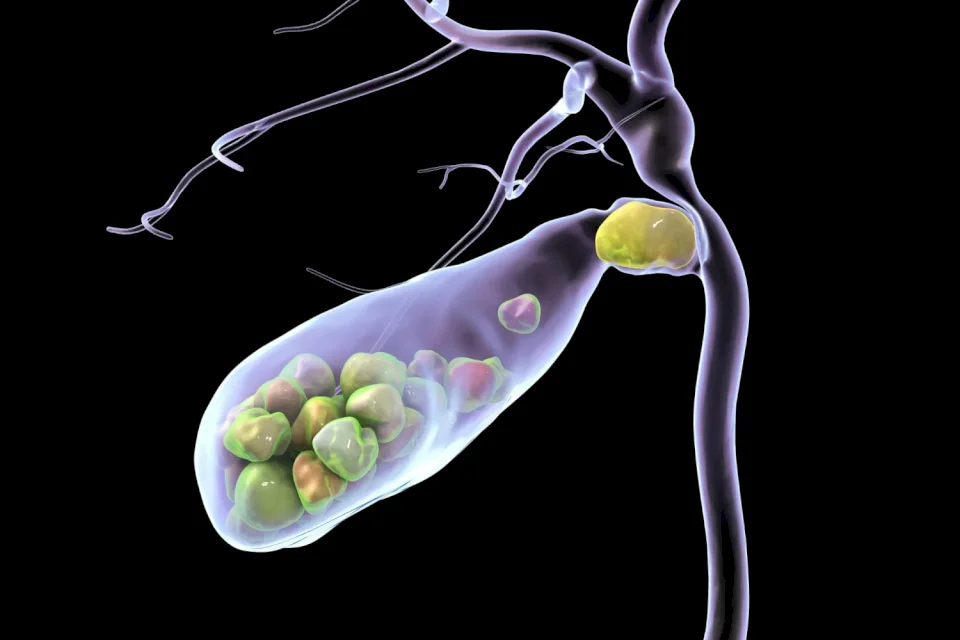
Gallstones... How They Form and What Are the Methods of Diagnosis?
SadaNews - Recent study results indicate that high sugar consumption increases the risk of gallstones in adults. According to a publication in the March 26 issue of the journal "Scientific Reports," an analysis of data from the National Health and Nutrition Examination Survey (NHANES) in the United States showed that adults consuming larger amounts of sugar have a higher likelihood of developing gallstones, adding new evidence that daily dietary habits may play a significant role in gallbladder health.
In detail, data from 8,975 participants in the National Health and Nutrition Examination Survey from 2017 to 2023 was analyzed, and it was noted that every 100 grams increase in daily total sugar consumption is associated with a 41% increased risk of gallstones. These results highlight that excessive sugar intake is a potential modifiable risk factor. However, further longitudinal and analytical studies are still needed to confirm the causal relationship and clarify the underlying biological mechanisms.
Gallbladder Diseases
Gallbladder diseases are a widespread and increasing health issue globally. For instance, statistics from the United States report that over 20 million Americans (6.3 million men, 14.2 million women) aged 20 to 74 suffer from gallstones. Gallstones are more common among women, affecting more than 25% of women over the age of sixty. Approximately 500,000 individuals in the United States undergo gallbladder removal surgery annually due to this condition. Worldwide, cases of gallbladder and biliary diseases have risen to over 251 million by 2021, with an increasing trend in subsequent years.
Gallstones are solid clusters that indeed resemble stones and form abnormally within the gallbladder. Fortunately, most individuals with gallstones do not experience bothersome symptoms and do not require treatment for them. However, in some cases, gallstones can cause pain or other complications, and treatment becomes necessary. This is usually done by removing the gallbladder along with the stones.
Scientific Facts
As it is a common health issue, here are the following facts:
1. The biliary system consists of the liver, gallbladder, and bile ducts. The liver produces bile, which is stored in the gallbladder. When food reaches the small intestine, the gallbladder releases bile into the bile ducts to flow into the digestive tract and mix with food.
Anatomically, the gallbladder is a pear-shaped sac-like organ about 7.5 to 15 cm in length, located in the upper right of the abdomen, under the liver, directly below or behind the lower edge of the right rib cage. The gallbladder divides into three main anatomical parts: the fundus, body, and neck. Its primary function is to store and concentrate bile, a brownish-green liquid produced by the liver. The gallbladder has a muscular wall that allows it to contract (to empty its contents) and relax (to accommodate bile received from the liver).
The bile ducts converge to form the common bile duct. The cystic duct connects the neck of the gallbladder to the common bile duct, where it meets the pancreatic duct before draining into the small intestine. This structure is essential for understanding gallstone movements and their formation.
2. The liver produces approximately 600 milliliters of bile daily. Bile's function includes carrying a set of wastes and chemicals that the body wants to excrete via the liver through feces. Additionally, bile contains high amounts of dissolved cholesterol that the body aims to expel. Bile is crucial for digestive processes, playing a vital role in digesting and absorbing fatty foods, as well as in assimilating important vitamins classified as fat-soluble (vitamins: A, K, D, and E). The gallbladder relaxes between meals, allowing bile to flow in for storage and concentration. When food is consumed, the small intestine senses the fat content, prompting contraction of the gallbladder to release some of its bile contents into the intestine. After a few hours, the gallbladder relaxes and begins to store bile again. Bile gives stool its natural brown color by breaking down bilirubin. A lack of bile in the food mixture in the gut, often caused by blockages in the bile ducts or liver diseases or gallstones, leads to pale or clay-colored or white stools.
Gallstones
3. Gallstones are essentially hardened deposits from one or a combination of components found in bile. Since bile rests longer in the gallbladder, the chances of gallstone formation are higher there. Stones range in size from grains of sand to golf balls or even as large as the gallbladder itself. However, the vast majority are smaller than 2.5 cm. There are two main types: cholesterol stones (yellowish) and pigment stones (dark brown/black, formed from bilirubin). The type of gallstone is significant as cholesterol stones respond better to non-surgical treatments compared to pigment stones. Cholesterol stones make up about 80% of gallstone types, while pigment stones account for about 20%.
4. Common conditions accompanying gallstone formation include elevated cholesterol levels in bile, high bilirubin levels, or insufficient emptying of the gallbladder over long periods. However, medical experts do not conclusively understand why gallstones form, as some individuals may experience an abnormal rise in cholesterol and/or calcium concentrations in bile without the formation of gallstones. According to medical sources, several factors increase the risk of developing gallstones:
- Gender: Gallstones are more common in women.
- Age: The risk of gallstones increases with age. This condition is quite rare in children but gradually becomes more common over time, particularly after the age of forty.
- Family history and genetics: Gallstones are more prevalent among some families, indicating that genetics may play a role in gallstone formation.
- Other factors: Certain conditions may raise the risk of gallstones, including pregnancy, the use of estrogen-containing medications (such as birth control pills), obesity, rapid weight loss (including patients who undergo weight loss surgeries), lack of physical activity, diabetes, sickle cell anemia (and other conditions related to rapid red blood cell destruction, such as in patients with mechanical heart valves), liver cirrhosis, or severe liver scarring.
5. Gallstones do not only form in the gallbladder itself, but they can also develop in the bile duct, known as "choledocholithiasis." Approximately 10-15% of individuals with gallstones also have stones in the bile duct. The passage of gallstones from the gallbladder into this duct is affected by several factors, including stone size and quantity, as well as the anatomy of the biliary system. Larger stones are more likely to cause obstruction, whereas smaller stones may pass more easily.
The presence of stones in the bile duct can lead to severe health issues if not diagnosed and treated promptly, as they may obstruct the normal flow of bile, causing serious local and systemic complications, such as infection, jaundice, and pancreatitis. To illustrate, gallstones can get lodged in several locations while moving through the biliary system.
Common sites for this include:
- The cystic duct, where stones can obstruct and cause cholecystitis.
- The common bile duct, where stones can cause jaundice and may lead to infection or pancreatitis.
- The Ampulla of Vater (where the bile duct meets the pancreatic duct), which can cause pancreatitis.
Thus, the location of the stones affects symptoms and the required treatment.
Complications and Diagnosis
6. Untreated gallstones can lead to severe health problems, either in the gallbladder or other parts of the digestive system. The most significant include:
- Cholecystitis: This is a common issue resulting from untreated gallstones. It occurs when a stone blocks the cystic duct, leading to infection and inflammation. Symptoms include severe pain, fever, and nausea. If cholecystitis is not promptly treated, it can worsen, leading to gangrene or a perforation of the gallbladder.
- Cholangitis: Gallstones in the bile duct can induce cholangitis, a serious infection that may lead to sepsis, a severe infection that spreads through the bloodstream. Symptoms include jaundice, fever, and pain.
- Pancreatitis: Gallstones can also cause pancreatitis. This is extremely painful and can be life-threatening. Symptoms include severe pain, nausea, and vomiting. Seeking immediate medical assistance is essential to manage symptoms and prevent complications.
- Jaundice: This is another problem resulting from untreated gallstones. It is characterized by the yellowing of the skin and eyes due to bile duct obstruction. Jaundice can be an indication of a serious issue and requires medical examination. Treatment depends on the underlying cause of jaundice and may include the removal of gallstones or other interventions.
7. Abdominal ultrasound is often sufficient to diagnose the presence of gallstones. However, locating the gallstones within the branches of the bile duct requires a combination of advanced imaging techniques and precise laboratory tests. These include:
- Ultrasound: Often the first option because it is safe and can detect stones and blockages.
- Magnetic Resonance Cholangiopancreatography (MRCP): Provides clear images of the bile and pancreatic ducts, helping to identify stones and other issues.
- Endoscopic Ultrasound (EUS): Combines endoscopy and ultrasound to obtain detailed images of the bile duct and surrounding areas.
- Laboratory tests: Include liver function tests and enzyme levels, bilirubin levels, and white blood cell count.
By using medical imaging and laboratory tests together, doctors are able to accurately identify gallstones in the bile duct and then develop the optimal treatment plan.
Multiple Methods for Treating Gallstones
Doctors at "Mayo Clinic" state that most individuals with gallstones that do not cause symptoms will not require treatment. Your doctor will determine whether gallstone treatment is based on symptoms and diagnostic test results.
Your doctor may advise you to be aware of symptoms of gallbladder stone complications, such as severe pain in the upper right side of the abdomen. If signs and symptoms of gallstones appear in the future, you may need treatment.
In general, treatment options for gallstones include either surgery or medication for breaking down the stones.
Mayo Clinic doctors say: "Your doctor may recommend laparoscopic gallbladder removal surgery due to the recurrence of gallstones. Once your gallbladder is removed, bile will flow directly from the liver to the small intestine instead of being stored in the gallbladder. During the procedure, special surgical tools and a small video camera are inserted through incisions in your abdomen while performing laparoscopic gallbladder removal. Your abdomen is inflated with carbon dioxide gas to create space for the surgeon to work with the surgical tools.
You do not need the gallbladder to live, and gallbladder removal will not affect your ability to digest food, but it may cause temporary diarrhea.
Doctors at Cleveland Clinic add: "Cholecystectomy is the only reliable long-term solution for gallstones. It is one of the most common surgeries in the world, usually performed laparoscopically. You can live healthily without a gallbladder, as bile flows directly from the liver to the small intestine.
Sometimes, some individuals needing gallstone treatment may not be in good health for gallbladder removal surgery. In such cases, cholecystostomy may be an alternative. This simple procedure involves inserting a catheter into the gallbladder to drain bile, allowing for the removal of the stones inside it.
Regarding medications for dissolving gallstones, Mayo Clinic doctors state: "Oral medications may help dissolve gallstones. However, it may take months or years for the treatment to dissolve gallstones in this manner, and stones may recur if you stop taking the treatment.
Sometimes, medications may be ineffective. Gallstone medications are rarely used and are limited to individuals who cannot undergo surgery. Cleveland Clinic doctors explain that "drugs such as ursodiol and chenodiol only work with small cholesterol stones that have not caused complications yet. Dissolving them may take months or years, and they often return. This method is not practical for treating gallstones in most people. However, there may be limited cases where medications are useful as a temporary or preventative measure. If you are not a suitable candidate for gallstone surgery, your doctor will discuss recommendations with you."
 Follow the latest Sada News via Google News
After Deschamps' Departure... Zinedine Zidane Tops the Candidates to Lead France

Mbappe Surpasses Messi and Becomes the All-Time Top Scorer in the World Cup

England Defeats France and Achieves Largest World Cup Achievement Since 1966

Messi Refused to Play for Spain and Missed 3 World Cups

Publishers Sue Google for Allegedly Using Books to Train Artificial Intelligence

Google Expands Capabilities of Google Search Console to Support Social Media Accounts

The Mediterranean Table... An Ancient Diet Revealing Its New Secrets for Health and Longev...
