

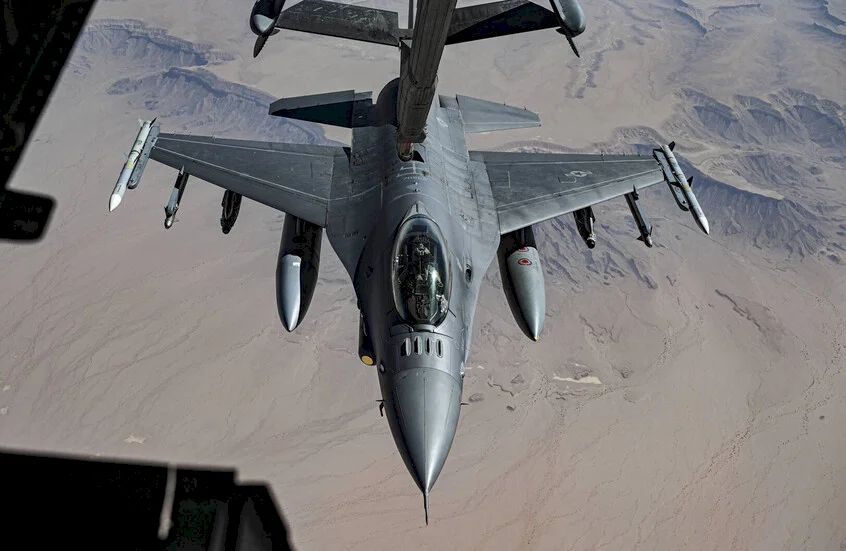
American Escalation Using B-1 Bomber Against Targets of the Iranian Revolutionary Guard
SadaNews - American officials reported that the U.S. military used a long-range strategic bomber, the B-1, to carry out strikes targeting sites affiliated with the Iranian Revolutionary Guard, indicating an expansion of operations.
According to the American website "Axios", this marks the first use of this type of bomber since confrontations with Iran resumed about 12 days ago.
The website noted that the use of B-1 bombers, capable of carrying dozens of missiles or around 24 bombs weighing 2,000 pounds, signals a significant escalation in the scope of the American military campaign.
These bombers are characterized by their ability to fly at supersonic speeds at low altitudes, carrying the largest combat load among American bombers.
According to available data, the bomber launched from a base in the United Kingdom, while U.S. Central Command (CENTCOM) has not officially announced this mission in its statement regarding the strikes executed on Tuesday, which referred to targeting Iranian military operation centers, naval capabilities, aircraft hangars, drone storage facilities, and logistical structures, aimed at undermining Tehran's ability to threaten commercial navigation in the Strait of Hormuz.
It remains unclear what specific targets the bomber struck or the effectiveness of this strike compared to previous attacks. The United States had previously used B-1 bombers in operations targeting missile bases, command centers, and air defense systems.
Despite the escalation of American strikes, Iran has shown no change in its position regarding the Strait of Hormuz and continues to carry out attacks against American bases in the region, while estimates within the U.S. Department of Defense vary regarding the extent of the decline in Iranian military capabilities in the vicinity of the strait.
In a related context, U.S. President Donald Trump threatened to bomb infrastructure inside Iran, including bridges and power stations in Tehran, if attacks on ships in the strait continued, while Tehran retaliated by threatening to target infrastructure in Gulf countries allied with Washington.
In a related development, the Houthis launched attacks on Saudi ships in the Red Sea for the first time since announcing a blockade on Saudi ports, in a move believed to be driven by Iran to open a new front and pressure international energy routes, according to "Axios", prompting several commercial vessels to change their routes to avoid the Bab al-Mandab Strait.
Meanwhile, diplomatic efforts mediated by Qatar continue between the United States and Iran and the Sultanate of Oman to reach an agreement that would reopen the Strait of Hormuz and halt the escalation, although regional sources indicate that Tehran has not yet agreed to the proposed proposals.
 Follow the latest Sada News via Google News
American Escalation Using B-1 Bomber Against Targets of the Iranian Revolutionary Guard

Iranian Revolutionary Guard Targets Al-Adairi Camp and Ali Al-Salem Air Base in Kuwait

Massive Fire in Spain Forces Residents of 34 Villages to Evacuate

Public Prosecution in Damascus Demands Death Penalty for Wisam Al-Assad

Saudi Arabia: Targeting of Tanker in the Red Sea and Safety of Its Crew

Jordanian Army Intercepts 4 Iranian Missiles and 4 Drones

Death of a Moroccan Man During His Arrest in Italy Sparks Calls for Investigation
