

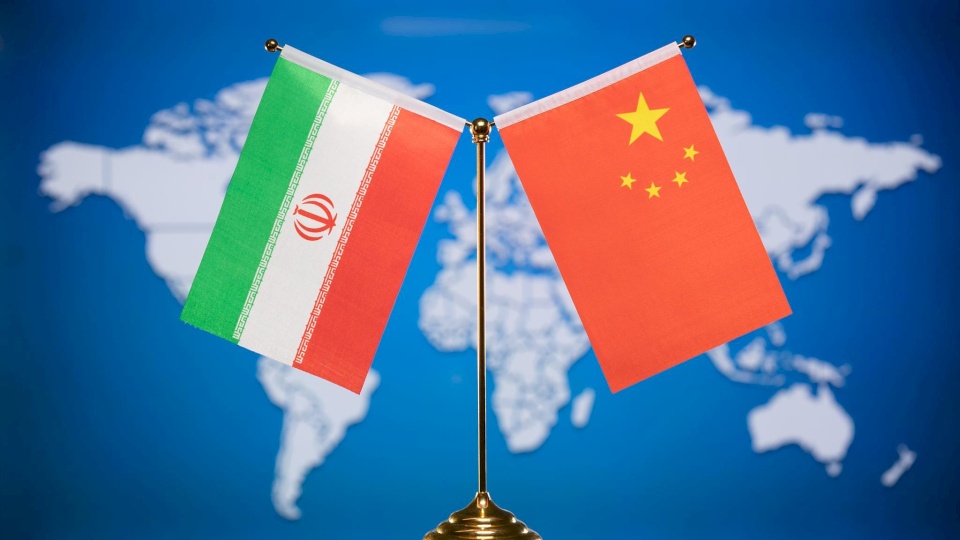
The Riddle of the Hesitant 'Dragon': Why Doesn't China Intervene in the Iran War?
SadaNews - The US-Israeli war against Iran has entered its second week without any end to the military escalation in sight. Despite Tehran's resilience and its ability to absorb the initial strike that seemingly took the Americans by surprise, the balance of power in this war remains heavily tilted. The vast disparity in military capabilities between Tehran on one side and Washington and Tel Aviv on the other is glaringly evident, leading to questions regarding Iran's allies who might provide decisive assistance that could alter the course of the war.
Attention is often directed towards China as the most prominent candidate capable of placing Iran in a better political and, more importantly, military position. Indeed, there were some initial indicators of Beijing's desire to support its Iranian ally and strengthen its position ahead of the war. Just hours before the start of the US-Israeli attacks, the "Middle East Eye" reported, citing unnamed officials, that China had delivered offensive and defensive weapons to the Islamic Republic to bolster its military capabilities.
According to the unnamed officials quoted by "Middle East Eye", Beijing had already sent suicide drones and air defense systems to Iran and provided it with surface-to-air missile batteries following the 12-day war in June 2025, during which the US bombed three Iranian nuclear sites. However, after the outbreak of fighting and the assassination of Iranian Supreme Leader Ali Khamenei, China's position became markedly timid. Foreign Minister Wang Yi condemned the attack as a violation of Iran's sovereignty and international norms, describing Khamenei's assassination as "unacceptable." He indicated that China supports Iran's efforts to maintain its security, territorial integrity, and national dignity, calling for efforts to de-escalate. Nevertheless, Beijing has refrained from offering any publicly announced material support to Tehran since then.
This position aligns perfectly with China's diplomatic legacy; one could say that any other stance would have represented a stark departure not only from the traditions of Chinese-Iranian relations but also from Beijing's historical approach to foreign policy. China has repeatedly refrained from making any direct security commitments to Tehran, aligning with its rejection of formal alliances and what it terms "Bloc mentality" in foreign policy.
China's response was similarly cautious during the 12-day war in June 2025, limiting its response to issuing statements criticizing US and Israeli actions. If Beijing had provided weapons or any other military assistance to Tehran, it would have exposed itself to financial and political risks, the least of which would be US sanctions, jeopardizing China's real priorities centered on its economic interests. In short, this war once again demonstrates that China's relationship with Iran is less important than its internal economic stability and its compatibility with the United States.
China and Iran: Limits of the Relationship
At first glance, the relationship between China and Iran appears to be a solid alliance. The two countries signed a comprehensive 25-year strategic partnership agreement in 2021, and China is considered a lifeline for the Iranian economy, which has been suffering from international sanctions for many years. China purchased more than 80% of the oil Iran exported last year, accounting for 13.5% of China's total seaborne oil imports. Not only that, but China has also pulled Iran out of its international political isolation in recent years by granting it membership in the BRICS group and the Shanghai Cooperation Organization.
Iran imports goods from China worth approximately $18 billion and exports goods worth around $14.5 billion to it, according to World Trade Organization data for 2024. Therefore, China constitutes a fundamental pillar for the Iranian economy. Trade with China accounts for over a quarter of Iran's total trade, and additionally, Chinese energy companies actively participate in offshore oil extraction from Iranian waters.
These close economic ties have reflected in the form of security and military cooperation between the two countries during non-crisis and wartime. Following the 12-day war, Beijing and Tehran expanded their security cooperation agreements, including intelligence sharing and coordination to counter potential external threats, as well as China supplying Iran with significant weaponry. However, this support often diminishes during wartime, replaced by standard Chinese diplomatic positions that emphasize respect for Iran's sovereignty and reject military adventures against it, without embroiling itself in the throes of war.
According to "The Diplomat", there is another aspect of Chinese-Iranian relations that does not usually receive enough attention, which is the surveillance and drone technologies China provides to Iran. Chinese companies have played a significant role in developing Iran's surveillance infrastructure. The Chinese company "Tiandy" has provided the Iranian regime with equipment and training in this area, and this technology has played a role in dealing with recent protests in Iran and in the regime's ability to maintain its cohesion and grip internally. Additionally, Chinese companies contribute significantly to supplying Iran's drone industry with technology and equipment.
This leads us to the "structural imbalance" in Iranian-Chinese relations, characterized by a lack of balance between the two sides, as Iran relies heavily on China while China needs Iran only to a minimal extent. This is evident in trade; since 2019, China has become Iran's primary export destination, and since 2014, it has been Iran's largest source of imports. Conversely, Iran accounts for less than 1% of China's total global trade. From these figures, we can see how China serves as an economic lifeline for Iran, whereas Iran does not hold the same significance for China.
Moreover, Chinese investments in neighboring Gulf countries far exceed its investments in Iran. In 2024, China's total trade with the six Gulf Cooperation Council countries amounted to about $257 billion, while the bilateral trade between China and Iran did not exceed $14 billion that same year, according to Chinese government data. This means that Gulf states, some of which have "unstable" relations with Tehran, are more important commercially for China.
There is also a deep impression among Chinese officials and academics that cycles of violence and instability in Iran indicate it is a high-risk country for investment, and that these recurring cycles of unrest discourage China from placing Iran in the rank of its most important strategic allies in the region. The most stark disagreement between Beijing and Tehran lies in the nuclear issue, as Beijing does not welcome Iran's possession of nuclear weapons, but advocates a peaceful resolution to the matter, evidenced by its participation in the agreement reached in 2015 regarding Tehran's nuclear program, from which the United States later withdrew.
Beijing's Priorities
In summary, during times of war, China orchestrates its moves independently of the hypothetical assumptions surrounding its "reluctant" alliance with Iran. At that moment, Beijing's real concern with the war itself lies in its impact on its direct interests, primarily energy security, as approximately one-third of China's oil imports and about a quarter of its natural gas imports pass through the Strait of Hormuz, which is "partially at least" closed due to the war.
Last year (2025), China imported 13.5% of its crude oil from Iran, and 36.8% from other Gulf producers reliant on the strait, making Beijing's primary interest the cessation of the war and stability in navigation, regardless of how that occurs. However, China is not prepared to intervene (militarily) more than necessary to achieve this goal, relying instead on the hedge plans it has put in place to deal with these disruptions, including its large oil reserve stock.
Over the past years, Beijing has successfully stored at least 1.1 billion barrels of oil, sufficient to cover three months of imports. As Victoria Hertig, an analyst at "Geopolitical Futures", indicates, China has diversified its oil portfolio depending on Russia, which now accounts for about 20% of China's crude oil imports. Amid renewed unrest in the Middle East, it is likely that Beijing's motivations to invest in long-term oil projects such as the "Power of Siberia 2" project, a proposed 2,600-kilometer pipeline to transport 50 billion cubic meters of natural gas annually from Russian Yamal fields to China via Mongolia, will increase.
On another note, it is evident that China is currently seeking to avoid any obstacles that could arise regarding its upcoming negotiations with the United States and the anticipated summit between Presidents Trump and Xi Jinping, expected to be held in early April. It seems that the United States shares this priority. To avoid provoking Beijing ahead of the summit, the Trump administration postponed the announcement of a $13 billion arms package for Taiwan, including Patriot missile defense systems and other advanced surface-to-air missile systems, and President Donald Trump eased some restrictions on semiconductor exports to Beijing, as reported by "The New York Times".
Could China Intervene in the War?
Beyond direct interest calculations, China does not present itself globally as an ally that can decisively move if its distant allies face an existential threat. Beijing may provide diplomatic and economic support to its allies, and perhaps some military exports, but it never gets involved in providing security guarantees, which always positions it as a lesser actor in global conflicts.
China has failed to take any serious steps when the United States "kidnapped" its ally, former Venezuelan President Nicolás Maduro, and when the US took control over the Venezuelan oil sector in which China invested billions of dollars. In last June's war when Iran was attacked by Washington and Tel Aviv, Beijing took no serious positions other than some criticisms of Israel regarding its actions in the Gaza Strip and other criticisms of Washington for its threats against Iran, as observed by the British think tank "Chatham House".
The think tank goes further to hypothesize that China may tolerate some US and Israeli strikes against Iran for two primary reasons: the first is its deep opposition to Iran's possession of nuclear weapons, and thus it would not be adversely affected by American and Israeli tactical strikes that might ultimately lead to a diplomatic breakthrough and a stable regional settlement for years. The second reason is that a weakened Iranian regime, as long as it does not completely collapse or is replaced by a pro-Western government, is beneficial for China; as the increasing pressure on Iran would heighten Tehran's dependence on Beijing, the more the pressure campaign on Iran increases, the more Tehran becomes reliant on China technologically, politically, and economically.
There is another aspect concerning geographical proximity that governs China's security interventions and military assistance. Hamid Reza Azizi, a Middle East security affairs analyst at the International Institute for Strategic Studies in Berlin, states that China clearly refrained from seriously defending Iran during the June 2025 war, and it is likely that it will exhibit the same passivity in the current war. Azizi notes that this Chinese passivity stands in stark contrast to what China does with other countries in its direct neighborhood. During last year's clashes between India and Pakistan over Kashmir, China provided substantial military assistance to its key ally Pakistan, which is something that China does not consider doing with the same seriousness concerning Iran. Azizi concludes that pressure on Iran and strikes against it do not harm China in the ways some might imagine.
Therefore, it is unlikely that Beijing will send troops or directly engage in any conflict according to its current military doctrine and cautious strategy. However, Beijing is still capable of supporting its allies in its own distinctive way. Reports from military sources indicate that Iran wishes to acquire advanced fifth-generation aircraft from China and HQ-9 air defense systems, thus keeping its economic and military role significant for Iran, even if it lacks a direct strategic impact in the battle.
In conclusion, one can succinctly argue that China is not ready to intervene militarily to save Iran. First, because Iran does not represent the red line for China that compels it to act, and second, because its calculations suggest that US strikes may be painful but are unlikely to lead to regime change in Iran. On the other hand, China's global strategy does not include direct intervention to assist its allies in wartime except in rare cases, likely not including scenarios where the conflict is distant from its territory and maritime domain or where the adversary is the United States, with which Beijing seeks to avoid direct confrontation on any issue, including the long-standing Taiwan file.
Even critical Chinese arms imports related to the battle remain confined to the immediate neighborhood, as evidenced by the recent India-Pakistan war and the close relations between China and North Korea, while the Middle East remains subject to China's calmer calculations, where the economic dimension plays a more critical role, as oil flows and investments are more valuable than a risky adventure to protect an Iranian ally.
Source: Al Jazeera
 Follow the latest Sada News via Google News
Jordanian Army Intercepts 4 Iranian Missiles and 4 Drones

Death of a Moroccan Man During His Arrest in Italy Sparks Calls for Investigation

Due to Trump's Sanctions.. Canada Cancels Joint Ceremony with the US for Bridge Opening

Trump: We will make great progress with Beirut.. Aoun: It is time for Lebanon to be stable

The Lebanese Army Deploys in the South and Comes Under Gunfire; Israel Clarifies

Bezhkian: Directives from the Leader to End the State of No War, No Peace

Meeting Between Aoun and Trump Expected Alongside 'Experimental Areas'
