

US Intelligence Report: Attack on Iran May Not Overthrow Authorities
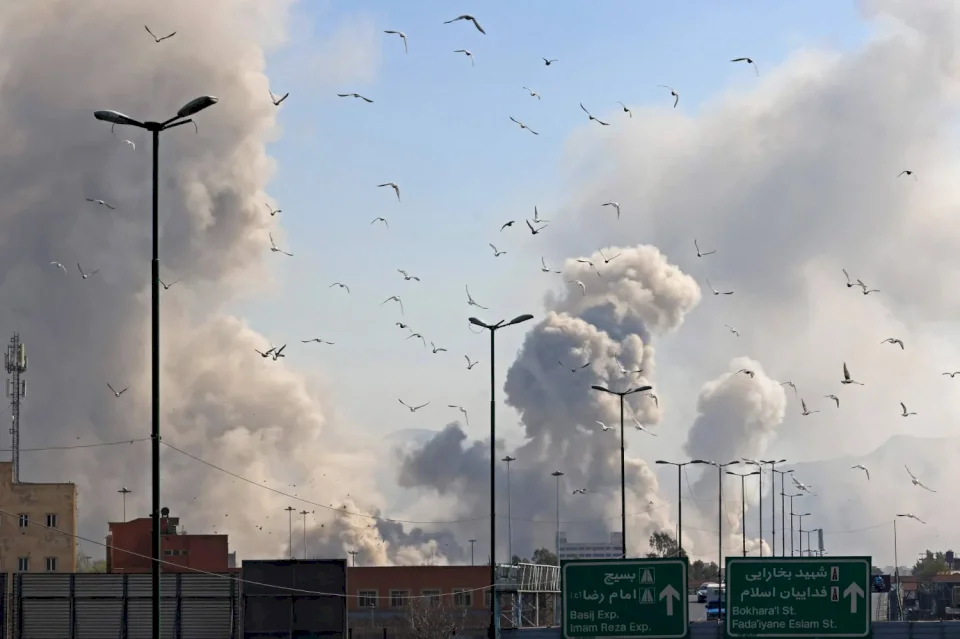
SadaNews - A confidential report prepared by the US National Intelligence Community revealed that even a wide-ranging military attack on Iran led by the United States is unlikely to result in the overthrow of the entrenched military and religious establishment in Tehran. This assessment highlights the complexities of any prolonged military campaign, at a time when President Donald Trump's administration speaks of a war it says has "only just begun."
According to three individuals familiar with the report's content, who spoke to the Washington Post, the findings raise doubts about Trump's announced plan to "cleanse" the Iranian leadership structure and install a ruler of his choosing.
The report, completed about a week before the US and Israel's war began on February 28, addressed scenarios for political succession in Iran, whether in the case of a limited campaign targeting regime leaders or a broader attack on the leadership and governmental institutions. In both scenarios, intelligence assessments concluded that the religious and military establishment in Iran would respond to the death of Supreme Leader Ali Khamenei by following protocols designed to maintain continuity of power.
The report also deemed the likelihood of the divided Iranian opposition coming to power as "unlikely."
The National Intelligence Community consists of seasoned analysts who provide confidential assessments representing the conclusions of the eighteen US intelligence agencies.
The military operations have rapidly expanded, extending eastward to include maritime operations with submarines in the Indian Ocean and westward to missile confrontations near Turkey, a NATO member.
White House spokesperson Anna Kelly stated that the goals of the "Epic Fury" operation are clear, including "destroying Iranian ballistic missiles and their production capabilities, dismantling the Iranian navy, ending Tehran's ability to arm its proxies, and permanently preventing it from acquiring nuclear weapons." She added that "the Iranian regime is facing complete destruction."
The doubts of US intelligence agencies regarding the Iranian opposition's ability to seize power have been referenced in previous reports by the New York Times and Wall Street Journal, but the involvement of the National Intelligence Council and its analyses of the limited and broader attack outcomes had not been disclosed before.
Iran expert and Vice President of the Brookings Institution, Suzanne Maloney, stated that the council's assessment of the regime's institutions remaining in place is based on deep knowledge of Iran's nature, noting that the evaluation "appears to be grounded in an accurate understanding of the Iranian regime and its institutions and mechanisms that have been entrenched over many years."
The report does not seem to address other possible scenarios, such as sending American ground troops into Iran or arming Iranian Kurdish opponents to ignite an internal rebellion.
Currently, the power transition process in Iran, as predicted by the report, seems to have already begun, but under the pressure of the intense air and naval campaign launched by the US and Israel.
The decision to officially choose the new Supreme Leader falls to the Assembly of Experts, a powerful religious body, while the Iranian Revolutionary Guard and security agencies play a significant role in this process.
There is widespread speculation about the possibility of choosing Mojtaba Khamenei, the son of the late leader, although no official announcement has been made so far. Reports indicate that the Revolutionary Guard supports his candidacy, but he faces opposition from other influential figures, including Ali Larijani, the Secretary of the Supreme National Security Council of Iran.
As the war enters its second week, Trump continues to demand "unconditional surrender" from Iran, hinting at his desire to play a role in selecting the next Iranian leader. He told reporters that Mojtaba Khamenei is "incompetent" and "weak," asserting that he does not want Iranian leaders who might rebuild the country's nuclear and missile infrastructure.
Trump added: "We want them to have a good leader. We have some people who I think could do the job well."
In contrast, Iranian Parliament Speaker Mohammad Baqer Qalibaf rejected the idea that Trump could have any role in appointing the next Iranian leader, asserting that "the fate of Iran will be decided solely by the Iranian people."
Current and former US officials see no signs yet of a widespread popular uprising within Iran or major divisions within the government or security agencies that could lead to a regime change.
Experts point out that Trump's ability to impose political outcomes in Iran remains limited as long as the religious and military establishment remains cohesive. Holly Dagres, a researcher at the Washington Institute for Near East Policy, stated that "submitting to Trump contradicts everything that the Iranian regime leaders believe, as their ideological approach is based on resisting American influence."
Maloney added that the Iranian regime still possesses the ability to assert control within the country, even if its power to project influence externally has diminished, noting that "there is no other force within Iran capable of confronting what remains of the regime's authority."
 Follow the latest Sada News via Google News
Two Injured by Occupation Forces, One Seriously, and Another Due to Settler Attack West of...

Artificial Intelligence Grants Israeli Drones the Ability to Generate Offensive Targets in...

Netanyahu Delays Voting on Agreement with Lebanon after Hezbollah's Rejection

Martyrs and Injured in Ongoing Israeli Strikes on Lebanon, Hezbollah Continues Its Respons...

Martyr and Injuries in Israeli Shelling on Al-Mawasi, Khan Younis

Settler Attacks: Martyr and Arrests in Various Areas of the West Bank

Al-Hayya Receives a Phone Call from Araqchi and They Discuss the Latest Developments
