

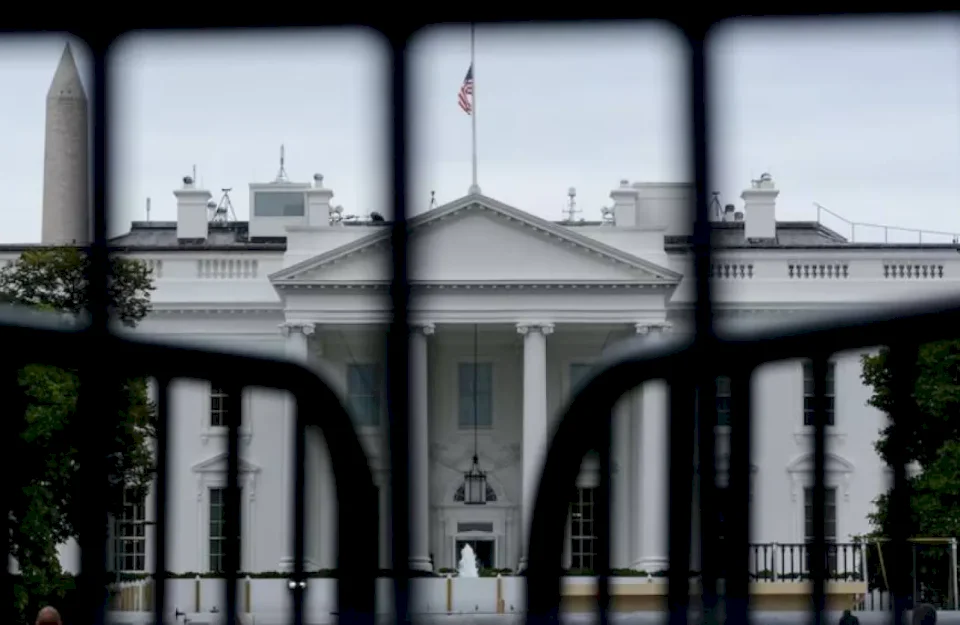
Emergency Meeting at the White House to Increase Weapons Production
SadaNews - The administration of U.S. President Donald Trump is planning to hold a meeting with senior executives from the largest military manufacturing companies to discuss "accelerating weapons production" following the recent U.S.-Israeli attack on Iran.
Reuters reported from five sources described as "knowledgeable" that the meeting, scheduled for next Friday at the White House, comes at a time when the U.S. Department of War (the Pentagon) is working on "replenishing stocks after military operations in Iran and other areas."
The meeting underscores the urgent need felt by Washington to bolster its weapons stockpile after the U.S. military operation in Iran consumed large quantities of ammunition, according to Reuters.
The sources, who requested anonymity, stated that companies such as Lockheed Martin and RTX, the parent company of Raytheon, along with other key suppliers received invitations to attend the meeting, anticipating that the U.S. administration will focus on "urging defense companies to move faster to increase production."
One source explained that the White House meeting comes at a time when Deputy Secretary of Defense Stephen Fineberg is leading efforts for the Pentagon to request a supplemental budget of about $50 billion, likely to be obtained by Friday.
He added that this budget would "cover the costs of replenishing the weapons used in recent conflicts," noting that this figure is preliminary and subject to change.
Efforts to increase weapons production have intensified following the recent U.S. attack on Iran, where Raytheon, the manufacturer of Tomahawk missiles, signed a new agreement with the Pentagon to eventually ramp up production to 1,000 missiles per year.
Currently, according to Reuters, the Pentagon plans to buy 57 of these missiles in 2026 at an average cost of $1.3 million each.
Last Monday, Trump posted on his Truth Social platform that the U.S. stockpile of mid-range ammunition is at its highest level, and that the high-end ammunition is at a good level but perhaps below expectation, and efforts are underway to increase it, affirming his country's ability to continue the war at the same pace indefinitely.
The United States spent an estimated $779 million during the first 24 hours of its attack on Iran, which began last Saturday morning, according to estimates by Anadolu Agency, while estimates published by The Wall Street Journal indicated that the military buildup preceding the war on Iran, which included repositioning aircraft and deploying more than 12 warships to the region, cost $630 million.
According to the Center for a New American Security, the daily operational cost of a strike carrier group, such as the USS Gerald Ford, is approximately $6.5 million, while costs associated with equipment losses are recorded, as at least three U.S. fighter jets were downed in Kuwait on Monday.
A report in the British newspaper "The Times" concluded that the ongoing war is extremely costly, even with a U.S. defense budget of $1 trillion for 2026, indicating that America's biggest concern is maintaining a sufficient stockpile of ammunition to wage a short or medium-term war without jeopardizing its reserves.
The newspaper noted that the continuation of the war on Iran for 4 to 5 weeks, as stated by President Donald Trump, could exhaust the key weapons stockpile that plays a crucial role in this war.
Since the start of the Russian-Ukrainian war in 2022 and Israel's war on Gaza, the United States has consumed billions of dollars worth of weapons stockpiles, including artillery systems, ammunition, and anti-tank missiles; operations in Iran have consumed longer-range missiles than those provided to Kyiv.
Since Saturday morning, Israel and the United States have launched a military attack on Iran, resulting in the death of leader Ali Khamenei, prominent security and military officials, and civilians. Iran is responding with missile barrages and drones aimed at Israel and what it claims are U.S. bases in the Gulf states, but some have inflicted damage on civilian facilities, including airports, ports, and various buildings.
 Follow the latest Sada News via Google News
Morocco Hosts Formative Exercise for International Stabilization Force in Gaza

Sheikh Holds Meeting with Security Leaders to Follow Up on Current Developments

Hebrew Channels: The Likelihood of Israel's Participation in the Attack on Iran is Increas...

Netherlands Sets September Deadline for Ban on Settlement Products

12 Martyrs in Gaza Strip since Dawn Today

A Series of Important Decisions Taken.. The Cabinet Discusses Developments in the Deterior...

Organizations of the Temple Prepare for the Largest Raid on Al-Aqsa on What is Called the...
