

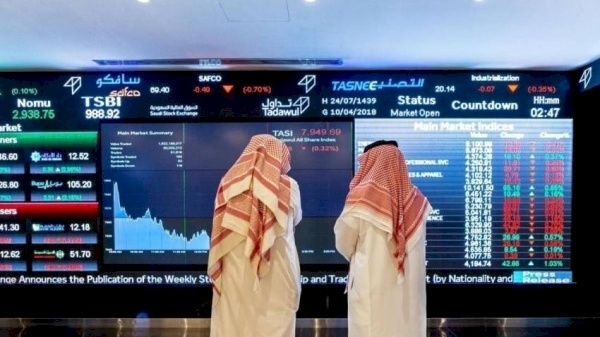
Wave of Selling Hits Gulf and Egyptian Markets After Unprecedented Military Escalation
SadaNews - Stock markets in Saudi Arabia, Egypt, Oman, and Bahrain plummeted on Sunday, as investors reassessed geopolitical risks following the U.S.-Israeli strikes on Iran, the death of Iranian leader Ali Khamenei, and several senior officials, as well as Tehran's response by targeting regional countries and Israel.
In Saudi Arabia, the general index "TASI" dropped by about 4.5% at the opening, marking the largest decline in 11 months, before trimming its losses to about 2.2% at 10,471 points. Bank stocks faced collective selling pressure, with shares of "Al Rajhi Bank" falling 2.9% and "National Commercial Bank" dropping more than 4%. In contrast, "Aramco" shares turned to rise by about 2.4%, benefiting from bets on rising oil prices amid escalating energy supply risks and potential disruption of navigation in the Strait of Hormuz.
The pressures extended to the rest of the region's markets. The main index of the Muscat Stock Exchange ended today down 1.4%, while the Bahrain Stock Exchange closed with a loss of about 1%. The main index of the Egyptian stock market dropped by more than 5% at the opening but reduced its losses to 2.5% at closing.
It is worth noting that the stock markets in the UAE and Qatar are on holiday, while trading on the Kuwait Stock Exchange has been suspended until further notice.
Oil Mitigates Losses
Mohamed Zidan, a financial analyst at "Al Sharq", believes that the markets are experiencing a phase of "rapid risk reassessment," anticipating continued pressure during the current week as global market trading begins.
He added that the energy sector might serve as a balancing factor in the Saudi market, explaining that "geopolitical risks and the possibility of closing the Strait of Hormuz could push oil prices up, which would positively reflect on energy stocks, especially Aramco, which holds a significant weight in the index."
A Week of High Volatility
For her part, Mari Salem, a financial analyst at "Al Sharq", noted that uncertainty is likely to continue amid U.S. President Donald Trump's statements that strikes on Iran could extend for days or weeks.
She predicted that this would contribute to "creating a sense of caution and uncertainty among investors, which will lead to strong volatility during the upcoming sessions," especially if the Iranian response expands as well.
Israel launched a new wave of strikes on targets inside Iran on Sunday, and U.S. President Donald Trump stated that the strikes aim to end what he described as the long-standing Iranian threat and prevent Tehran from developing nuclear weapons.
Tehran had launched hundreds of missiles and drones in response to the initial attacks, targeting what it claimed to be U.S. military sites in the region and cities within Israel and Arab countries, escalating the regional tension. The escalation led to disruptions in air traffic after several countries completely or partially closed their airspace, canceling numerous flights, reflecting the widening implications of the crisis on vital economic sectors.
 Follow the latest Sada News via Google News
Gulf Investors Make a Difference in the Largest IPO in 'Wall Street' History

Small Shares and Big Dreams... How Did Small Investors Snatch a Piece of the 'SpaceX' Pie?

World Bank: Jordan's Economy Gradually Recovers Despite Regional War

"European Central Bank" Raises Interest Rates for the First Time Since 2023

US Inflation Hits Highest Level in Three Years

Oil Prices Rise Amid Escalating Tensions Between the US and Iran

Gold Fluctuates in Turbulent Trading After New U.S. Strikes on Iran
