

"Lazarus Species"... When Scientists Mistakenly Announce Extinction
SadaNews - In some cases, scientists declare a species extinct. However, nature surprises us on rare occasions with what was not anticipated, as it later turns out that the species still exists. These cases are known as "Lazarus species," referring to the Biblical figure said to have returned to life.
Louise Gentle, head of the Environmental Conservation Department at Nottingham Trent University's School of Animal Sciences in England, explains that "the term Lazarus species is applied to organisms that have been absent from observation for long periods and are believed to be extinct, only to be rediscovered later, proving they have not completely disappeared but were hiding away."
She adds in an interview with Al Jazeera Net, "The term can also describe organisms that have disappeared from the fossil record for long periods, sometimes extending to millions of years, before being rediscovered in modern times in an extraordinary manner."
A Speeding Wave of Extinction
An extinct species is known to be one for which there is no reasonable doubt that the last of its members has died, following extensive field surveys in all its known or potential habitats over suitable periods of time.
Earth's history has witnessed five mass extinction events, the most famous of which was the one that wiped out the dinosaurs. Currently, the planet is experiencing what some scientists describe as the "sixth extinction," which is largely linked to human activities.
Given the limited resources allocated to documenting biodiversity, researchers believe that the current extinction wave is occurring at a rate hundreds or even thousands of times faster than before the extensive human impact.
Gentle points out that about one-third of the species assessed are threatened with extinction, noting that many of them cannot adapt quickly enough to the rapid environmental changes, whether due to global warming, pollution, habitat destruction, or the introduction of invasive species, pushing some towards the same fate as the dinosaurs.
However, determining the extinction of any organism is not easy; just finding one individual is enough to prove its continued existence. Therefore, the International Union for Conservation of Nature relies on the "Red List," where species are assessed based on their population size, distribution, and trends in their numbers.
Evidence of "Returning from the Dead"
Over the past decades, more than a hundred species of organisms that were thought to have disappeared forever have been rediscovered, with their future fate remaining dependent on the passage of time.
According to a lecture specializing in wildlife protection, these organisms often share fundamental characteristics, the most notable being extreme rarity, living in limited geographical ranges and remote habitats, making their observation exceedingly difficult.
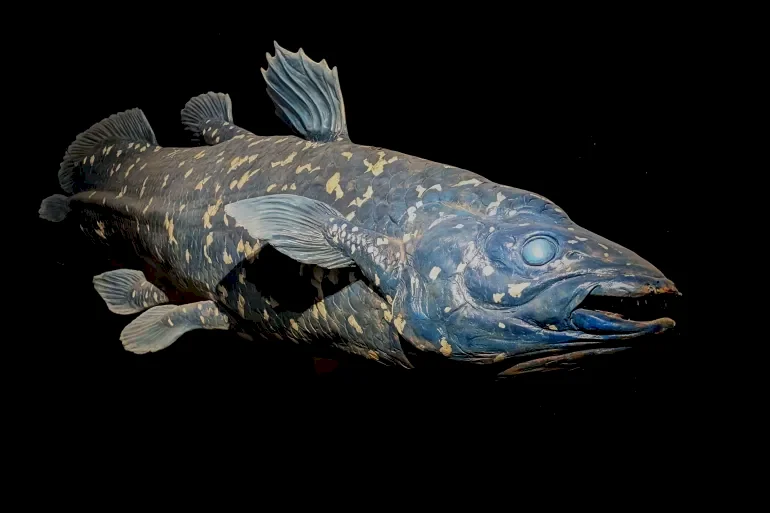
The story of the coelacanth fish – which lives in deep-water caves away from sight – is one of the most famous historical examples of "Lazarus species," as it was believed to have gone extinct 66 million years ago, before a live specimen was caught in 1938 off the coast of South Africa, one of the most important animal discoveries of the twentieth century.
In other cases, local knowledge played a crucial role, as was the case with the Chacoan peccary. This pig-like animal was known only from fossils until it was found alive in 1971 in the arid Chaco region of Argentina, where it lives in hot, dry environments difficult for humans to penetrate.
The giant Wallace’s bumblebee, or "Megachile pluto," the largest bee in the world measuring about 4 centimeters, four times the size of a honeybee, was rediscovered in 2019 when a single female was found nesting inside a termite mound in Indonesia, after a 38-year absence, but it still faces the threat of losing its habitat due to the expansion of palm oil plantations.
Rare species such as the venomous Cuban solenodon, of which only 37 individuals have been recorded and declared extinct in 1970, have also reemerged. There is also the large-eared New Guinea bat discovered in 2012 after 120 years of disappearance, as well as the "horrible lizard," known also as the Bukoura terrifying lizard, which was only known from one preserved specimen in a museum until it was rediscovered in 2000.
The year 2023 saw two prominent examples, with the earless grass dragon lizard being rediscovered after more than half a century of absence. In November of the same year, the long-billed Atinpara snipe was found again in the Cyclops Mountains of Indonesia after more than six decades of disappearance.
Facing the Threat of Extinction Again
Despite these inspiring stories, scientists warn against excessive optimism. Rediscovery does not mean the end of danger; most of these species remain threatened with extinction. For example, the population of the takahe bird stands at around 225 individuals, it is estimated that only about 500 specimens of the coelacanth remain, the population of the yellow-tailed woolly monkey does not exceed one thousand individuals in the wild today, and the number of Chacoan peccary is estimated to be around 3,000 individuals today.
Some species, like the Tasmanian tiger, which is believed to have completely vanished in the 1960s, still have a very slim chance of being found, with scientists estimating this species' survival likelihood at less than 1%, making it a symbol in the community of "cryptozoology," which focuses on mythical or presumed creatures.
Gentle explains that "the rediscovered species confirm that their absence from scientific records does not necessarily mean extinction, but may be due to our limited knowledge of them or the difficulty of accessing their habitats."
She adds that "these species remain rare and fragile, and their long-term survival depends on intensifying monitoring and protection of their natural environments before they actually disappear this time."
Summary of the article
Source: Al Jazeera
 Follow the latest Sada News via Google News
Oak Trees Outsmart Caterpillars with a Clever Spring Maneuver

9 عادات صباحية يستلهمها الأذكياء والسعداء من جداتهم

Britain Bans Social Media for Those Under 16 Years Old

وائل حمدي عن "ورد على فل وياسمين": أحب الشخصيات التي تحمل جروحاً صامتة

Instead of Turning Into a Black Hole.. A Dying Star May Create a New Universe

Not Just for Hydration: Watermelon May Contribute to Heart Health

Rice Water for Hair: Between Korean Trends and Scientific Truth
