

What does the agreement stipulate regarding the integration of "SDF" with state institutions?
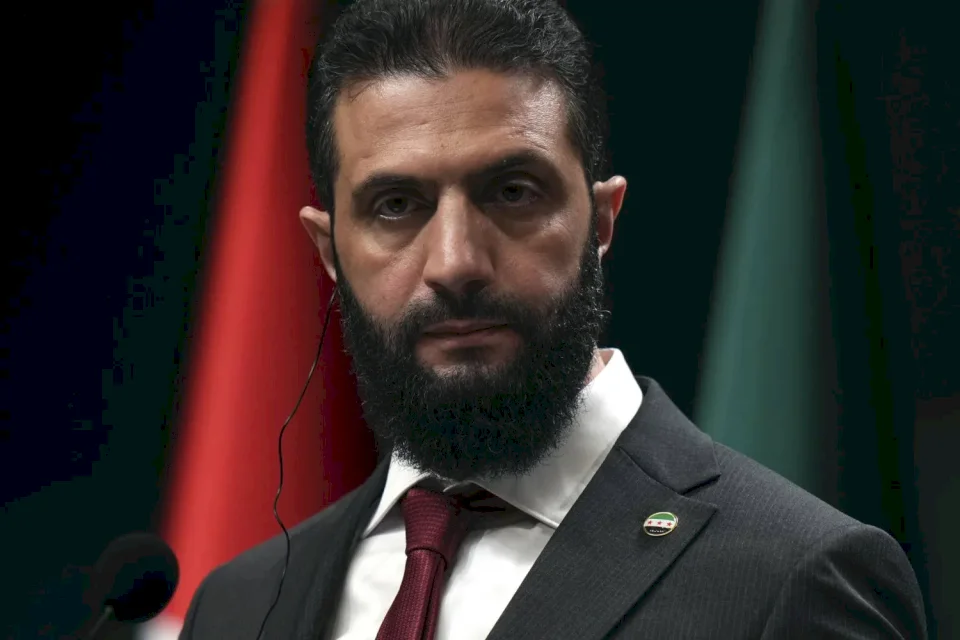
SadaNews - Syrian President, Ahmad al-Shara, signed an agreement on Sunday evening regarding the integration of the Syrian Democratic Forces ("SDF") with state institutions, which includes a comprehensive ceasefire on all fronts and the withdrawal of all military formations affiliated with the organization to the eastern Euphrates region as a preliminary step for redeployment.
The agreement signed by the Syrian president regarding the integration of the SDF into state institutions stipulates the following:
The agreement states the incorporation of all civil institutions in Al-Hasakah province within the structures of the Syrian state and its administrative frameworks.
The Syrian government will assume responsibility for border crossings in northeastern Syria.
A comprehensive and immediate ceasefire on all fronts in northeastern Syria.
The Syrian government commits not to target SDF fighters and self-administration employees in northeastern Syria.
The SDF leadership commits not to incorporate remnants of the fallen regime in northeastern Syria into its ranks and to provide lists of their names.
A presidential decree will be issued to appoint a candidate for the position of governor of Al-Hasakah, to ensure political participation and local representation.
Remove heavy military appearances from Ain al-Arab (Kobani) and form a civil force from the city’s residents.
State institutions will enter the three eastern and northeastern provinces.
Merge the administration responsible for the file of prisoners from the extremist organizations into the structures of the Syrian government.
Adopt a list of proposed leaderships provided by the SDF leadership to fill high military, security, and civil positions in the central state structure to ensure national partnership.
Welcome the presidential decree No. 13 of 2026, which recognizes Kurdish cultural and linguistic rights, addressing the legal and civil issues of those listed as stateless and reclaiming accumulated property rights from previous decades.
The SDF commits to remove all non-Syrian leaders and elements of the Kurdistan Workers' Party (PKK) from the borders of the Syrian Arab Republic to ensure sovereignty and neighborhood stability.
The Syrian state commits to continue combating terrorism (ISIS) as an active member of the international coalition, coordinating with the United States in this context to ensure the security and stability of the region.
Work to achieve understandings regarding the safe and dignified return of the people of the Afrin and Sheikh Maqsoud areas to their areas.
Syrian President Ahmad al-Shara announced the signing of the ceasefire agreement and the complete integration of the SDF with the Syrian government.
This came after a military operation launched by the Syrian army, through which it regained vast areas in eastern and northeastern Syria, following the SDF's repeated violations of the agreements signed with the Damascus government about a year ago, and its evasion of implementing their terms.
Al-Shara told reporters, after meeting with the special envoy to Syria, Thomas Barak, that he was scheduled to meet with the SDF leader Ferhat Abdi Shaheen, also known as Mazloum Abdi, "but he delayed until tomorrow due to bad weather conditions."
He added: "Therefore, we decided to sign the agreement today through communications to alleviate tensions now."
He mentioned that "the new agreement is in the spirit of the March 10, 2025 agreement, which stipulates the merging of civil and military institutions in northeastern regions into state management."
Regarding the areas controlled by the SDF and what happened there, al-Shara said: "We recommend our Arab tribes in the eastern part of the country to remain calm and to open the space for implementing the agreement terms with the SDF gradually, until we reach complete tranquility in the country."
He stated that "state institutions will enter the three eastern and northeastern provinces."
Shortly after announcing the signing of the agreement, the Syrian Ministry of Defense announced, "a ceasefire on all fronts and the cessation of combat operations in various areas of conflict."
The Interior Ministry announces the start of its units entering the city of Raqqa to maintain security.
The Syrian Interior Ministry announced on Sunday the start of its units entering Raqqa city, in preparation for establishing security and stability there, following the announcement of a ceasefire agreement with the SDF.
The ministry stated in a statement: "Our units have begun entering Raqqa city, in preparation for an organized deployment in all its neighborhoods, within a comprehensive plan aimed at imposing security and stability and protecting citizens and their public and private properties."
It added: "This step comes as part of the ministry's ongoing efforts to control the security situation in various cities and regions, a guarantee of a safe and stable environment for all citizens."
Barak: A turning point.
For his part, the U.S. special envoy to Syria, Thomas Barak, said: "We commend the Syrian government and the SDF for their efforts that led to reaching a ceasefire agreement."
He noted that "the ceasefire agreement paves the way for resuming dialogue and cooperation towards a unified Syria."
He stated that "the agreement between the Syrian government and the SDF is a turning point, where former adversaries transition into partnership, instead of division."
SDF Commander: We accepted the agreement to stop a "war imposed" on us.
SDF Commander Mazloum Abdi announced on Sunday that he accepted the agreement announced by the Syrian president to stop a war that was "imposed" on them after the government forces advanced in areas they control in northern Syria.
He stated in a statement broadcasted by the Kurdish channel "Ronahi": "There was a clear insistence to impose this war on us," adding: "And to prevent this war from turning into a civil war... we accepted to withdraw from the Deir ez-Zor and Raqqa areas to Al-Hasakah, to stop this war."
He pledged to explain the terms of the agreement to the Kurds after returning from Damascus, where he is expected to meet with al-Shara on Monday.
Al-Shara emphasizes Syria's unity, sovereignty, and the importance of dialogue.
During his meeting with the U.S. envoy in Damascus, the Syrian president stressed, before announcing the signing of the agreement, his country's commitment to its territorial integrity, full sovereignty, and the importance of dialogue at this stage.
The Syrian presidency stated in a statement that the meeting was attended by Foreign and Expatriates Minister As'ad Hassan al-Shaybani, where al-Shara affirmed the necessity of building Syria with the participation of all Syrians and continuing efforts in combating terrorism.
The statement added that both sides discussed ways to enhance economic cooperation between Syria and the United States, alongside discussing the latest regional developments.
This comes amidst escalating field confrontations in western Euphrates between the army and the SDF, alongside fierce clashes fought by Arab tribes against SDF forces east of the river, where dozens of towns and villages have been liberated.
In western Euphrates, the army secured control over cities and towns in Aleppo and Raqqa provinces, including the recently taken city of Tabqa and its military airport south of Raqqa.
In eastern river areas, tribal forces supporting the authorities liberated vast areas in Deir ez-Zor province after clashes with the SDF, according to tribal sources.
The sources added that the tribal forces were able, after liberating the southern and central parts of Deir ez-Zor province, to extend their control northward towards Raqqa and Al-Hasakah provinces, imposing significant control.
Earlier on Sunday, the Deir ez-Zor governorate announced in a statement that tribal forces had liberated the area that includes the "Omar" oil field, the largest in Syria, and the "Koniko" natural gas field.
The tribes continued their advance east of the Euphrates, as they also controlled dozens of towns and villages in Deir ez-Zor province, including: Shaheil, Al-Hawaij, Al-Zubaan, Al-Tayyana, Abu Hamam, Hatla, Granij, Al-Baghuz, Al-Susa, and Al-Sha'fa.
The SDF evaded applying its agreement with the government in March 2025, which emphasizes respecting the Kurdish component within equal rights for all components of the Syrian people.
The agreement stipulates the integration of civil and military institutions in northeastern Syria into state management, the reopening of crossings, the airport, and oil and gas fields, highlighting the unity of the country’s territories, and the withdrawal of its forces from Aleppo to the east of the Euphrates.
The government is making intensive efforts to maintain security in the country since the overthrow of Bashar al-Assad's regime on December 8, 2024.
 Follow the latest Sada News via Google News
Trump: We will make great progress with Beirut.. Aoun: It is time for Lebanon to be stable

The Lebanese Army Deploys in the South and Comes Under Gunfire; Israel Clarifies

Bezhkian: Directives from the Leader to End the State of No War, No Peace

Saudi Arabia condemns the Houthi threats to navigation and pledges to protect its ships

Global Warning to Americans Due to Rising Tensions in the Middle East

Houthi Movement Announces Ban on Maritime Navigation Against Saudi Arabia

Earthquake of 5.5 Magnitude Hits Western Iran
