

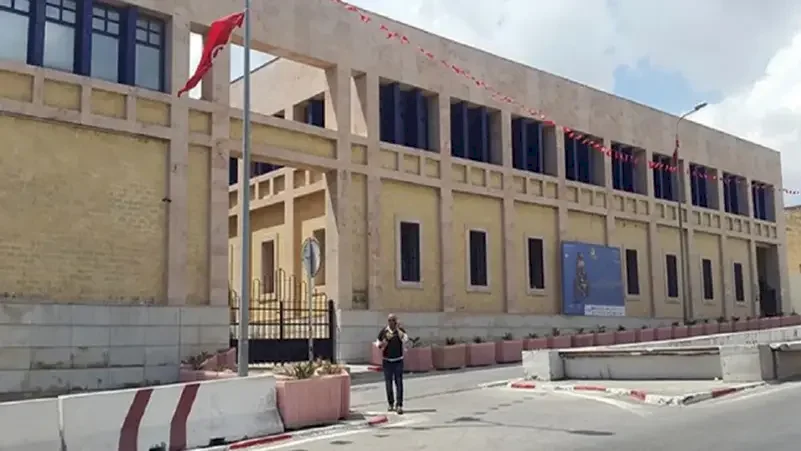
The Decision to Evacuate the Ministry of Culture for the Benefit of Defense Sparks Controversy in Tunisia
SadaNews - The circulating news about a government decision to evacuate the headquarters of the Ministry of Culture for the benefit of the Ministry of Defense has sparked a wave of controversy, especially among cultural circles, amid warnings that its implementation could threaten the future of a sector that has been marginalized for years.
In this context, the General Union for Culture, affiliated with the Tunisian General Labor Union, has called for an immediate reversal of this decision, demanding a pause until an alternative workspace for the Ministry of Cultural Affairs is provided, ensuring that the rights of stakeholders and workers are not harmed, and preserving the ministry's status and its national role.
The union confirmed, in a statement on Friday, that any decision of this magnitude "must be based on a comprehensive approach that considers the interest of the sector and all those affiliated with it," warning that relocating the ministry's headquarters could disrupt administrative and cultural work, harm the rights of intellectuals, staff, and officials, and damage the public cultural facility, potentially representing an extension of the marginalization path the sector has been suffering from for years.
The union also emphasized its readiness to defend the sector and the dignity of its workers, and the right to a free and effective national culture, calling for official clarifications to the cultural public regarding the backgrounds of this decision and its potential implications.
Severe Concerns
For its part, the Independent Union of Directors and Producers expressed its deep concern regarding the decision to relocate the ministry's headquarters, considering that the "current headquarters is not merely an administrative space, but carries historical and cultural value that embodies the identity of Tunisian culture and its long journey, and serves as a witness to pivotal moments in the history of artistic creativity in the country.
The union affirmed its insistence on maintaining the historical headquarters as the site of the Ministry of Cultural Affairs, as an extension of national memory and a manifestation of cultural continuity, warning that "making a unilateral decision without consultation with artists, intellectuals, and professional structures represents a diminishment of culture and marginalization of the role of arts and creativity in the societal project."
Call for Help
Meanwhile, on social media, several users expressed their rejection of this decision, as university professor Rjaâ Ben Selama stated that "the seizure of the Ministry of Culture's headquarters is an assault on the country's memory and a belittlement of culture."
Ben Selama issued a call for help, urging not to accept this decision and to prevent its implementation, considering that "the most important real resource for this country is its culture, history, civilization, and heritage," asserting that the application of the decision would represent "another tragedy among the tragedies the country has witnessed in recent years."
Activist Thamer Idriss sees that the decision to evacuate the Ministry of Cultural Affairs from its historical headquarters in Kasbah "is not merely an administrative procedure for relocating offices, but a blatant assault on the historical symbolism and sovereign status of culture in Tunisia," considering that "removing the ministry from the heart of the primary governmental square reflects a worrying trend towards marginalizing the cultural sector and weakening its presence in the decision-making center.
Idriss pointed out that the current headquarters of the Ministry of Culture "is not just walls, but a national memory and a landmark tied to the identity of the Tunisian state since independence," adding that "dismantling it without a clear vision or appropriate alternative constitutes a disruption of administrative work and a belittlement of the value of creators and intellectuals who view this edifice as a symbol of their existence at the heart of the state."
The headquarters of the Ministry of Cultural Affairs is considered one of the administrative landmarks with special symbolism in Tunisia, as it is located in the Government Square in the capital, near sovereign institutions, including the Ministry of Defense.
 Follow the latest Sada News via Google News
Bezhkian: Directives from the Leader to End the State of No War, No Peace

Saudi Arabia condemns the Houthi threats to navigation and pledges to protect its ships

Global Warning to Americans Due to Rising Tensions in the Middle East

Houthi Movement Announces Ban on Maritime Navigation Against Saudi Arabia

Earthquake of 5.5 Magnitude Hits Western Iran

To Enhance His Support for "Increasing Children"... Vance Announces the Birth of His Fourt...

Death of a Mosque Imam in Armed Attack in Southeastern Iran
