

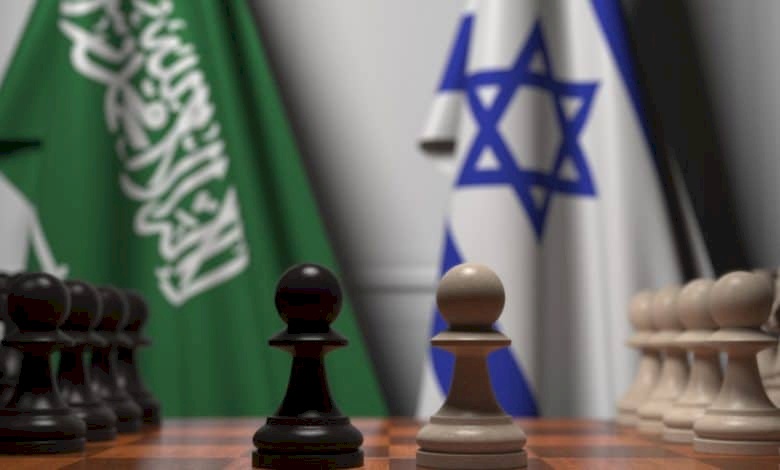
Slowdown in the Normalization Process between Saudi Arabia and Israel... What is the Role of the UAE?
SadaNews - Estimates in Israel regarding the possibility of advancing the normalization process with Saudi Arabia in the near future have decreased, amid what political circles describe as a "loss of momentum" in the communications that were proposed over the past two years as one of the central goals of Prime Minister Benjamin Netanyahu and U.S. President Donald Trump.
According to a report published by the newspaper "Maariv" today, Sunday, Saudi Arabia was the most prominent target in the efforts to "expand the Abraham Accords"; however, "talks with them have receded, and it seems that returning to them will take a long time."
The Israeli report correlates this retreat with a broader regional context, characterized by the escalation of tensions between Riyadh and Abu Dhabi, at a time when the UAE has become the Arab state closest to Israel in practice.
The report pointed out that the relationship between Israel and the UAE is managed away from the spotlight but is manifested in various arenas, as "in almost every regional conflict zone where one of them is active, the other is also present."
According to the report, developments in southern Yemen have revealed the depth of the competition between Saudi Arabia and the UAE, after what was characterized for years as a "known secret" became public, amid the UAE's efforts to cement its position as an independent regional power that does not see itself as "the little sister" to Riyadh.
The report also noted that the strengthening of the UAE's relations with the separatist "Somaliland" region is viewed in Israel as an additional signal of Abu Dhabi's ambition to play a pivotal role in Gulf security, and not to leave the field solely to Saudi Arabia, considering that involving Israel in this axis sends a clear regional message about the identity of the UAE's primary and most important ally.
Alongside this, the report discussed limited and undisclosed discussions within Israel regarding Iran as a theoretical long-term possibility for normalization, with a clear emphasis that the discussions are conditional and sensitive, proposed within narrow frameworks.
"Maariv" quoted political sources stating that this proposal "has not been presented officially"; however, it was put forward in a manner that "cannot be understood otherwise," in light of increasing Israeli estimates that the protests within Iran might lead to political change.
According to the report, these estimates are based on the assumption that if the regime falls, resuming relations between Iran and Israel, as they were before the Islamic Revolution, could become a feasible possibility, and even some elements in the Iranian opposition are presented as "potential negotiators for a future peace agreement," even before any electoral entitlement.
The report noted that discussions held this week in Israel covered the implications of the protests in Iran, but remained within the theoretical estimation framework for the developments of internal protests in Iran.
In a parallel context, the Israeli Public Broadcasting Corporation ("Kan 11") reported, citing sources it said were "knowledgeable Gulf sources," that Saudi Crown Prince Mohammed bin Salman is recently working on shaping what has been described as a "parallel axis" to the so-called "moderate Sunni axis," which includes countries like Turkey, Iran, Qatar, Egypt, and Pakistan.
According to these sources, this orientation translates, among other things, into a Saudi escalation in public and implicit rhetoric towards the UAE, accusing it of operating "in coordination with Israel" in ways that contradict Saudi interests, describing Abu Dhabi as an "extension" or "arm of Israel" in the region.
The report added that Riyadh has come to view Israel as the "central problem in the Middle East," which is also understood in Israeli terms as a Saudi attempt to reposition politically to facilitate rapprochement with Turkish President Recep Tayyip Erdoğan.
The same sources discussed what are described in Israel as "concerning" indicators, claiming that the Saudi Crown Prince is adopting a more lenient approach towards the "Muslim Brotherhood," in parallel with protecting Turkish interests in the African arena.
 Follow the latest Sada News via Google News
High-level sources reveal to SadaNews: Washington seeks to hold a Gaza Reconstruction Conf...

Iraqji Reveals Details of the Attack on the Iranian Supreme Leader's Headquarters

صراع على إرث خامنئي وسط غياب مجتبى.. والمتشددون يتهمون قادة إيران بـ«الانقلاب»

The European Union Reiterates Its Call for Israel to Refrain from Expanding Settlements in...

"Mamdani Berlin".. The German Left Bets on a Politician of Turkish Descent to Lead the Cap...

Hebrew Channel: Kushner Pushing to Enhance Communication Between the United States and the...

SadaNews Report: Israeli Elections with a Settlement Flavor!
