

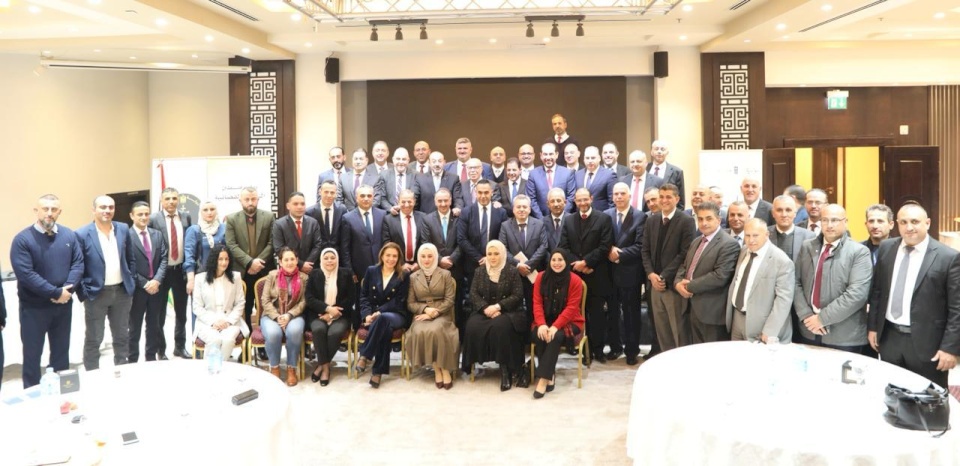
At the Conclusion of Their Joint Conference: The Supreme Judiciary and the Public Prosecution Confirm Adoption of Recommendations and Transformation into Future Action Steps
SadaNews - The President of the Palestinian Supreme Judiciary Council, Advisor Muhammad Abdul Ghani Al-Awawiya, and the Public Prosecutor, Advisor Akram Al-Khatib, confirmed at the conclusion of the conference on the integration of work between the Supreme Judiciary Council and the Public Prosecution their full commitment to follow up on the conference outputs and to work on transforming its recommendations into future practical steps according to clear and specific plans, believing that the development of judicial work and alleviating the backlog is a collective responsibility and a national necessity that cannot be postponed.
The conference was held in the city of Ramallah over two consecutive days, with wide participation from judges, members of the Public Prosecution, and representatives of official, civil, and international institutions, supported by the Joint Sawa'ia Program, as part of the national efforts aimed at enhancing the efficiency of the justice system and addressing judicial congestion.
In the final statement, Judge Al-Awawiya confirmed that the success of this conference represents an advanced national milestone toward a more effective and resilient justice system, embodying a genuine consolidation of the importance of institutional integration between the judiciary and the Public Prosecution as a fundamental pillar for addressing the judicial backlog, improving the quality of judicial performance, and speeding up the resolution of cases, thereby enhancing citizens' trust in the justice system, especially in light of the political, security, and exceptional challenges facing the State of Palestine.
He pointed out the key recommendations that emerged from the conference, which focused on simplifying judicial procedures, improving case management, unifying judicial interpretations, enhancing the use of technology and digital transformation, building human capacities, and developing institutional coordination mechanisms.
He clarified that implementing these recommendations can contribute to reducing the duration of litigation in accordance with the provisions of the law, particularly the Criminal Procedure Law, in addition to addressing the backlog in cases and achieving timely justice without compromising fair trial guarantees.
For his part, Advisor Akram Al-Khatib emphasized that the most distinguishing feature of the conference outputs is that they are the result of genuine field experience and daily practical practice, making them a solid foundation for building upon in the next stage.
He affirmed the Public Prosecution's full readiness to make every possible effort to address judicial backlogs in cooperation with the Supreme Judiciary Council, noting that this is a shared national responsibility that requires ongoing coordination and practical integration between the judiciary and the Public Prosecution, enhancing institutional readiness to manage justice under various circumstances, ensuring the rule of law, safeguarding rights and freedoms, and entrenching principles of justice and transparency.
At the conclusion of the conference, both the President of the Supreme Judiciary Council and the Public Prosecutor thanked all those who contributed to the success of this conference, including judges, members of the prosecution, and supporting entities, expressing their great appreciation for the efforts made, which embody the resilience of the Palestinian justice system in facing the current exceptional circumstances.
The conference witnessed in its two days in-depth discussions, professional presentations, and practical interventions, reflecting the participants' eagerness to accurately diagnose the points of failure and to transition from describing issues to proposing practical solutions, whether related to settlement courts, appeal courts, criminal cases, or the joint working mechanisms between the judiciary and the Public Prosecution.
 Follow the latest Sada News via Google News
Sheikh Meets with Representatives of Civil Society Institutions, Praising Their Role as a...

Ministry of Education Sets Friday for Announcing High School Results

مركز كارتر يصدر تقريره النهائي بشأن الانتخابات البلدية في الأراضي الفلسطينية المحتلة التي...

Al-Sharqawi from Geneva: Protecting the special status of Jerusalem requires greater coord...

Lt. General Al-Natsha Undergoes Lengthy Interrogation at Moskobiya Regarding His Represent...

The Occupation Demolishes a House in the Town of Sa'ir near Hebron

Sheikh Offers Condolences for the Martyrdom of Citizens in Deir Jareer
