

Israeli Industrial Zones in the West Bank: An Economic Distortion Hindering Palestinian Development
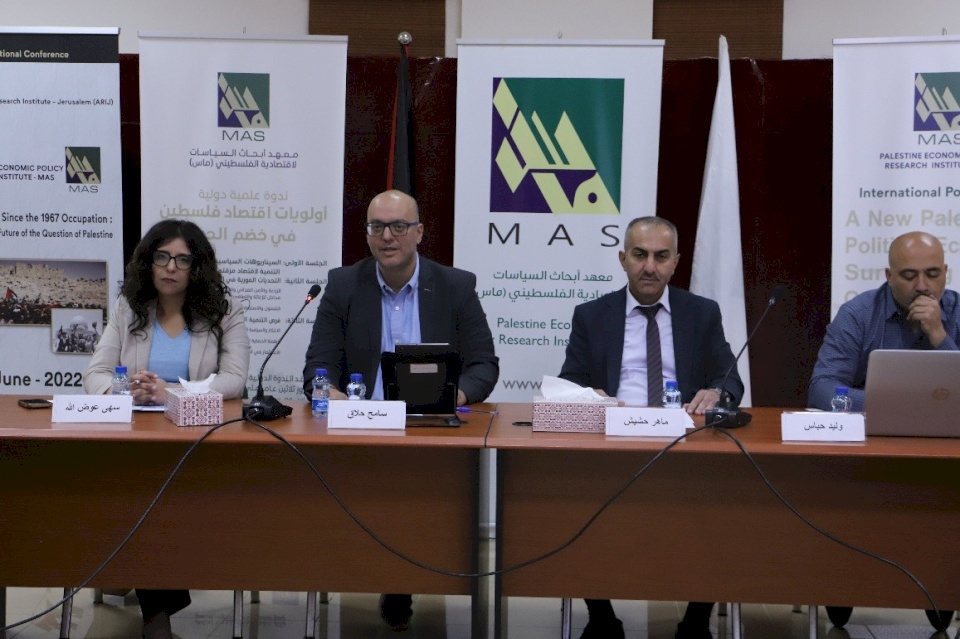
SadaNews - The Palestinian Economic Policy Research Institute (MAS) held the second roundtable meeting of this year 2026 to discuss "The Economic Impacts of Israeli Industrial Zones in the West Bank: Employment, Environmental Pollution, and Disruption of Palestinian Logistics," both in-person at the institute's headquarters and via Zoom. The background paper was prepared by Dr. Walid Habas, a researcher at the Palestinian Center for Israeli Studies (Madar), while Dr. Maher Hashish, the advisor to the Minister of Industry, and Dr. Soha Awadallah, the Secretary-General of the Palestinian Federation of Industries, presented their comments and feedback on the paper.
At the beginning of the meeting, Dr. Samih Hallak, the research coordinator at the institute, welcomed participants, including experts and representatives from various sectors, and emphasized the significant importance of discussing this topic, which reveals the complex nature of these industrial zones, which go beyond their productive role to act as tools for economic control and resource reallocation, imposing direct pressures on Palestinian development opportunities and requiring urgent attention.
Researcher Habas presented a comprehensive analysis of the economic impacts of Israeli industrial zones in the West Bank, describing them as part of an expansive settlement environment that surrounds the geographical area and harms the Palestinian economy on several levels. He noted the existence of about 35 industrial zones in the West Bank, including areas for heavy industries such as metals, chemicals, plastics, and cement, in addition to industrial parks, technology zones, commercial complexes, and service areas. He indicated that these zones contribute to strengthening economic ties between the settlements and Israel, as they are connected to bypass roads and main arteries.
The researcher explained that the paper identifies five main impacts on the Palestinian economy. First, deepening the dependency of Palestinian labor through an unequal labor market characterized by low wages and legal fragility. Second, attracting some Palestinian investments to these areas, reflecting a lack of serious oversight. Third, disrupting trade movement due to the fragmentation of Palestinian geography and high transportation and trade costs. Fourth, increasing environmental pollution due to the transfer of polluting industries to these areas amid weak regulatory oversight. Fifth, the confiscation of agricultural land and the deterioration of natural resources, which negatively affects agricultural production and threatens food security.
Habas concluded his presentation with several recommendations that call for the necessity of adopting a clear official Palestinian position regarding the relationship with Israeli industrial zones, addressing the reasons that drive Palestinian capital to move towards settlements, and working on protecting workers, as well as calling for holding Israel accountable for environmental crimes. In this context, the recommendations emphasize the importance of developing a long-term developmental and sovereign approach that strengthens the Palestinian national economy and limits economic dependency.
In his comments on the paper, Hashish confirmed that the Palestinian government places great importance on the studies presented by MAS. He noted that Israeli policies encourage settlement by offering incentives and facilities for industrial zones established in the settlements, considering that this Israeli investment comes within the framework of a replacement settlement project and an attempt to legitimize settlement.
Hashish also indicated that the Palestinian government pays significant attention to Palestinian industrial zones for the resilience and job creation they provide, noting that the Jenin industrial city will soon come to fruition, forming a cornerstone for the Palestinian economy with Palestinian investors from the 48 territories intending to invest in it. He added that the Palestinian government mandates the national Palestinian product in tenders and focuses on supporting renewable energy in Palestinian industrial zones to reduce production costs.
For her part, Awadallah stated that the participation of some Palestinian investors and workers in Israeli industrial zones does not necessarily reflect acceptance of the settlement project, but rather the significant gap between the constrained Palestinian investment environment and the environment provided by Israeli industrial zones in terms of infrastructure, stability, and ease of access to markets.
She emphasized the need to build a Palestinian economic alternative through the development of Palestinian industrial zones, improving infrastructure, reducing production costs, and linking the Palestinian economy to Arab and regional markets, stressing that any policy must combine pressure with the provision of economic alternatives and job opportunities.
The participants emphasized the need to highlight the environmental damage caused by industrial zones in the settlements, along with the necessity of covering the paper with the size of Palestinian investment in these Israeli industrial zones in the West Bank and the level of Palestinian presence within them.
 Follow the latest Sada News via Google News
Soaring Oil Prices Burn the Pockets of the Palestinian Citizen "The Poor"

Millions of Dollars in Losses.. "SadaNews" Reveals Shocking Figures for Traders from Pales...

The Problem of Shekel Overcrowding Worsens.. Fuel Station Owners Threatened with Closure o...

The Palestinian Economy at a Crossroads: 4 Files Awaiting Resolution

National Economy: Referral of 6 Violators to Prosecution and Seizure of 76 Tons of Violati...

Israel's Foreign Currency Reserves Rise to $238.7 Billion

Exchange Rates of Currencies Against the Shekel on Wednesday (July 8)
