

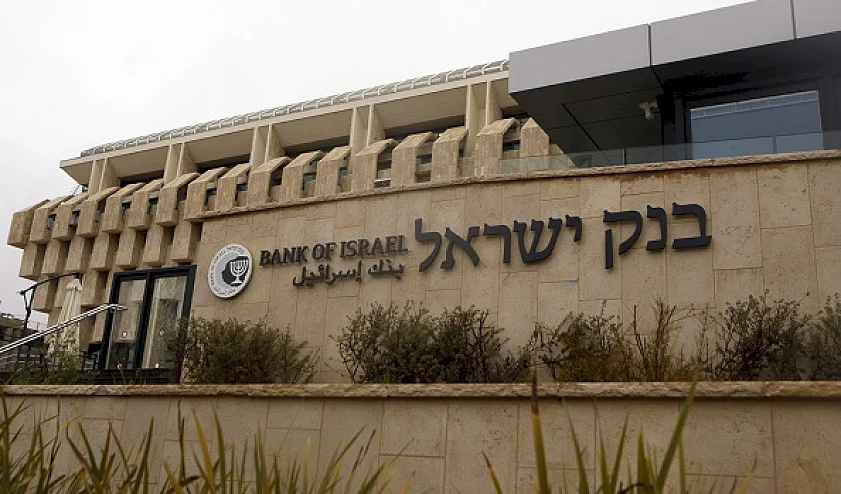
Israeli Banks Reduce Deposit Interest Rates in Anticipation of Expected Decision from Bank of Israel
SadaNews - A report published by the Hebrew newspaper Globes revealed that several Israeli banks have begun lowering interest rates on deposits, a move that reflects their readiness for the possibility of the Bank of Israel reducing the base interest rate in the near future.
According to the report, one of the top clients specializing in investment management was surprised by a significant drop in the interest rate offered to him within just one week, after he intended to deposit a large sum for a year. He explained that one bank reduced the interest on the deposit by 0.5% in just a few days.
In another instance, a client at a small bank stated that he received nearly 5% interest on an annual deposit at the beginning of the year, but when he requested to renew the deposit this week, he was offered an interest rate that did not exceed 3.8%.
Market estimates suggest that banks have already started hedging against a scenario of interest rate cuts by the Bank of Israel, possibly starting with the expected decision on May 25. The current base interest rate is 4%, following two consecutive cuts of 0.25% each at the beginning of the year.
Although most analysts expect a limited cut to 3.75%, there are increasing calls for a larger reduction to support the economy, especially in light of the slowdown in the real estate market and decreasing inflation rates.
Moti Citrin, Vice President of Medrog Credit Rating Agency, noted that some banks have already begun calculating the expected interest rate reductions for the remainder of the year, indicating that interest rates on deposits and loans, particularly for terms between 6 and 12 months, have become directly influenced by market expectations concerning upcoming decisions by the Bank of Israel.
He added that pressures on the central bank have increased with the annual inflation rate reaching 1.9%, which is within the target range, but upcoming price index data and the implications of the war on Iran may affect the final decision.
The report pointed out that the strength of the shekel and the continuous slowdown in the real estate market bolster expectations for interest rate cuts, in an attempt to stimulate mortgage lending and support economic activity.
Regarding current interest rates, data from the Bank of Israel for April shows that the average interest on annual deposits reached 3.93% compared to 3.88% in March. Major banks recorded a variation in returns, with the average interest at Bank Hapoalim being 4.2%, 4.03% at Leumi, while it reached 4.6% at the digital bank One Zero.
The report noted that these rates reflect averages that include large depositors who receive better offers, while most regular customers receive much lower interest, often ranging between 2.5% and 3% for fixed deposits lasting a year.
The report clarified that many investors are now turning to financial funds and cash credit funds as alternatives that provide higher returns, which ranged over the past year between 4.2% and 4.4%.
On his part, Shuki Oren, Chairman of the Board of the digital bank One Zero, criticized the policies of major banks, arguing that ordinary customers do not receive fair interest on their deposits compared to large clients who have greater negotiating power.
He added that traditional banks often offer very low interest rates on small deposits, noting that some customers only receive offers of less than 1%, despite the high base interest rate in the economy.
He also pointed out that the average interest rates published by the Bank of Israel might give a misleading impression, as most customers actually receive rates lower than those announced averages, which, according to him, reinforces the criticisms directed at the dominance of major banks over the banking market.
 Follow the latest Sada News via Google News
Soaring Oil Prices Burn the Pockets of the Palestinian Citizen "The Poor"

Millions of Dollars in Losses.. "SadaNews" Reveals Shocking Figures for Traders from Pales...

The Problem of Shekel Overcrowding Worsens.. Fuel Station Owners Threatened with Closure o...

The Palestinian Economy at a Crossroads: 4 Files Awaiting Resolution

Currency Exchange Rates Against the Shekel on Thursday (July 2)

Sheikh Holds Expanded Economic Meeting with Chambers of Commerce to Discuss the Impacts of...

Currency Exchange Rates Against the Shekel on Wednesday (July 1)
