

Local Economy
Amid Political Ambiguity, the Palestinian Economy Faces Three Scenarios in 2026
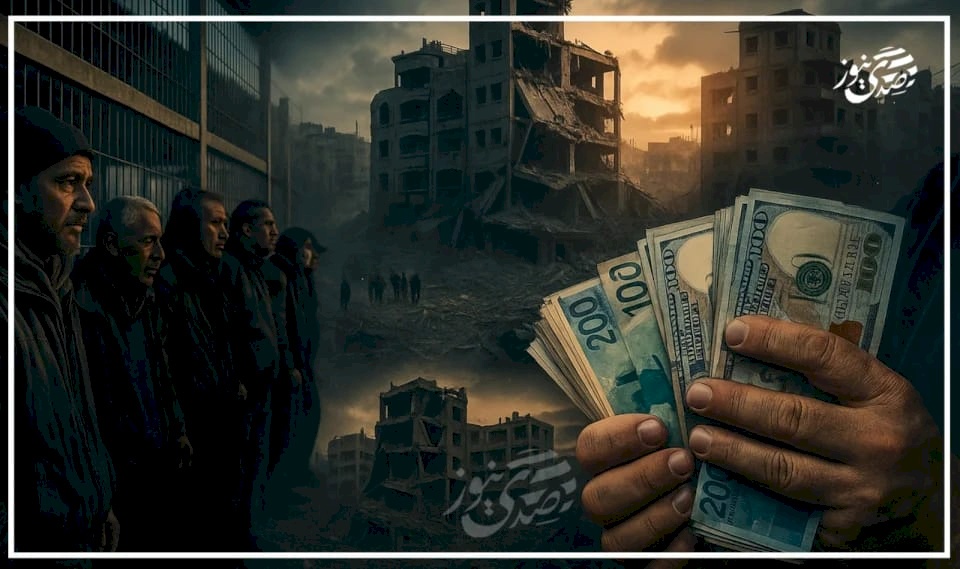
Special to SadaNews: The Palestinian economy enters 2026 burdened by two years of bleeding due to the genocidal war launched against the Palestinian people in Gaza following the events of October 7, 2023, and the extensive aggression on the West Bank. Will we witness an economic breakthrough in the new year after over 80% of Gaza’s economy has been destroyed, and the West Bank has faced various pressures, leading to a contraction of the Palestinian economy by approximately 29% last year? Or will the Palestinian economy continue to suffer under Israeli policies aimed at suffocating it?
Economists speaking to SadaNews have laid out three scenarios for the Palestinian economy in 2026: optimistic, pessimistic, and realistic.
Economic expert Dr. Thabit Abu Rous believes that the optimistic scenario assumes the allowance for Palestinian workers to return to Israel, the resumption of the transfer of clearance funds, an increase in the flow of shekels from Palestinian banks to Israel, an improvement in commercial market performance, and a breakthrough in the import issue from abroad by alleviating obstacles set before Palestinian traders at Israeli crossings and ports.
Abu Rous states that the Palestinian economy in the West Bank has lost nearly 33 billion shekels due to preventing workers from reaching their jobs inside the Green Line, thus this factor remains decisive in determining the course of the Palestinian economy in the upcoming year, along with Israel releasing about 4 billion dollars in clearance funds that it holds, which are the main revenue source for the Palestinian Authority.
As for the pessimistic scenario, Abu Rous argues that there are currently no indicators for the resumption of permitting Palestinian workers to return to their jobs in Israel, relying instead on foreign labor from abroad, and there are no indicators regarding the release of clearance funds. Additionally, the economic scene is linked to a political reality that does not appear to have positive prospects in the foreseeable future, which will be reflected in market realities and will push hundreds of small and medium enterprises to close, plunging the Palestinian economy into a more difficult situation.
In contrast, the realistic scenario, according to Abu Rous, is based on the Palestinian economy adapting to the lack of returning workers to the Israeli market, integrating a segment of them into the Palestinian market despite its small size since most of them are skilled workers. Regarding clearance funds, donor countries have partially bridged the gap by providing aid to the Palestinian Authority as happened this year, which could be repeated in 2026. Therefore, the Palestinian Authority continues to operate within limited margins; moreover, its employees have become accustomed to receiving 50-60% of their salaries, a situation that could persist into the next year, but this scenario will not lead to economic growth but rather to the management of the ongoing political crisis.
For his part, economic expert Dr. Said Sabri, in an interview with SadaNews, notes that given the existing economic and political data, the economic future of the West Bank in the coming year appears to be highly sensitive, characterized more by crisis management than by a real recovery pathway. He states, "The economy enters the next phase burdened with accumulated pressure factors, the most prominent of which are the decline in job opportunities inside the Green Line, continued deductions from clearance funds, a severe liquidity crisis in the banking system, and a continuous erosion in citizens' purchasing power, alongside a clear weakness in external support and a lack of stable political or economic prospects."
He emphasizes that the expected scene for the coming year is a slow, fragile, and movement-restricted economy. Economic activity will remain at the minimum necessary to conduct daily life, without any real capacity to generate sustainable growth or wide job opportunities.
He further states, "The most affected sectors will continue to be trade, services, and construction, while small and medium projects, which constitute the backbone of employment in the West Bank, will face intense pressure that may push some of them to close or scale down their activities," indicating that this reality means the expansion of disguised unemployment, decreased working hours, and the continued decline in households' real income.
Regarding workers and employees, Dr. Sabri believes that the crisis will shift from economic figures to a direct living crisis, noting that many workers are losing their income sources or facing irregular income, along with employees receiving partial or delayed salaries, pushing large segments of society to rely on borrowing, depleting savings, or cutting back on spending on food, health, and education.
He adds, "These mechanisms may provide temporary resilience, but they are not sustainable and reflect a gradual erosion of the society's capacity to endure."
Dr. Sabri points out that the West Bank is not heading towards a comprehensive famine in the classical sense, but it is approaching a dangerous stage of economic food insecurity. That is, food may be available in markets, but the ability to purchase it is no longer guaranteed for wide segments, especially unemployed workers and families with fixed or limited income, noting that this form of silent starvation is more dangerous than direct famine, as it gradually creeps in without sounding the alarm.
He concludes by saying, "The West Bank stands on the brink of a concerning economic and social slide next year. It is not a sudden explosion, but rather a slow deterioration in living standards and stability," emphasizing that preventing this path requires bold economic decisions, a different management of the crisis, and a shift in policies from a reactive logic to a preventive one, before economic pressure turns into a wider humanitarian crisis.
The Central Bureau of Statistics and the Monetary Authority indicated that the Palestinian economy remains deeply immersed in recession in 2025, despite recording a 4% increase in 2025 compared to 2024. However, the GDP still exhibits prolonged stagnation, having decreased by an average of 24% from its level in 2023, reflecting the cumulative damage inflicted on the economy since the onset of the Israeli occupation's aggression against the West Bank and Gaza Strip, which has led to damaged productive capacity and persistent bottlenecks in economic activities.
The gross domestic product recorded a sharp decline of 84% in Gaza in 2025 compared to 2023, while it dropped by 13% in the West Bank during the same period. Despite a limited 4.4% increase in the West Bank in 2025 compared to 2024, the GDP in Gaza continued to contract, experiencing an additional decline of 8.7% during the same period.
 Follow the latest Sada News via Google News
Read Also

Soaring Oil Prices Burn the Pockets of the Palestinian Citizen "The Poor"

Millions of Dollars in Losses.. "SadaNews" Reveals Shocking Figures for Traders from Pales...

The Problem of Shekel Overcrowding Worsens.. Fuel Station Owners Threatened with Closure o...

The Palestinian Economy at a Crossroads: 4 Files Awaiting Resolution

Exchange Rates of Currencies Against the Shekel on Tuesday (July 21)

Inflation Expectations in Israel Stabilize at 1.5%

Ministry of Economy Announces the Opening of Import Application Submissions for Commodity...
