

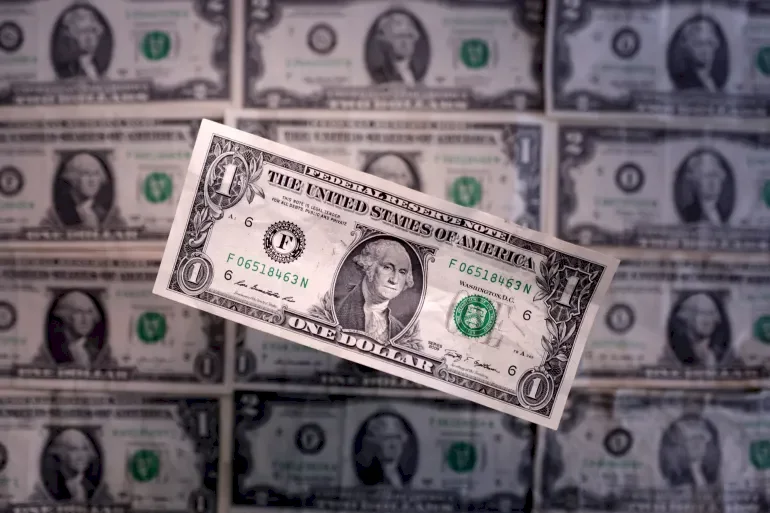
What Does the Weakness of the US Dollar Mean for the Economy?
SadaNews - Typically, the strength of the US dollar increases during times of economic or geopolitical turmoil. However, in 2026, a significant amount of uncertainty and political upheaval is coming from within the United States itself, and President Donald Trump has expressed support for the resulting decline of the greenback.
The US dollar fell by 9% overall against a basket of global currencies over the past year, and last January, it dropped to its weakest level since March 2022. The downward pressures do not seem to be easing.
The weakness of the US dollar leaves extended effects across both the US and global economies. In the United States, the prices of imported goods rise, making the purchase of those products more expensive for American manufacturers and consumers, while US exports become more attractive to foreign clients.
Here are the key things you should know about the decline of the US dollar, and what to expect if the currency remains under pressure.
Why is the US dollar weakening?
Multiple forces are pressing on the American currency. However, analysts say that the unpredictable foreign policy of the Trump administration, including his repeated threats to take over Greenland and to remove the Venezuelan president, undermines the traditional role of the dollar as a safe haven during times of uncertainty. Additionally, Trump’s repeated attacks on the independence of the US Federal Reserve have put pressure on the American currency, alongside the potential for further interest rate cuts by the central bank. Lowering interest rates tends to weaken the US dollar, as investors look elsewhere for higher savings returns.
Separately, the Trump administration and several analysts have argued that the US dollar has been overvalued, and that the recent weakness and expectations for continued decline represent a correction that the world should have been prepared for.
During Trump’s first term, the president pointed out that the US dollar, over decades, as one of globalization's cornerstones, has been artificially pushed to higher levels by the rest of the world. Accusations of currency manipulation have been widespread for at least the last two decades. China and other Asian countries have often been criticized for pushing their currencies lower, while European officials have unexpectedly admitted their reluctance to allow the euro to exceed certain levels.
US Commerce Secretary Howard Luttnick stated on February 10 that the current value of the US dollar may be closer to its natural level.
What role does the US dollar play in the global economy?
The US dollar is as close as it gets to a global currency. The US currency is the cornerstone of international finance and the preferred means of payment in several international transactions more than any other currency. The US also uses the US dollar as a tool in its foreign policy; for example, it significantly restricted Russia’s ability to trade in dollars following the full-scale invasion of Ukraine in 2022.
How has confidence in the US dollar developed?
Analysts say that the concerns undermining the dollar touch on the core of how the Trump administration has operated in governance. A dominant currency requires a strong democracy, which includes elements such as the rule of law, an independent central bank, free and fair elections, and freedom of the press. The Trump administration has challenged these foundations.
Trump has repeatedly talked about his desire to dismiss Federal Reserve Chair Jerome Powell, and the Justice Department launched an investigation into renovations at the Federal Reserve's headquarters, a move that bipartisan lawmakers suggested appears politically motivated. Trump also pressured the Fed to lower interest rates, making it clear that he expected his nominee to succeed Powell, Kevin Warsh, to implement that policy, challenging the prevailing belief that the central bank should operate free from political influence. Analysts say all of these moves have undermined confidence in the US currency.
Another source of pressure on the US dollar is the mountain of American debt. US public debt has risen to over $38 trillion, exceeding 100% of GDP, the highest level since around the end of World War II. Increased federal borrowing weakens the US dollar by undermining investors' confidence in the US's ability to meet its obligations.
Does the US still want a strong dollar?
The Trump administration has sent mixed signals. Trump often indicates he wants to weaken the US dollar against other major currencies as a way to boost demand for American goods. However, he also claims he wants the US dollar to maintain its status as the cornerstone of global finance.
In recent days, the president seemed to fully embrace the idea of a weakened US dollar. When asked on January 27 about the recent decline of the US dollar, he told reporters, "No, I think it's great." His statements have largely solidified the view that the currency is heading for further declines.
However, Treasury Secretary Scott Bisent took a different tone a day later, reiterating that the US is sticking to its longstanding policy of a "strong US dollar."
Is it really possible to replace the US dollar?
A complete shift of the reserve asset to a different currency would require a monumental change in global finance, economic growth, and geopolitics. Any shift would be slow, considering how deeply entrenched the US dollar is. The currency remains dominant partly because the US economy is vast, roughly equivalent to the combined economies of second-place China, third-place Germany, and fourth-place Japan. Foreign investors' holdings of US stocks and bonds reached $31 trillion as of June 2024, which would take time to decouple from.
Any attempt to displace the dollar requires a currency with vast and highly liquid debt markets, which no other country can currently offer. Christine Lagarde, President of the European Central Bank, and Kristalina Georgieva, Managing Director of the International Monetary Fund, have expressed regret over the lack of a unified debt market in the Eurozone that could rival the US dollar.
It is likely that the world will enter a phase of multiple currency power centers while the US dollar remains dominant, albeit to a lesser degree than it is today.
Who are the winners and losers from the weakness of the US dollar?
If the dollar experiences sustained weakness against other major currencies, it is likely to benefit US exporters and manufacturers. Buyers abroad of goods made in the US will enjoy greater purchasing power as their currencies rise against the US dollar. However, the manufacturing sector represents a much smaller share of the US economy compared to decades ago, meaning any boost to the sector may not be as significant as some might imagine. In the 1950s, over 30% of working Americans were employed in manufacturing. That figure has dropped to less than 8%, despite Trump's promises to bring manufacturing back to the country.
The weakness of the US dollar may complicate the picture of American economic growth, as it tends to fuel inflation in the US, forcing American consumers to pay more for goods not manufactured in the US.
If the downward trend continues, it is likely to push interest rates up, putting pressure on consumers with rising costs of mortgages, auto loans, and credit card debt.
Higher interest rates also mean that the US government will have to pay more to finance the budget deficit, which could compel the US Congress to consider sharp cuts to spending.
Has this happened before?
Talk of the decline of the US dollar comes up from time to time. In the 1990s, the Japanese yen drew attention as a potential rival. In the early 2000s, the euro seemed to pose a challenge before the credit crisis on the continent undermined the currency's position.
Additionally, events within the United States, including the abandonment of the gold standard in 1971 and the financial crisis in 2008, have also threatened the dominance of the US dollar. Each time, the US currency has largely withstood the test thanks to the strength of the US economy and the absence of a clear competitor on the scene.
 Follow the latest Sada News via Google News
London Stock Exchange Enters the Era of 24/7 Trading

Shamaran Petroleum: Suspension of Oil Production in Duhok Fields in the Kurdistan Region o...

Dollar Steadies Near One-Week High Amid War Developments

Trump Imposes Tariffs on Canadian Imports... Ottawa Vows to Respond

Oil Prices Drop After Reports of Mediation Efforts Between the U.S. and Iran

Gold Price Rises Supported by Increased Buying Amid Lower Prices

Due to "Hazardous and Counterfeit Products".. Europe Fines "AliExpress" $627 Million
