

IMF Chief Economist: The World Faces Significant Risks and Globalization is Not Dead
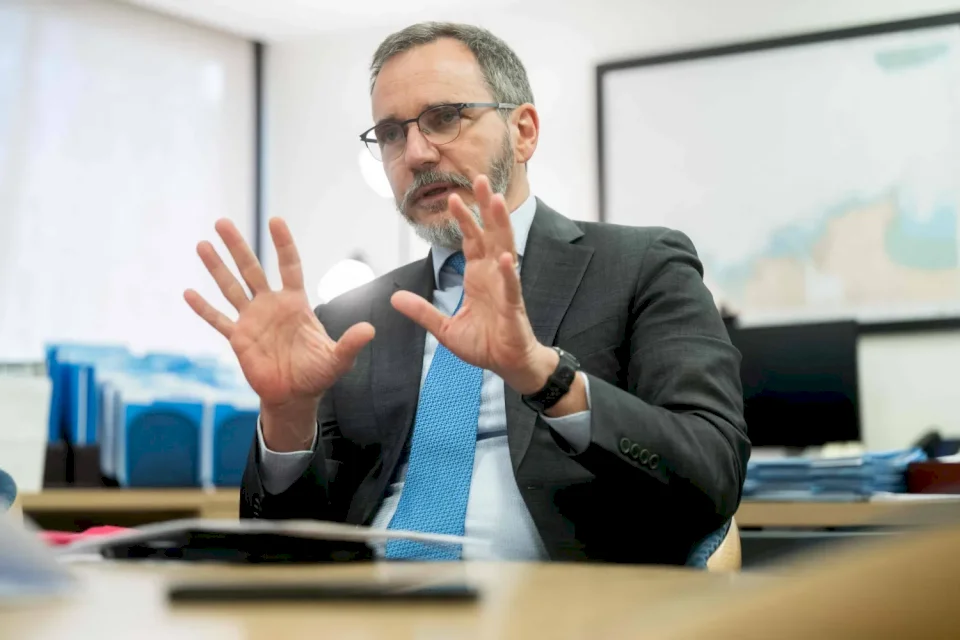
SadaNews Economy - The chief economist of the International Monetary Fund (IMF), Pierre-Olivier Gourinchas, stated that the global economy faces significant downward risks if the fragile ceasefire between the United States and Iran does not hold. He also indicated that globalization has not died in the face of current trade shocks; rather, it is undergoing a "transformation" and reshaping of supply chains.
Gourinchas explained in separate interviews with Reuters and Agence France-Presse, just before leaving his position next week to return to the University of California at Berkeley, that geopolitical conflicts and tariff policies pursued by Washington create a new reality that requires greater flexibility from countries and financial institutions.
The Oil Dilemma
Gourinchas revealed that rapid strategic withdrawals from oil reserves helped avoid a sharp spike in prices due to the war in the Middle East, as only 3 percent of global oil was withdrawn from the markets, instead of initial expectations ranging between 10 to 15 percent.
However, the international official warned that these reserves have now been significantly depleted, reducing the maneuvering margin for countries if the conflict reignites and the ceasefire collapses, especially after U.S. President Donald Trump accused Iran of targeting a ship near Oman.
In this context, Gourinchas hinted that the IMF, which will release an update of its global forecasts on July 8, may revert to providing the traditional "baseline forecasts" rather than the three scenarios it adopted last April, due to the uncertainty caused by the closure of the Strait of Hormuz and oil prices surpassing $100.
The IMF spokesperson, Julie Kozak, froze on Thursday her response to whether the fund will continue with the three growth scenarios or revert to traditional baseline forecasts.
Kozak had mentioned last month, when the Strait of Hormuz was still closed and oil prices were at record levels above $100 a barrel, that the global economy is shifting from the most optimistic "baseline forecasts," which assumed a quick end to the conflict and a growth of 3.1 percent in 2026, to an "adverse scenario" with a growth of 2.5 percent.
Tariffs Are Futile
Despite the profound transformations, Gourinchas denied the hypothesis of "the end of globalization," asserting that the ratios of global trade to GDP remain strong. He described the current scene as "a desire to reduce the level of bilateral trade between the United States and China," noting that supply chains are already beginning to adapt through the entry of intermediate countries like Mexico and Vietnam.
The departing chief economist criticized the Trump administration's accelerated use of tariffs and economic sanctions to resolve political disputes, stating: "Sanctions and tariffs provide leverage in the short term only, but actors on the other side find ways to circumvent them, accelerate their innovations, or build new trade links away from Washington. Therefore, in the medium to long term, they almost never succeed.".
He also expressed skepticism about the ability of policies to localize industries within the United States to create jobs, explaining that new factories in advanced economies will rely heavily on technology and employ fewer workers.
The "Middle-Income Trap"
In his reading of the future of developing countries, Gourinchas warned of the risk that many emerging market economies could fall into the "middle-income trap." He clarified that the Chinese model based on exports and benefiting from cost differentials, which has been a recipe for success since the 1990s, is no longer easily available today.
Gourinchas concluded by pointing out the significant challenge facing major countries like India, stating: "As advanced economies trend towards closure and China continues to present fierce competition in manufacturing costs, the margin available for emerging countries to adopt an export-based growth model narrows, leaving countries like India uncertain about their ability to follow in Beijing's footsteps."
 Follow the latest Sada News via Google News
IMF Chief Economist: The World Faces Significant Risks and Globalization is Not Dead

Oil Falls 2% Amid Resumption of Shipments from the Strait of Hormuz

Gold Rises Globally as Dollar Weakens

The Recovery of Middle Eastern Oil Accelerates as Qatar Resumes Crude Sales to Asia

"Bloomberg": Reopening of the Strait of Hormuz Drowns Oil Markets in a Sudden Surplus

Return of Confidence in the AI Deal Revives Asian Stocks

Oil prices continue to decline as barrels speed their return from Hormuz to the markets
