

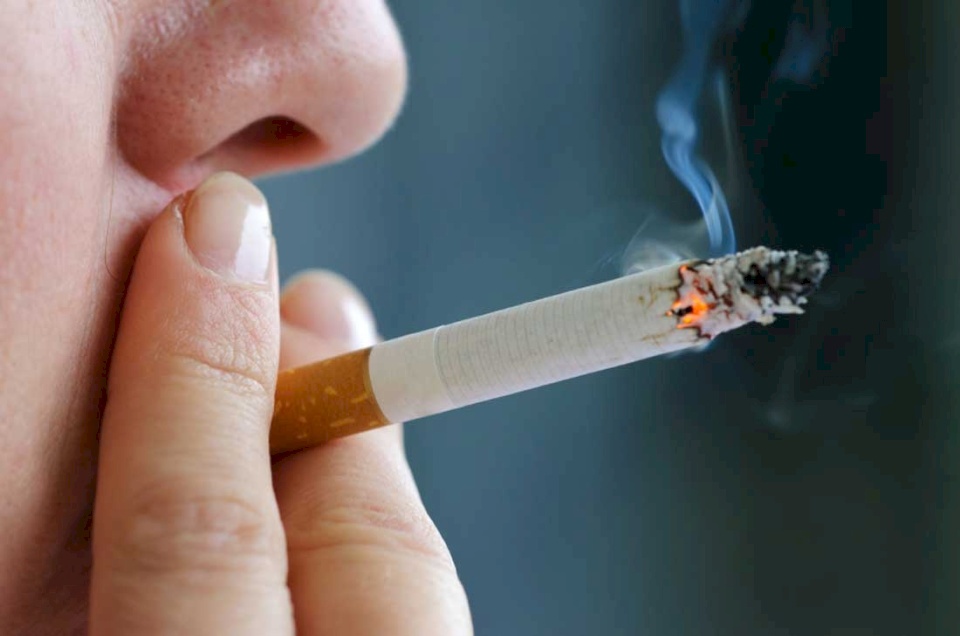
Smoking Poses a Threat to the Health of 1.2 Billion People Worldwide
SadaNews - Alarming and concerning statistics are announced by the World Health Organization every year ahead of World No Tobacco Day, which falls on May 31. This year, the organization announced on its website that 40 million children around the world use tobacco in all its forms, including 15 million adolescents aged between 13 and 15 who use electronic cigarettes.
The number of tobacco product users is around 1.2 billion people worldwide, according to estimates, with 80% living in low- or middle-income countries.
In addition to the harmful health effects of tobacco, the total economic cost of treating the adverse health and social effects caused by smoking (including health expenditures and productivity losses combined) is estimated at about 1.4 trillion US dollars annually, equivalent to about 1.8% of the global GDP, with developing countries bearing nearly 40% of these costs.
This year, the global organization raised the slogan "Exposing the Lies of Temptation – Combating Tobacco and Nicotine Addiction" to raise awareness about the dangers of tobacco and reduce its prevalence among all groups, especially young people (children, youth, and adolescents), and to protect a new generation from nicotine and tobacco product addiction, who are deceived by the false advertising campaigns conducted by tobacco production and manufacturing companies around the world.
The global organization warned of the dangerous tactics used by tobacco and nicotine companies, which engineer their products to make them more appealing and easier to use, making it difficult for smokers, especially among youth and adolescents, to quit. Ultimately, these companies make huge profits at the expense of a new generation of youth and teenagers turning into addicts to tobacco in all its forms and products.
The World Health Organization urged governments to protect their citizens by banning flavored products, prohibiting advertisements promoting tobacco and its products, making public indoor spaces completely smoke-free, and intensifying law enforcement.
The organization stated that tobacco causes the deaths of more than 7 million people worldwide each year, including 1.6 million non-smokers who are exposed to secondhand smoke, known as passive smoking.
False "Manhood"
Dr. Sherif Hatta, a consultant in preventive medicine and public health, believes that the rates of smoking are significantly high among adolescents and young adults because their age phase imposes on them the development of a sense of "manhood" within themselves, which drives them to imitate older individuals, and smoking may be one manifestation of this imitation. The problem increases even more if the young person or adolescent is among a group of smoking friends.
He emphasizes that the massive advertising campaigns executed by tobacco production and manufacturing companies require powerful counter-campaigns to raise awareness and stress the dangers of tobacco and nicotine, using the tragedies of smoking victims as examples and highlighting the severe diseases they suffer from due to these products.
7000 Chemicals
Some studies indicate that cigarette smoke contains more than 7,000 chemicals, including at least 69 substances that cause cancer. Therefore, it does not only affect smokers directly, but also poses a risk to those around them through passive smoking.
Smoking remains one of the leading causes of death worldwide as it is closely linked to cardiovascular diseases and respiratory diseases, in addition to being a major cause of more than 20 subtypes of cancers.
Dr. Sherif warns against being deceived by tobacco promotion campaigns in their new forms, especially shisha and electronic cigarettes, claiming that they are less dangerous than traditional smoking, stressing that all forms of smoking are harmful and contain lethal substances.
Even shisha and electronic cigarettes, although their manufacturers claim they have a lower nicotine content, the increased frequency of their use daily raises this dangerous level because of their ease of use, leading to higher rates of heart diseases, respiratory conditions, atherosclerosis, strokes, hypertension, and cancer, particularly as the incidence of lung cancer rises among smokers.
Dr. Sherif advises smokers who wish to quit smoking to:
Seek the help of a specialist doctor to quit smoking scientifically through what is known as "behavioral medicine. "
Continue exercising regularly.
Look for a hobby and make sure to practice it.
Follow the World Health Organization, which continuously issues advice and guidelines to help smokers quit smoking.
Economic Status and Living Conditions
Regarding the concentration of smokers worldwide, the World Health Organization stated that 80% of tobacco users live in low- or middle-income countries.
Dr. Sherif believes that economic and social conditions and living standards play a significant role in the prevalence of smoking, as many see it as a solution to stress and anxiety.
He adds that the lower the economic conditions and living standards of a smoker, the more likely they are to resort to cheaper cigarette brands.
Reasons to Quit Smoking
The organization provided an easy-to-follow guide on its website to help smokers quit tobacco and nicotine products, including electronic cigarettes and nicotine bags, which included more than 100 reasons to quit smoking, some of which are summarized below:
Smokers are at a greater risk of severe Covid-19 infection.
Tobacco has an immediate and direct impact on the smoker's appearance, in terms of unpleasant odors, yellowing of teeth, and the appearance of skin wrinkles.
In addition to health risks to smokers, smoking also causes more than a million deaths annually due to exposure to cigarette smoke, known as "passive smokers," and cigarette smoke increases the risk of tuberculosis and lung cancer surrounding smokers.
Tobacco use is responsible for 25% of all cancer-related deaths in the world, and tobacco users are over 22 times more likely to get lung cancer than non-smokers.
Smokers are at higher risk of acute myeloid leukemia; sinonasal cavity cancer and adjacent sinus cavities; colon, rectum, kidney, liver, pancreas, stomach cancers; or ovarian cancer and lower urinary tract cancer (including bladder, ureter, and renal pelvis cancers).
Smokers are more likely to lose their hearing and vision, as smoking can lead to numerous eye diseases that can lead to blindness if left untreated, and smokers are at increased risk of age-related macular degeneration, a condition that can lead to vision loss.
Smoking children are more likely to suffer from impaired lung function and respiratory disorders in adulthood.
The significant damage inflicted on the global economy, with spending of 1.4 trillion US dollars in healthcare costs to treat diseases caused by tobacco.
Smoking reduces fertility, and smokers are more likely to experience infertility, as smoking causes diseases related to masculinity, decreased libido, and performance weakening among smokers.
Source: Al Jazeera + World Health Organization
 Follow the latest Sada News via Google News
After Deschamps' Departure... Zinedine Zidane Tops the Candidates to Lead France

Mbappe Surpasses Messi and Becomes the All-Time Top Scorer in the World Cup

England Defeats France and Achieves Largest World Cup Achievement Since 1966

Messi Refused to Play for Spain and Missed 3 World Cups

Publishers Sue Google for Allegedly Using Books to Train Artificial Intelligence

Google Expands Capabilities of Google Search Console to Support Social Media Accounts

The Mediterranean Table... An Ancient Diet Revealing Its New Secrets for Health and Longev...
