

Will Trump Announce a Unilateral Agreement with Iran Despite Ongoing Disputes?
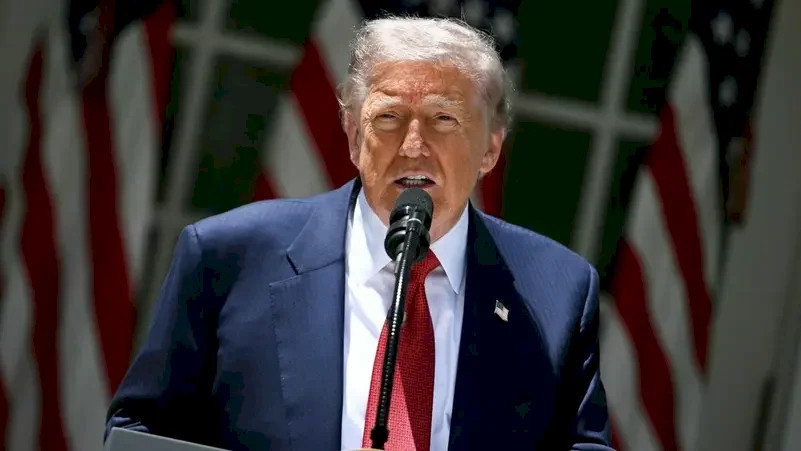
SadaNews - U.S.-Iranian negotiations are nearing a critical stage, amid Iranian reports suggesting that U.S. President Donald Trump may announce a "one-sided" agreement with Tehran in the coming hours, despite Iranian sources confirming that fundamental issues remain unresolved.
In this context, the Iranian news agency "Fars" quoted a source from the Iranian negotiating delegation as saying that Trump might unilaterally announce the "completion of the agreement" between Washington and Tehran, considering that such a step aims to "pressure public opinion" before settling all outstanding points of contention between the two sides.
The agency reported that a member of the Iranian negotiating team stated that "some files and issues remain unresolved," emphasizing that "there will be no agreement unless all topics considered by Iran are settled." He added that Tehran will officially announce the results of the negotiations only if these issues are "fully resolved and settled."
The White House: "Clear Red Lines"
On the other hand, the White House spokesperson said that the negotiations are "going well," noting that Trump has "set clear red lines" regarding discussions with Iran.
The White House also denied, on Wednesday, the accuracy of a report by Iranian television regarding a "draft agreement" between Washington and Tehran, describing the document published by Iranian media as "completely fabricated."
The White House, via an official account on the "X" platform, stated that "this report from an official Iranian media outlet is not true, and the memorandum of understanding published is completely fabricated," adding that "what Iranian media publish should not be believed."
Draft Agreement and Conflicting Leaks
Earlier on Wednesday, Iranian television published what it described as a "preliminary framework for an understanding" being worked on with Pakistani mediation to end the U.S.-Israeli war on Iran and reach an understanding between Washington and Tehran.
According to Iranian leaks, the draft includes a U.S. commitment to lift the naval blockade on Iran and to stop harassing ships moving to and from Iranian ports, in exchange for an Iranian pledge to restore commercial shipping in the Strait of Hormuz to pre-war levels within one month.
The draft also discusses a U.S. withdrawal from "areas surrounding Iran," with the details of this withdrawal still under negotiation, as well as the possibility of presenting any final agreement reached within sixty days to the United Nations Security Council for ratification by binding resolution.
Conversely, Iranian media emphasized that the document is "not final" and that the possibility of its collapse or modification still exists, stressing that Tehran "will not take any step without achieving tangible progress."
Progress in Negotiations on Frozen Assets and Mechanism for Announcing Agreement Still Disputed
Iranian news agency "Tasnim" reported, citing informed sources, that progress has been made following the Iranian delegation's visit to Qatar regarding the release of $12 billion in frozen Iranian assets, noting that some details related to the final mechanism for releasing the funds "have not been settled yet."
The sources added that the proposed understandings include ending the war on various fronts, releasing Iranian funds, lifting the naval blockade, and reopening the Strait of Hormuz within 30 days, followed by the commencement of a 60-day negotiating period, extendable, to discuss the nuclear file.
Tasnim mentioned that Iran "did not provide any commitment" in the first phase related to enriched materials or suspending enrichment, while emphasizing the necessity of suspending sanctions that hinder the sale of Iranian oil and petrochemicals throughout the negotiation period.
It also indicated that the announcement of any memorandum of understanding must be "joint," considering that any unilateral U.S. announcement could be "completely inaccurate."
Strait of Hormuz as the "Guarantee of Agreement"
In a related context, Ali Akbar Velayati, the advisor to the Iranian leader for international affairs, stated that the Strait of Hormuz constitutes the "material guarantee" for any potential agreement with the United States, adding that "this time, it will not be the papers and signatures that guarantee us, but the real guarantor of the agreement's survival is the Strait of Hormuz."
For his part, Mohammad Akbar Zadeh, Deputy Commander of the Naval Force of the Iranian Revolutionary Guard, ruled out the renewal of war with the United States, considering that the chances of that are "slim," while assuring at the same time that Iranian forces are "in full readiness."
Ali Bagheri, Deputy Secretary of the Supreme National Security Council of Iran for International Affairs, also stated that the issue of enriched uranium stocks "is not on the agenda of the current negotiations," indicating that disputes regarding ending the impasse in the Strait of Hormuz "have yet to be resolved," with indirect diplomatic channels between Washington and Tehran continuing.
 Follow the latest Sada News via Google News
Axios: Proposal for a 10-day Ceasefire Between Washington and Tehran and Two Options for M...

In a Rapid Pace.. The Occupation Builds a Huge Earth Barrier Inside Gaza

Meeting Between Aoun and Trump Expected Alongside 'Experimental Areas'

Gaza Health Warns of Collapse of Oncology Services Due to Depletion of Treatments and Susp...

The Occupation Demolishes a House in the Town of Sa'ir near Hebron

Israel Reveals Details of Secret Iranian Nuclear Facility in Mount Fas

A Mother, Her Child, and Her Three Daughters Martyred in Israeli Shelling on Gaza City
