

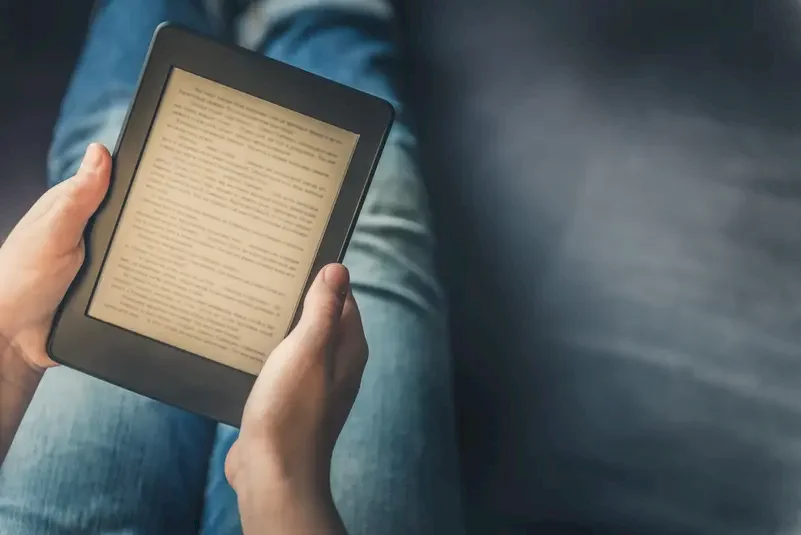
Between Paper and Audiobooks: Science Settles Which Is Better, Reading or Audiobooks
SadaNews - With the fast pace of life and limited time, many people have turned to audiobooks as a practical alternative to traditional reading, but the question remains: Does listening to a book provide the same benefits and enjoyment that reading does?
In a recent survey conducted by NPR in collaboration with Ipsos, which included over two thousand adults, it was revealed that only 51% had read a book in the past month, with the most common reason being lack of time. In contrast, one in six people listened to an audiobook during the same period.
Despite the popularity of audiobooks, the debate continues about whether they count as a form of reading, as 40% of Americans believe that listening to a book does not count as actual reading.
In a study published in 2019 in the journal Neuroscience, neuroscientist Fatima Deniz used functional magnetic resonance imaging to monitor the brain activity of volunteers while they read and listened to the same stories. The results showed that brain activity maps were very similar in both cases, indicating that the brain processes meanings and linguistic information in almost the same way whether through reading or listening.
Another study published in 2024 in the journal Communications Biology supported these findings, confirming that the areas of the brain responsible for understanding words and narrative storytelling activate in a similar manner during reading and listening.
However, despite this neural similarity, developmental psychologist Robert Sternberg believes that traditional reading may offer deeper cognitive benefits in the long run.
Important Visual Support
Sternberg emphasizes that reading provides the brain with important visual support, such as seeing the shape of words and how they are written, as well as the ease of returning to important paragraphs and connecting information with its locations on the page.
In contrast, a scientific analysis conducted in 2022, which included 46 studies, indicated that people who listen to books without controlling the speed of the narration achieve lower results in deep understanding and drawing conclusions compared to readers.
Researchers explain this by stating that a reader can stop, re-read difficult passages, and reflect on the information, while a listener is often forced to keep pace with the narrator's speed.
In audiobooks, words pass quickly, which may decrease opportunities for deep learning, especially when encountering new vocabulary or complex ideas.
Multitasking Reduces Comprehension
Studies also suggest that many people listen to audiobooks while driving, exercising, or doing household chores, which leads to distraction and reduced ability to absorb details compared to focused reading.
But when are audiobooks a suitable option? According to studies, audiobooks seem to be a good choice in cases of: recreational reading, utilizing commuting time or exercising, and exploring books that a person might not read in print.
Conversely, traditional reading remains the best choice when it comes to: complex texts and materials that require high concentration, and information that the reader wants to remember in detail.
In conclusion, studies do not call for abandoning audiobooks, but emphasize the importance of choosing the most suitable medium according to the nature of the content and the purpose of reading or listening.
 Follow the latest Sada News via Google News
NVIDIA's RTX Spark Platform Ignites Laptop Prices

Disheartening Leak About iPhone 18 Pro Battery Specifications

Intisar Shneeb is the First Woman to Lead a Sports Club in the History of Libya

Is your child exaggerating silly jokes? What lies beyond this stage may surprise you

Art and Words: A Cultural Evening in Taiz that Opens Doors to Memory and Colors

Has Sherine Really Regained Her Spark?.. The Controversy Over "Bahriya" Raises the Questio...

A Message Before Her Sudden Departure: What Happened in the Last Hours of Siham Jalal's Li...
