

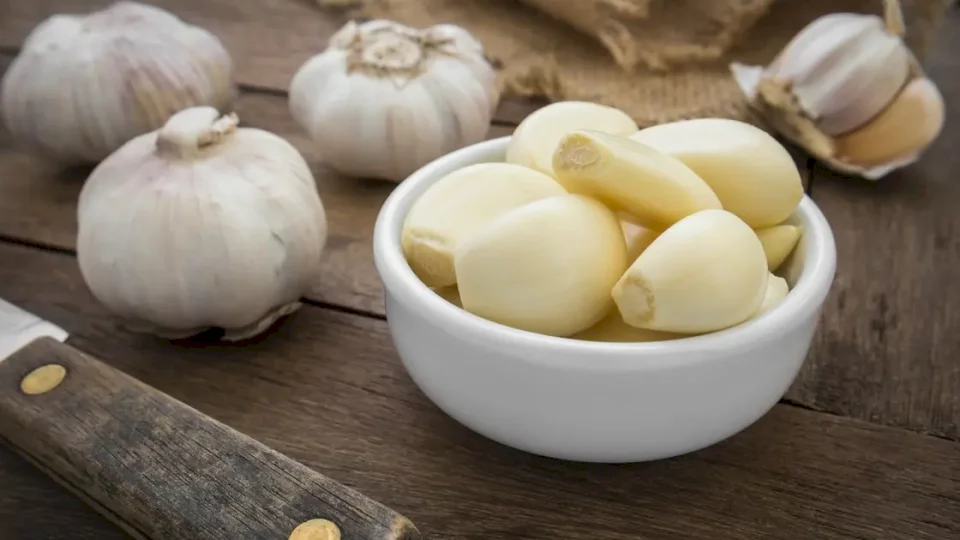
Discovery of a Substance in Garlic that Improves Muscle Strength and Slows Aging
SadaNews - The Japanese Institute for Aging Studies announced that experiments conducted on the amino acid S1PC will help find treatments that enhance the physical condition of the elderly.
The institute's media office indicates that Japanese and American molecular biologists have discovered that one of the components of ancient garlic extract - the amino acid S1PC - improves muscle strength and slows muscle aging in aging mice. Subsequent experiments with this compound will assist in creating treatments aimed at enhancing the physical condition of older adults.
The institute's director states: "Our experiments indicate a previously unknown advantage of the amino acid S1PC - it activates the enzyme LKB1, one of the regulators of cellular metabolic processes, and alters the interactions between the brain and organs in a way that slows muscle aging in elderly people. We expect this substance to slow aging in other ways that we still need to study."
According to scientists, the muscles of humans and other mammals gradually weaken as their bodies age, leading to decreased mobility, alongside an increased risk of various injuries, fractures, and other health issues. This encourages the search for ways to rejuvenate muscles, maintain their tone, and slow aging, either by developing new medications or by investigating existing ones.
Researchers have been particularly interested in how molecules found in ancient garlic extract affect the process of muscle aging, which has been widely used in traditional medicine in many regions of Eurasia since ancient times, and in recent years has been considered one of the natural remedies for high blood pressure and as an immune booster.
Experiments conducted by scientists on aging mice have shown that the sulfur-containing amino acid S1PC positively impacts muscle tension, as it affects them through a complex series of interactions involving liver cells, brain, fat tissues, and many enzymes and signaling molecules that make muscles produce more NAD+ coenzyme molecules, which play a crucial role in oxygen-participating reactions.
These metabolic changes had a positive effect on the muscle condition of the aging mice, resulting in them contracting 16% more forcefully under certain stress conditions compared to the muscles of individuals in the control group who did not receive the amino acids.
Scientists believe that S1PC may affect the functioning of other organs in the body, which they plan to verify in the near future.
Source: TASS
 Follow the latest Sada News via Google News
After Deschamps' Departure... Zinedine Zidane Tops the Candidates to Lead France

Mbappe Surpasses Messi and Becomes the All-Time Top Scorer in the World Cup

England Defeats France and Achieves Largest World Cup Achievement Since 1966

Messi Refused to Play for Spain and Missed 3 World Cups

Publishers Sue Google for Allegedly Using Books to Train Artificial Intelligence

Google Expands Capabilities of Google Search Console to Support Social Media Accounts

The Mediterranean Table... An Ancient Diet Revealing Its New Secrets for Health and Longev...
