

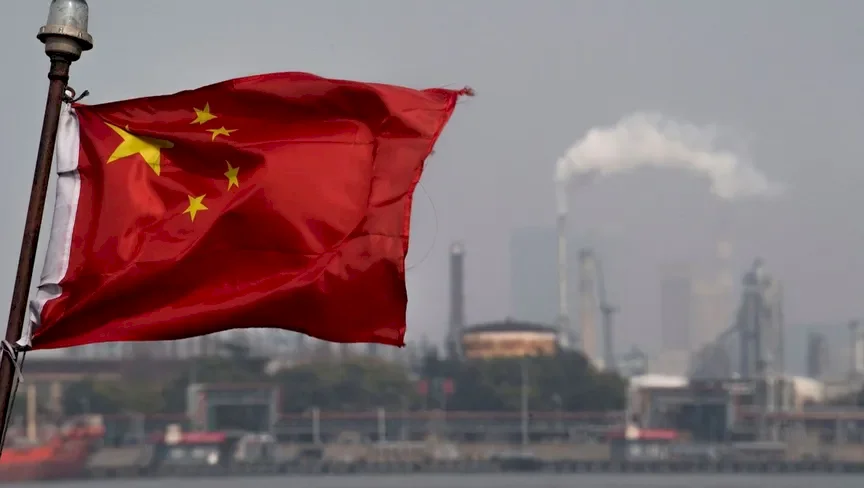
China asks its banks to suspend loans to US-sanctioned refineries
SadaNews - China's financial regulatory authority urged the country's major banks to temporarily suspend new loans to five refineries recently sanctioned by the United States due to their ties to Iranian oil, according to people familiar with the matter.
The National Administration of Financial Regulation has instructed banks to review their exposures and business dealings with companies including "Hengli Petrochemical (Dalian) Refinery Co," one of the largest private refineries in China, while awaiting further guidance, according to sources who requested anonymity because the information is confidential.
Currently, banks have been directed not to extend new loans in yuan, although they were also informed not to call for repayment of existing loans, the sources said.
Oral directives vs. notice from the Ministry of Commerce
The oral directives, issued shortly before China enters a long weekend holiday on May 1, contrast with a May 2 notice from the Chinese Ministry of Commerce, which instructed companies to ignore U.S. sanctions.
This was the first time China has publicly announced a blocking measure introduced in 2021 aimed at protecting its companies from what it considers unjust foreign laws.
The "National Administration of Financial Regulation," which oversees banks and insurance companies, did not respond to requests for comment.
These moves highlight the balancing act Beijing faces as it tries to demonstrate a challenge to the administration of U.S. President Donald Trump while protecting its largest state-owned banks from U.S. secondary sanctions.
Tensions between the two countries are escalating just weeks before a long-awaited meeting between U.S. President and his counterpart Xi Jinping in Beijing on May 14 and 15.
Washington pressures Iran
Washington is intensifying efforts to cut off Iranian oil shipments, which are a vital financial artery for Tehran. Last month, the Treasury Department's Office of Foreign Assets Control placed "Hengli" on its blacklist, targeting an important and well-connected player in the country's extensive crude oil processing sector.
The United States has also warned banks that they face the risk of secondary sanctions if they support Chinese private refineries buying Iranian oil.
Treasury Secretary Scott Pisonte said the United States has sent messages to two Chinese banks warning them of the risk of secondary sanctions if they are found to be supporting transactions connected to Iran. Pisonte did not identify the banks.
Chinese banks have not publicly disclosed their exposure to "Hengli," but loan data compiled by Bloomberg shows that the four largest banks in the country, "Industrial and Commercial Bank of China Limited," "Agricultural Bank of China Limited," "China Construction Bank," and "Bank of China Limited," lent to "Hengli" in 2018.
Lenders and "Hengli" did not respond to requests for comment.
Compliance with U.S. sanctions
Although China has often criticized unilateral sanctions, it has allowed its largest companies in previous cases to comply with them to avoid negative repercussions on its economy.
Its largest state-owned banks have a history of complying with U.S. sanctions against Iran and North Korea, and even against top officials in Hong Kong, to avoid losing access to the U.S. dollar settlement system.
In previous instances, Beijing has sought to protect its systemically important lenders by directing Iran-related transactions through "Kunlun Bank," a subsidiary of "China National Petroleum Corporation," which is currently under sanctions.
 Follow the latest Sada News via Google News
Wall Street Banks Intensify Hiring in the Gulf to Keep Up with "War Deals"

Oil Continues to Decline with Increased Flows through Hormuz and Progress in Iran Talks

Gold Recovers After Waller's Speech and Easing Tension Over U.S. Rate Hike

Aluminum Prices Drop to Lowest Level Since February Amid Dollar Strength

Bitcoin Drops Below $60,000

World Gold Council: The second half of 2026 is a critical turning point for gold prices

World Bank Approves $700 Million Loan for Jordan