

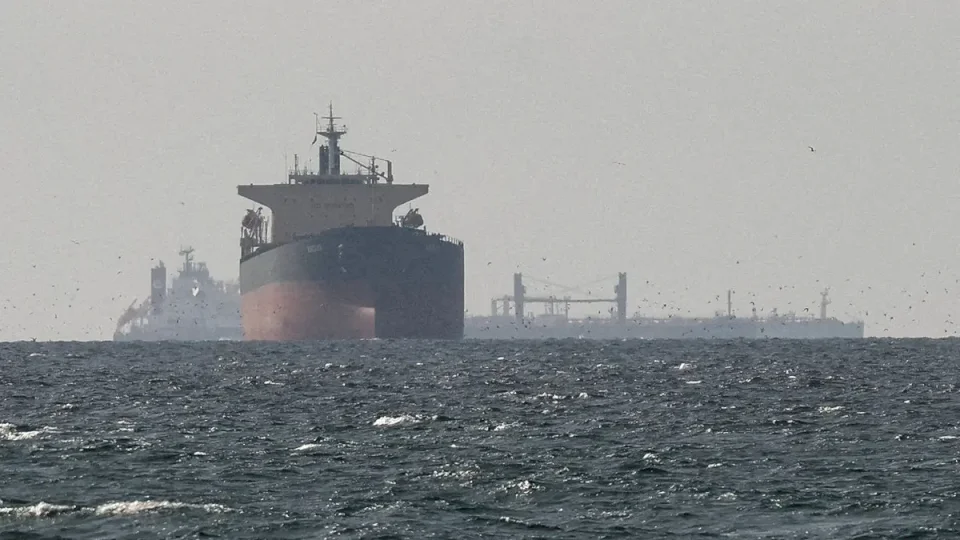
Crucial Negotiations or a New Tactic.. What Has Changed in Two Days Regarding the 'Freedom Project' in Hormuz?
SadaNews - The announcement by U.S. President Donald Trump to suspend the "Freedom Project," a military operation to escort vessels in the Strait of Hormuz, and the confirmation by Secretary of State Marco Rubio of the end of offensive operations in Operation "Epic Anger" raises two pressing questions: What has changed in two days? Does this reflect an imminent crucial negotiation moment to completely end the war or is it just a temporary test in the course of an open conflict?
"Significant Progress"
Trump announced the suspension of the Freedom Project two days after its launch, clarifying that the decision was made to allow an opportunity to finalize a potential agreement with Iran, noting "significant progress" towards reaching a comprehensive deal.
While Trump did not provide a timeframe for this suspension, he confirmed that the measure is temporary and does not affect the essence of the maritime blockade imposed on Tehran, which will remain in full force.
Trump linked this development to what he described as military success and progress towards a comprehensive agreement, emphasizing that the decision was made in response to a direct request from Pakistan and other unnamed countries within the framework of international mediation efforts to de-escalate and end the war.
This American announcement may represent a temporary retreat from "militarizing the Strait of Hormuz," potentially opening the door for a second round of negotiations in Islamabad with greater hopes for achieving a political breakthrough.
Trump's tone also reveals that the shift does not affect the core of the U.S. strategic position but rather reflects a rearrangement of priorities, as Washington views limited military pressure as a tool to improve negotiating terms, not a substitute for diplomatic pathways, according to several media reports.
"The End of Anger"
For his part, Secretary of State Marco Rubio confirmed that the United States has ended its offensive phase in Operation "Epic Anger" and moved to a defensive phase.
He emphasized that this shift does not imply a reduction in military readiness, clarifying that the primary goal of the "Freedom Project" is to assist stranded vessels and their crews in the Strait of Hormuz, while asserting that U.S. forces "will respond strongly" if attacked.
Rubio's statements indicate that Washington aims to solidify a practical cessation of direct attacks while maintaining the capability to respond, reinforcing the hypothesis that the military shift is linked to an active but uncertain negotiation track.
His public call for Iran to come to the negotiating table suggests that the U.S. administration sees an open diplomatic window but has not yet reached a conclusive moment, as reflected in the stances and statements thus far.
Iranian Mechanism
Conversely, Iran announced the establishment of a new mechanism for managing shipping traffic in the Strait of Hormuz, reflecting its aim to impose a new reality in this vital corridor.
Chairman of the Parliament Mohammad Baqer Qalibaf confirmed that Tehran has not yet initiated a comprehensive escalation, accusing the United States and its allies of endangering maritime navigation.
Iranian measures and warnings from the Revolutionary Guard indicate that Tehran is using the strait as a political and security pressure tool while being careful not to engage in open confrontation. This behavior reflects a willingness to negotiate but from a position of imposing conditions rather than retreating.
Political science professor Hossein Rouyaran confirmed that President Trump's retreat from the "Freedom Project" in Hormuz came in response to Iranian warning shots that prevented U.S. destroyers from imposing a unilateral reality, describing the American maneuver as a "failed adventure."
Rouyaran revealed Tehran's launch of a site to coordinate "safe passage" for stranded vessels directly with the Revolutionary Guard, denying that Iran has suffered from the operation, which it accused Washington of targeting civilian fishing boats and falsely claiming they were military targets to cover its field retreat.
Negotiation Data
Available data suggest that what has changed is the level of engagement, not the essence of the conflict. Washington has halted offensive operations, and Iran has not initiated a comprehensive escalation, but both sides continue to exchange messages.
Negotiations have not yet achieved a decisive breakthrough, having only held one round of talks in Islamabad, and attempts to resume them regularly have failed.
While Tehran affirms that Pakistani mediation is ongoing and is diplomatically moving towards China, it seems that channels of dialogue are open, but have not reached a final agreement or a binding framework to end the war.
Calculated Positioning?
It can be said that suspending the military operation does not reflect a confirmed approach towards ending the war as much as it reflects a stage of calculated repositioning by both parties.
Negotiations seem active, but are not decisive yet, amidst continued military and political pressure tools. While this situation provides an opportunity to avoid immediate escalation, it leaves the future of the conflict dependent on diplomatic capability to transform the temporary quiet into a lasting settlement.
This is not the first time that American statements have intersected between alluding to a diplomatic solution and returning to the language of war, nor the first station where both parties exchange accusations of rigid positions and inflated negotiating demands.
In this context, the Wall Street Journal pointed out that the current crisis falls within a broader framework of hesitation that characterizes President Trump's approach, caught between two opposing tendencies; the first calls for imposing "harsh punishment" on Iran due to its failure to retreat from its nuclear program according to the U.S. perspective, and the second seeks to avoid a significant escalation that could pull the United States back into a new war in the Middle East.
The newspaper quotes officials as stating that Trump does not wish to return to a large-scale bombing campaign, preferring to end the war and curb Iran's nuclear progress through a negotiation track, but developments in the Strait of Hormuz have tightened his maneuvering margin, as following the attacks on U.S. and commercial vessels, he has faced two costly options:
Either respond militarily, which carries the risk of reigniting confrontation again.
Or overlook Iranian provocations and continue diplomacy, with the resultant image of hesitance before Tehran.
According to the newspaper, Trump has attempted to contain this predicament by portraying the escalation as limited, describing what is happening as a small war or a minor turning point, while asserting that he negotiates from a position of strength that allows him to reach a good agreement or solidify American military superiority.
Source: Al Jazeera + Agencies
 Follow the latest Sada News via Google News
India Participates in the Second Ministerial Meeting of the Donor Group for Palestine

What Do Syrians Expect from the New People's Assembly?

Water and Food Shortages Threaten Displaced People in Southern Lebanon

Between De-escalation and Bab el-Mandeb.. How Does Tehran View the Escalation in Yemen?

Russia Bombs Kyiv Following Announcement of European Alliance to Enhance Support for Ukrai...

Britain Classifies the IRGC as a Threat to National Security

Airstrikes Target Sanaa Airport, Houthis Blame Saudi Arabia
