

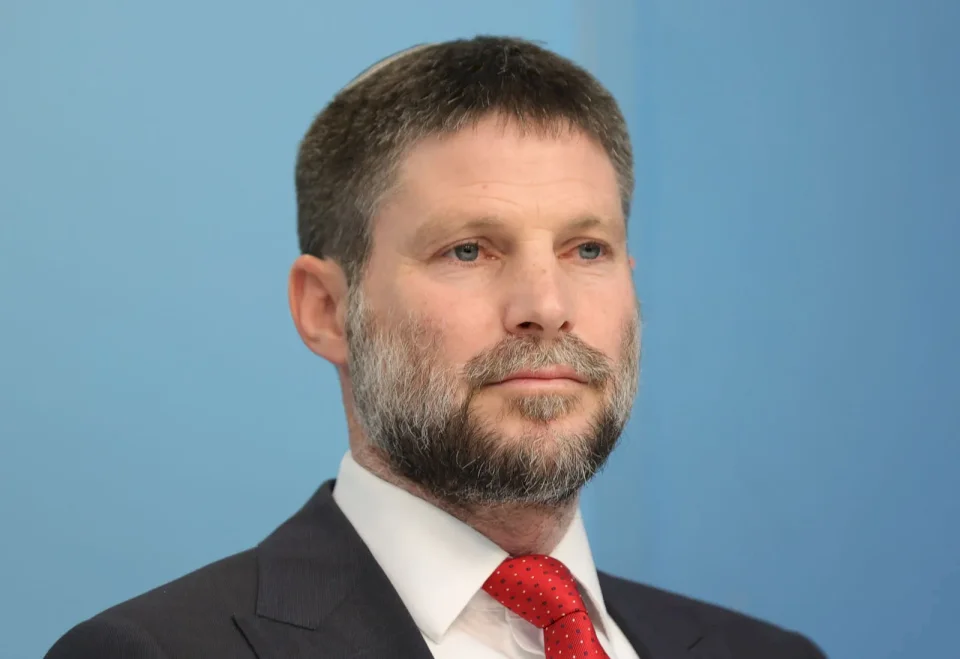
Smotrich: My injured son asks me to leave him "something to do in Lebanon"
SadaNews - Israeli Finance Minister Bezalel Smotrich's statements have sparked widespread reactions on social media after he revealed a conversation relayed from his injured son in Lebanon, indicating his desire to "leave something for him to do in Lebanon," in a context perceived by observers as having escalatory implications.
These statements came during Smotrich's participation in a podcast associated with Channel 7 in Israel, where he addressed the health condition of his son, who was injured during his military service in the "Givati" brigade amidst clashes on the Lebanese border last March.
According to announcements, the minister's son sustained injuries described as more serious than initially disclosed, having suffered a shrapnel wound to the liver, necessitating his air evacuation for treatment, and he remained in the hospital for a period before commencing the recovery phase.
Smotrich noted that his son's survival was a "miracle," affirming that his condition is improving rapidly during the rehabilitation phase.
During his talk, when asked about his son's condition, he said: "Thank God, he is now in the rehabilitation phase, and his condition is improving very quickly. He constantly asks me not to finish the work and to leave him something to do in Lebanon, so I tell him: don't worry, there will be enough for everyone," referring to the ongoing military operations and destruction in southern Lebanon.
These statements triggered widespread reactions on social media, as they were viewed as implying a continuation of military escalation, adopting a rhetoric that transcends traditional political statements.
Activists and observers considered Smotrich's remarks as reflecting a hardline approach within the Israeli government, raising fears of prolonged escalation in the region, especially in light of the existing tensions along the Lebanese front.
Twitter users felt that these statements reflect, as they put it, a mindset based on a rhetoric of destruction, asserting that this approach is repeated "wherever they exist," referring to what they described as a policy based on wars and demolition.
Others added, in circulating comments, that there are attempts to downplay or justify these statements, although they – according to them – reflect the continuation of the escalatory rhetoric linked to military operations.
Conversely, some saw that these statements raise questions about the influence of officials' personal and family positions on political and military decisions, and their impact on the course of escalation in the region.
Activists described these statements as "open terrorism and crime" practiced by the Israeli government, considering that they reflect an extremist trend in policies and official rhetoric.
They noted that Benjamin Netanyahu's government adopts, in their view, an escalatory approach that entrenches violence and fuels tension in the region, amid growing criticism of the nature of its positions and political choices.
Twitter users also pointed out that they are dealing with a "Zionist government considered one of the most religiously extreme," compared to previous governments, deeming that its policies and rhetoric target Palestinians and Arabs.
In circulating comments, references were made to the roles of several officials, including Prime Minister Benjamin Netanyahu, National Security Minister Itamar Ben Gvir, and Finance Minister Smotrich, accusing them of adopting escalatory policies, including expanding military operations, pushing for the arming of settlers, and seeking to impose new realities in the West Bank.
These positions, according to activists, reflect a rising anger towards Israeli policies, amid repeated accusations of fueling violence and deepening the conflict in the region.
Israel occupies areas in southern Lebanon, some of which have been held for decades and others since the recent war between October 2023 and November 2024.
Despite a ceasefire between Israel and Hezbollah since April 17, which was then extended after direct negotiations involving the ambassadors of Lebanon and Israel in Washington, the occupying army continues its attacks on Lebanon, especially in the south, resulting in casualties and injuries.
Israel and Hezbollah exchange accusations of violating the ceasefire agreement, while Hezbollah announces carrying out operations targeting Israeli forces in southern Lebanon and launching rockets and drones toward occupied territories.
 Follow the latest Sada News via Google News
Report: Washington feared Israel's assassination of Qalibaf and Araqchi during negotiation...

4 Martyrs in the Gaza Strip

Hebrew Channel: Egypt Offered Hamas to Hand Over Its Weapons to Cairo as a Custody

Katz: We Rose After 1000 Days of War and Became a Major Power

Journalist Union: We Reject Doubts About the Status of Martyr Journalists and Warn Against...

Jordanian King Issues Order to Transfer Kingdom's Ambassador to Israel to Amman

Zamir: The War We Are Fighting is the Longest in Israel's History
