

Gulf States Reject Hormuz Fees and Accelerate Transportation and Pipeline Projects
SadaNews - The Gulf Cooperation Council (GCC) countries rejected any fees for crossing ships through the Strait of Hormuz and directed to expedite the implementation of joint transportation and infrastructure projects, with the Iran war nearing the end of its ninth week.
This approach was outlined in the final statement of the 19th consultative Gulf summit held in Jeddah, Saudi Arabia, chaired by Crown Prince Mohammed bin Salman. The leaders emphasized their strong rejection of the "illegal" Iranian measures to close the strait or disrupt navigation within it, including imposing any fees under any name, stressing the necessity of restoring freedom of navigation and returning the situation to what it was before the war began on February 28.
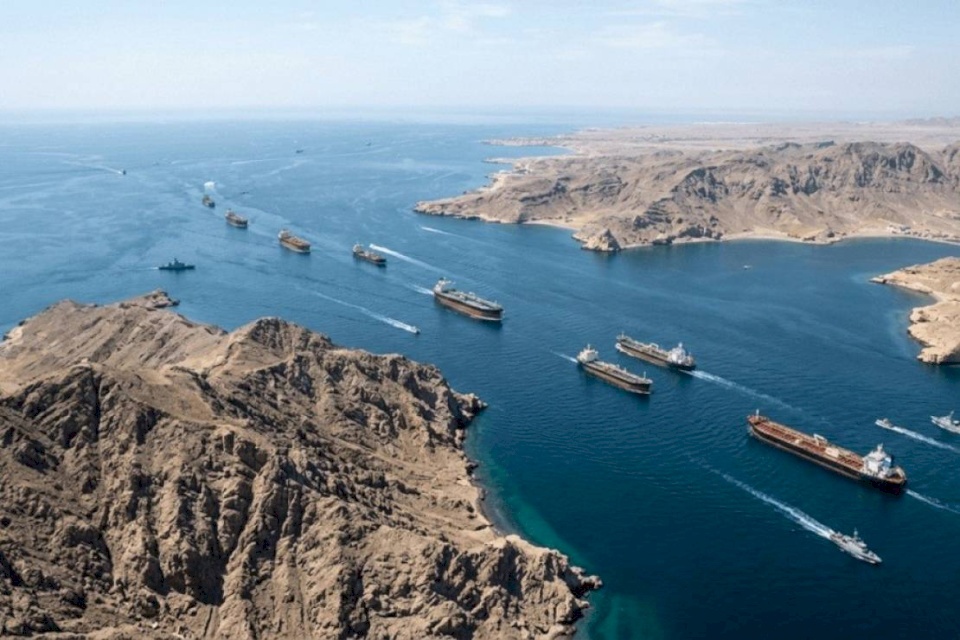
The war has led to a near closure of the Strait of Hormuz, through which about one-fifth of global energy supplies pass, resulting in fluctuations in markets, increased prices, and raised concerns of a global inflation wave, while some producers in the Gulf were forced to reduce oil production.
Iran stated that it would begin imposing fees on ships passing through the strait and has enacted a special law for this purpose, in an attempt to assert its control over the vital strait, which faced significant rejection.
Read also: Iran imposes a dollar fee on every barrel of oil crossing Hormuz during the truce and encourages Bitcoin payments.
In parallel, the leaders directed the General Secretariat to speed up the completion of joint Gulf projects, especially in transportation and logistics services, advancing the Gulf rail project, enhancing electrical connectivity, studying the establishment of pipelines to transport oil and gas, and projects related to water connection and strategic stockpiling.
Declining Trust with Tehran
In this context, the leaders condemned the "blatant Iranian attacks" targeting the GCC countries and Jordan, reaffirming their right to defend themselves individually and collectively under the United Nations Charter, emphasizing that the security of GCC states is "indivisible," and any aggression against a member state is considered aggression against all.
The statement also indicated a decline in trust with Iran, with a call for Tehran to take serious steps to rebuild it, alongside supporting diplomatic tracks to end the crisis, and "paving the way for agreements and understandings that address the concerns of the GCC countries and enhance long-term security and stability."
The leaders praised the ability of the GCC countries to contain the repercussions of the escalation, particularly swiftly rehabilitating damaged energy facilities and maintaining supply stability, in addition to managing supply chain disruptions and enhancing cooperation in the logistics and aviation sectors.
These messages were reinforced during the interventions of the participating leaders, where the Emir of Qatar, Sheikh Tamim bin Hamad Al Thani, affirmed that the summit reflects a unified Gulf position supporting diplomatic paths, while UAE Foreign Minister Sheikh Abdullah bin Zayed stressed the necessity of elevating coordination and integration to face regional challenges, reiterating that the security of GCC countries is indivisible.
 Follow the latest Sada News via Google News
Oil Prices Drop After Ceasefire Agreement Between Israel and Lebanon

Fluctuations in Gold and Silver Prices Due to Tensions in the Arab World

The Fastest in History: The Number of ChatGPT Users Exceeds One Billion

European Bank for Reconstruction and Development Cuts Growth Forecasts for 2026

International Warning of a "Dark Scenario" for the Global Economy if the War Lasts

Launch of the Petersburg International Economic Forum.. Saudi Arabia as Guest of Honor and...

America Proposes New Tariffs of No Less Than 10% on 60 Countries