

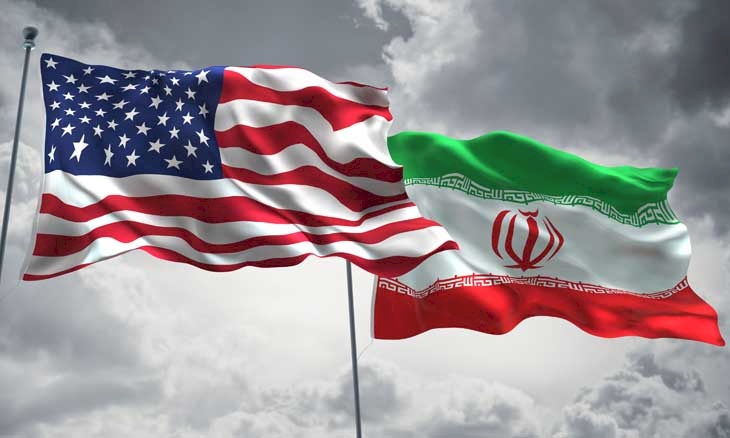
Maritime Escalation and Political Divergence on the Future of Ceasefire Between America and Iran
SadaNews - The U.S. military announced that, as the imposed blockade on Iran entered its second day, maritime trade activities to and from Iran have been completely halted, a move that reflects a new escalation in tensions between the two sides, coinciding with ongoing uncertainty regarding the future of the fragile truce between Washington and Tehran.
In the political context, the White House did not rule out the possibility of returning to a second round of negotiations, despite the stalling of the first round that took place in Islamabad, amid discussions about efforts to keep dialogue channels open.
For his part, U.S. President Donald Trump stated in an interview with "Fox News" that the war with Iran is nearing its end, asserting that U.S. intervention has prevented Tehran from acquiring nuclear weapons for the time being.
U.S. Vice President J.D. Vance also indicated that the Biden administration is not seeking a limited deal, but rather a "grand bargain" that comprehensively ends the conflict, pointing out that there has been progress in the negotiations in Pakistan, despite the ongoing lack of trust between the two sides.
At the same time, European countries are intensifying efforts to enhance maritime security in the Strait of Hormuz, with reports indicating that European ships will participate in protecting maritime passages without direct U.S. leadership.
International sources also reported that France and Britain are working on formulating a plan to establish an international coalition to ensure freedom of navigation after the end of the war, including the deployment of military ships and mine-clearing operations, in a move that may take place without U.S. participation.
 Follow the latest Sada News via Google News
Trump: We will make great progress with Beirut.. Aoun: It is time for Lebanon to be stable

The Lebanese Army Deploys in the South and Comes Under Gunfire; Israel Clarifies

Bezhkian: Directives from the Leader to End the State of No War, No Peace

Saudi Arabia condemns the Houthi threats to navigation and pledges to protect its ships

Global Warning to Americans Due to Rising Tensions in the Middle East

Houthi Movement Announces Ban on Maritime Navigation Against Saudi Arabia

Earthquake of 5.5 Magnitude Hits Western Iran
