

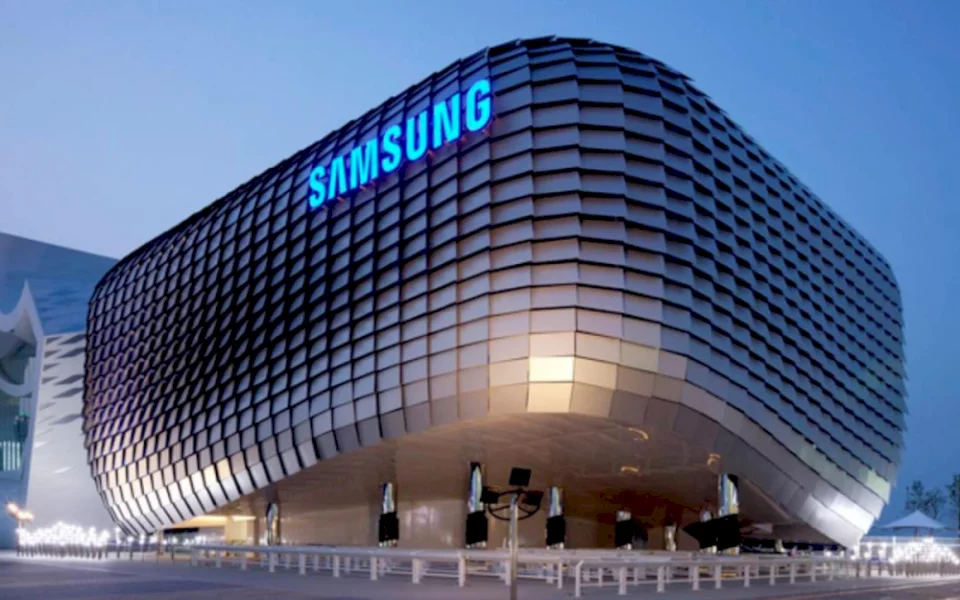
Samsung Adds AirDrop Compatibility to Quick Share for File Sharing
SadaNews - Samsung has added support for file sharing with Apple devices through Quick Share, a move that reduces one of the most significant barriers between the Android and iOS systems, enabling quick file transfers between two phones from different systems.
Samsung states that the feature began with the Galaxy S26 series and will initially be launched in Korea before expanding to other markets including Europe, North America, Latin America, Southeast Asia, Japan, Hong Kong, and Taiwan.
This step is not isolated but is part of a trajectory started by Google in late 2025 when it announced that Quick Share became capable of working with AirDrop, beginning with Pixel 10 phones, and later expanding coverage and signals to wider support for other devices. This practically means that the idea of quick file sharing is no longer exclusive to Apple's closed system but is beginning to transform into a more open space, albeit gradually and thoughtfully.
Smoother Sharing
From a technical standpoint, this approach attempts to maintain the simplicity of the AirDrop experience itself, where the user selects the file, the nearby device available for receiving appears, and then the transfer occurs through a direct connection between the two devices.
Google emphasized in its initial announcement that the transfer happens peer-to-peer without going through a server and that acceptance remains in the hands of the user, while Samsung clarified that the "sharing with Apple devices" feature will be enabled by default on supported devices. This is important because the success of the feature does not only rely on its existence but also on remaining close to the ease that originally made AirDrop popular among Apple users.
However, the real importance here goes beyond just transferring an image or file quickly. For years, sharing between Android and iPhone was often done through less smooth solutions: third-party applications, cloud links, or sending the file via messaging applications, which could lead to quality compression or increased steps. Therefore, introducing this type of compatibility within a native tool in the system fundamentally changes something in the daily usage experience, especially in mixed environments where friends, family, or work teams use devices from different companies.
Compatibility Under Testing
Nevertheless, it does not seem that the story has reached a stage of complete stability yet. Samsung officially announced that support begins with the Galaxy S26, with a promise to later expand to other devices, but subsequent reports from specialized sites like SamMobile indicated that Quick Share updates had already reached some older Galaxy phones, including S22, S23, S24, and S25 series, and some Z Fold phones, although the feature did not work consistently for all users, suggesting that the expansion still partly depends on minor updates or gradual activation from servers.
This gradation is not surprising. Even Google's own experience with Quick Share compatible with AirDrop has not been without issues. Reports appeared regarding connection problems with Wi-Fi among some Pixel users while using the feature, indicating that breaking the barrier between the two systems is possible, but still requires continuous technical adjustments to become a truly stable daily experience. Thus, what we see now is not the end of the problem, but the beginning of a new phase of compatibility testing across two platforms that weren't originally designed to work with this degree of openness between them.
Nonetheless, the significance of the step remains large. It reflects a broader shift in the smartphone market where competition is no longer solely about keeping the user within a closed ecosystem, but also about reducing friction when they have to deal with devices outside that system. In this context, it seems that Samsung is betting that ease of exchange with Apple devices is no longer a marginal feature but part of the core experience expected by the user.
 Follow the latest Sada News via Google News
After Deschamps' Departure... Zinedine Zidane Tops the Candidates to Lead France

Mbappe Surpasses Messi and Becomes the All-Time Top Scorer in the World Cup

England Defeats France and Achieves Largest World Cup Achievement Since 1966

Messi Refused to Play for Spain and Missed 3 World Cups

Publishers Sue Google for Allegedly Using Books to Train Artificial Intelligence

Google Expands Capabilities of Google Search Console to Support Social Media Accounts

The Mediterranean Table... An Ancient Diet Revealing Its New Secrets for Health and Longev...
