

Israeli Estimates of Potential Iranian Response to Escalation of Attacks in Lebanon
SadaNews - Israeli estimates indicate a possible Iranian response to the ongoing attacks and Israeli escalation in Lebanon, at a time when Tehran has intensified its rhetoric, warning against undermining the ceasefire agreement with the United States and demanding Washington adhere to its terms.
The Iranian Foreign Minister, Abbas Araghchi, criticized the continued Israeli attacks on Lebanon, considering that the ceasefire agreement with the United States is "clear and explicit," and that Washington must "choose: either ceasefire or continued war through Israel, and it cannot combine both."
Araghchi added in a post on the "X" platform on Wednesday evening that "the world sees the massacres in Lebanon," emphasizing that "the ball is now in Washington's court," with attention turning to whether Washington will "meet its commitments."
Araghchi's remarks came alongside a re-post of a tweet from Pakistani Prime Minister, Shahbaz Sharif, who emphasized that the ceasefire agreement includes "all fronts, including Lebanon," contrasting with the American and Israeli narrative on the matter.
For its part, White House spokeswoman Caroline Levitt stated on Wednesday evening at a press conference that Lebanon will remain a topic of discussion "between President Trump and Benjamin Netanyahu, and between the United States and Israel, as well as with all relevant parties." She claimed, "But at this stage, Lebanon is not included in the ceasefire agreement."
In contrast, Israeli public broadcaster "Kan" reported, citing informed sources, that Israel has information indicating that Iran is considering launching attacks on Israel in response to the continued attacks in Lebanon, adding that "Iranian officials have issued explicit threats in this regard."
According to the report, the political-security cabinet is scheduled to meet to discuss this possible scenario, alongside possible Israeli responses.
The report indicated that Israel does not rule out the possibility of extending the temporary ceasefire with Iran, treating the current confrontation with Iran as being "in its final stage, at least at this phase," amid estimates that the truce could evolve into a broader agreement.
In the context of political communications, the report mentioned that Israel worked overnight with the U.S. administration to ensure that the Lebanese front was not included in the agreement, including during a phone call between Prime Minister Benjamin Netanyahu and U.S. President Donald Trump.
It added that former minister Ron Dermer was the "central point of contact" with Washington, relaying Israeli remarks on the negotiations, including concerns about "insufficient oversight on the Iranian ballistic missile program."
Dissatisfaction in Israel: "The Ceasefire Came Too Early"
In this context, an Israeli source stated that there is "a sense of frustration," adding: "At this rhythm, there will be another round. But in the end, the United States is above us - and that’s part of the rules." A security source said, "If we have to attack Iran again in a year or two, it’s already a big problem."
An official in Tel Aviv confirmed that "the ceasefire was imposed upon us," adding that "once we understood that this was happening, we asked Trump to separate Lebanon from Iran, and that’s what happened."
Israeli security sources reported that the ceasefire agreement between the United States and Iran was reached without effective consultation with Israel, and without giving security agencies and the Israeli army a chance to present the remaining targets.
Israeli broadcasting authority quoted these sources as saying that "the assessment was that President Trump could stop us at any moment, but the timing of the ceasefire was too early," referring to dissatisfaction within security agencies about the timing of ending military operations.
In a related context, sources mentioned that shortly before the ceasefire came into effect, Israeli Air Force Commander Tomer Bar instructed the implementation of a wide air wave involving hundreds of warplanes heading towards Iran, targeting dozens of launch sites.
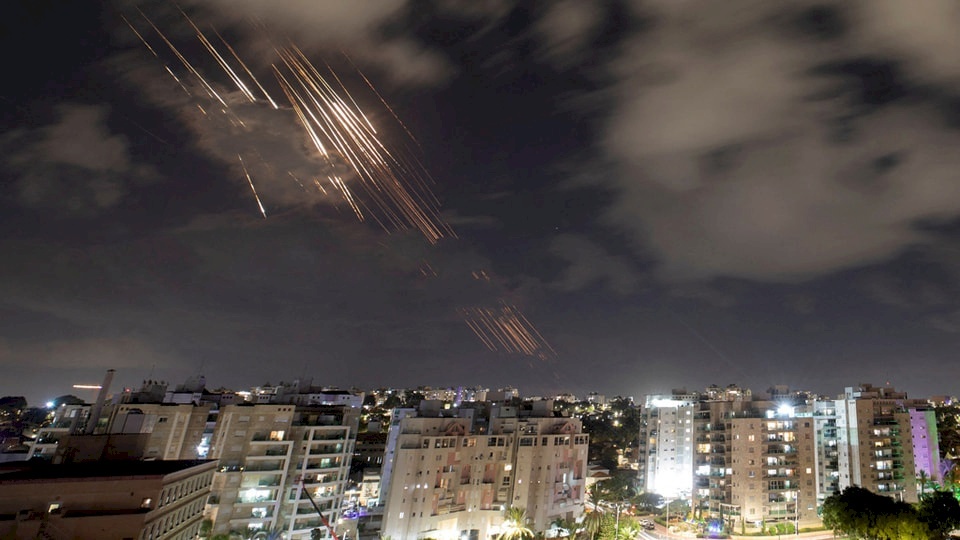
They added that the assessments in Israel indicated that Iran would carry out extensive rocket barrages, but what actually occurred was the launch of less than ten missiles.
They noted that Israeli airstrikes continued until 4 a.m., more than an hour after the ceasefire came into effect, amid continued missile launches from the Iranian side.
In this context, the "Wall Street Journal" reported that Israel expressed "significant dissatisfaction" over learning late about the ceasefire agreement between Washington and Tehran, and not being sufficiently involved in the consultations.
According to intermediaries and an informed source, the only consultations that took place were a "short phone call" between President Trump and Israeli Prime Minister Benjamin Netanyahu shortly before the announcement of the agreement.
This comes amid a contradiction in interpreting the terms of the truce between Washington and Tehran, as the parties agree on the implementation of the ceasefire, but they differ on its scope, especially regarding Lebanon.
On the ground, Israel continues to carry out wide-scale raids in Lebanon, described as the largest since the start of the war with Iran, while Tehran has threatened to withdraw from the agreement and close the Strait of Hormuz if the escalation continues, reflecting a direct link between the Lebanese front and the future of the ceasefire.
Despite the announcement of a ceasefire, data indicates that fighting "has diminished but not stopped," amid mutual attacks and estimates of continued tension, as the parties prepare for a decisive round of negotiations in Islamabad, amid deep gaps regarding core issues, especially the Iranian nuclear program, the role of Hezbollah, and the future of calm in the region.
 Follow the latest Sada News via Google News
Washington Investigates Possible Russian Role in Iranian Attacks on Its Sites

Mossad Chief Visited Washington to Discuss Iran and Its Nuclear Program

Report: Washington Informed Israel It Is Preparing to Intensify Attacks on Iran and Use St...

Organization of Islamic Cooperation Condemns Nauru's Decision to Open an Embassy in Occupi...

Video:: Nablus: Settlers Evict Tubasi Family from Their Home in Jaloud and Take Over It

Netanyahu: I Intend to Form a Broad National Unity Government

Syrian Foreign Minister Meets with Yasser Abbas in Damascus
