

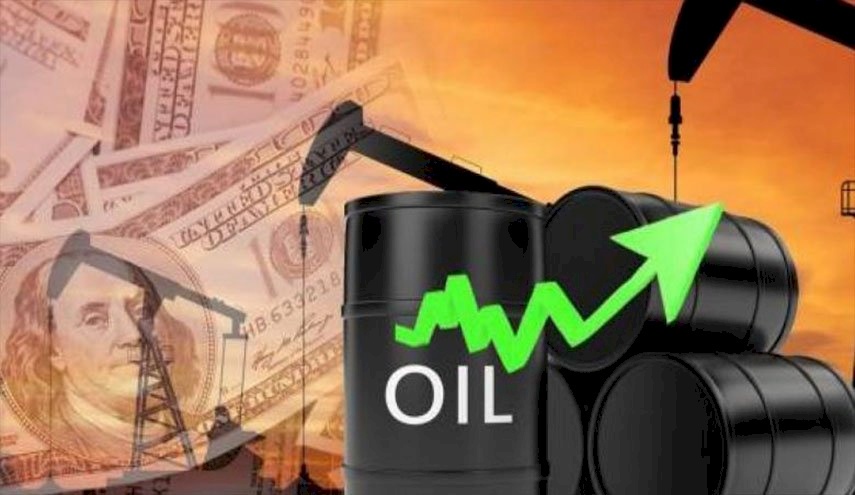
Oil and Dollar Rise Following Trump's Threats of Severe Strikes Against Iran
SadaNews - President Donald Trump's speech regarding the war on Iran immediately impacted oil and precious metal markets.
The world is watching with concern the ongoing war in Iran, which has lasted for over a month, amid the closure of the Strait of Hormuz, through which approximately 20 percent of the world's oil flows.
Oil prices surged by more than four dollars on Thursday following Trump's statements, in which he confirmed that the United States would continue to carry out strikes against Iran in the coming weeks, including targets in the energy and oil sectors, without specifying a clear timeline for ending the war.
In the same context, the U.S. dollar rose against a basket of major currencies during today's trading, reflecting the downward trend that persisted over the past two days, driven by escalating tensions and recent statements.
Brent crude futures increased by $4.88 or 4.8 percent to $106.04 per barrel by 0200 GMT. Light sweet crude futures for West Texas Intermediate rose by $4.17 or 4.2 percent to $104.29 per barrel.
These increases come after the two benchmark indices had dropped by more than a dollar earlier on Thursday before Trump's speech, following declines at the close of the previous session.
In a televised address to the nation, Trump stated that the U.S. military is close to completing its objectives in the war against Iran and that the conflict will end soon, but he did not specify a timeline for that.
He mentioned, "We will accomplish the mission, and we will accomplish it very quickly. We are very close to that."
The head of the International Energy Agency warned that supply disruptions will start to affect Europe's economy by April.
The dollar index, which measures the performance of the U.S. currency against a basket of currencies, rose to 99.925 after the speech. In the latest trading, it reached 99.861, up 0.3 percent.
The dollar benefitted from the rush towards safe-haven assets since the outbreak of the conflict in late February. Expectations for a soon-to-happen ceasefire reversed some trading trends in the markets earlier this week and led the dollar to decline for two days.
Carol Kong, a currency analyst at Commonwealth Bank of Australia, said, "Trump's comments failed to reassure the markets... The markets are beginning to realize that the war is likely to escalate beyond this level before easing later on."
She added, "Certainly, the dollar can rise further against all major currencies."
The euro reached 1.1554 dollars, and the pound sterling was at 1.3254 dollars. Both currencies declined by about 0.3 percent against the dollar after the speech, giving up some of their recent gains.
Both the Australian and New Zealand dollars, which are sensitive to risks, fell by about 0.6 percent to trade at 0.68865 dollars and 0.5719 dollars, respectively.
The Japanese yen traded lower at 159.25, but remained away from the significant psychological level of 160, which is seen as a red line where Japanese authorities might intervene.
 Follow the latest Sada News via Google News
Due to "Hazardous and Counterfeit Products".. Europe Fines "AliExpress" $627 Million

Gasoline Prices Exceed $4 Again in America Amid Resumed War

What was the financial reward for Spain after winning the World Cup?

Gold Stabilizes Amid US Interest Rate Outlook

Oil Prices Climb 2% Amid Escalating Attacks Between the US and Iran in the Middle East

Israel Increases Gas Supplies to Egypt by 26% to Reach 1.2 Billion Cubic Feet Per Day

Expectations of a Delay in European Interest Rate Hike Amid War Risk Preparedness
