

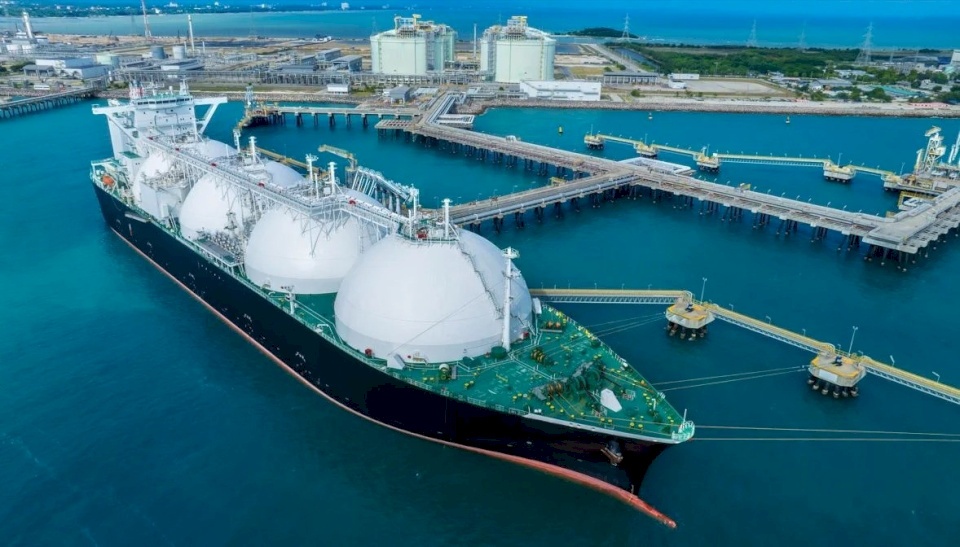
LNG Buyers Compete for U.S. Supplies as "Ras Laffan" Suspends Operations
SadaNews - LNG buyers in Asia and Europe are competing for the limited remaining shipments from U.S. suppliers after the world’s largest LNG facility in Qatar was halted due to the war in Iran.
According to informed sources who requested anonymity because the information is confidential, importers from Japan and Germany are among those in talks with U.S. LNG companies to purchase additional quantities of fuel, particularly for short-term delivery.
The early talks taking place during the "Sierra Week" conference in Houston highlight how attacks on the "Ras Laffan" facility, which took about one-fifth of global supplies offline, have drained global LNG supplies to unprecedented levels.
Energy facilities in the Gulf under pressure of war: A list of affected sites
This gives U.S. LNG producers, who were already well-positioned, an opportunity to acquire long-term market share from Qatar, which is among the largest competitors.
However, there isn’t much additional U.S. supply available. Most producers on the Gulf Coast are operating at maximum capacity, and a significant portion of the supplies is already tied to long-term contracts.
Balaji Krishnamurthy, upstream operations head in Australia at Chevron, said during a session on Tuesday, "Additional LNG supplies in a constrained market will see bidding between Asia and Europe."
"U.S. Airgas" reduces helium shipments after production disruptions in Qatar
Global competition for limited supplies
The United States is the world’s largest exporter of LNG, producing over 116 million metric tons annually by 2025, according to data collected by Bloomberg. Qatar was the third-largest exporter before the outbreak of the war. The UAE produces about 4.5 million tons annually.
With the effective closure of the Strait of Hormuz, a large portion of LNG supplies in the Middle East are out of the market. As buyers can only store limited quantities of fuel, importing countries such as Japan rely on a steady flow of shipments.
Concern dominates energy leaders at the "Sierra Week" conference due to the Iran war
Takihiko Matsu, Japan’s Deputy Minister of Economy, Trade and Industry, stated during a discussion session that Japan has gas stocks sufficient for only 21 days, compared to 250 days of oil stocks.
New projects might increase supplies
U.S. LNG exporting companies such as Cheniere Energy Inc, Venture Global Inc, and Woodside Energy confirmed they are operating at maximum production capacity, as the global race to secure supplies accelerates, noting that all options are on the table to try to increase production.
Cheniere CEO Jack Fusco said the company is reviewing its maintenance schedule to see if it can load extra shipments from its facilities in Texas and Louisiana.
The stoppage of Qatari LNG redraws the energy map... with no clear savior
Moreover, some companies, including Venture Global, are beginning to operate export terminals, allowing them to send shipments before long-term contracts start.
The "Blackminers" facility of Venture Global in Louisiana is set to start producing shipments under contracts later this year, while it generates surplus shipments from the "Calcasieu Pass" terminal.
Cheniere is also ramping up production in the next phase of expanding its Corpus Christi facility, with the fifth unit of phase three expected to start this week.
Rising prices pressure emerging markets
Although U.S. exporters cannot fully bridge the supply gap, spot sales could boost future expansion.
Ben Dell, managing partner at Kimmeridge Energy, which is developing the proposed "Commonwealth LNG" project in Louisiana, stated, "It is clear that there will be a repricing of the risk premium in the Middle East, which I believe will benefit U.S. suppliers."
While discussions are ongoing during the "Sierra Week" conference with more established buyers in Asia and Europe, the disruption of Qatari supplies is expected to have the most severe impact in the short term on emerging markets in Southeast Asia, such as Bangladesh and India.
How will India's economy look if oil prices reach $140?
Spot LNG prices have nearly doubled since the outbreak of the war, increasing pressure on buyers. Fusco stated, "Unfortunately, at these high prices, emerging markets will be the hardest hit, as rich countries will pay whatever it takes."
 Follow the latest Sada News via Google News
London Stock Exchange Enters the Era of 24/7 Trading

Shamaran Petroleum: Suspension of Oil Production in Duhok Fields in the Kurdistan Region o...

Dollar Steadies Near One-Week High Amid War Developments

Trump Imposes Tariffs on Canadian Imports... Ottawa Vows to Respond

Oil Prices Drop After Reports of Mediation Efforts Between the U.S. and Iran

Gold Price Rises Supported by Increased Buying Amid Lower Prices

Due to "Hazardous and Counterfeit Products".. Europe Fines "AliExpress" $627 Million
