

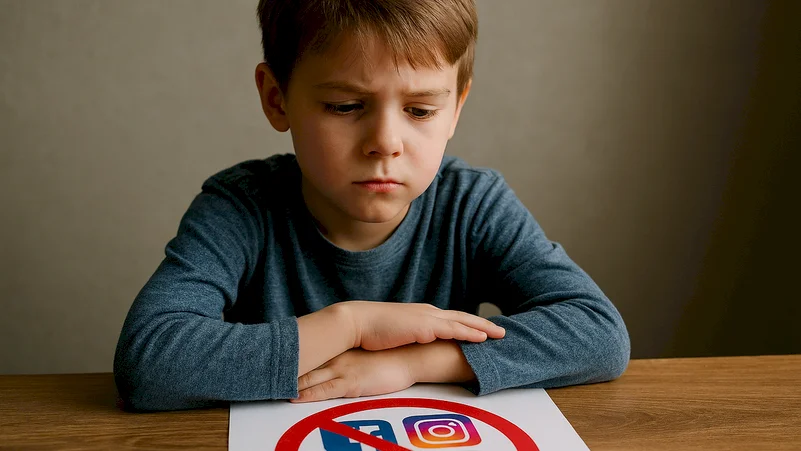
UK Tests Social Media Ban on Teenagers
SadaNews - The British government intends to launch a limited experiment to ban social media use among hundreds of teenagers, in a move aimed at assessing the impact of reduced usage on mental health and behavior.
Experiment on 300 Teenagers
The Department for Science, Innovation and Technology announced a six-week pilot program involving around 300 teenagers, applying various restrictions on the use of digital platforms, according to a report published by "CNBC" which was reviewed by "Al Arabiya Business".
The measures vary between:
- A complete ban on certain applications through parental control tools.
- Limiting usage to one hour per day for apps such as "Instagram", "TikTok", and "Snapchat".
- Imposing a night-time ban from 9 PM to 7 AM.
Alternative to a Comprehensive Ban
This step comes after the British parliament rejected an all-encompassing ban on those under 16 as part of the "Children and Schools Welfare Bill", prompting the government to test gradual solutions instead of radical decisions.
Increasing Regulatory Pressure
At the same time, regulatory bodies such as "Ofcom" and the "Information Commissioner's Office" have called on technology companies to enhance child protection, by improving age verification and preventing contact with strangers for minors.
Global Trend Towards Restrictions
The British move is part of an increasing global trend, as Australia has previously banned social media use for those under 16, while Spain has enacted similar restrictions, and France is considering a ban for those under 15.
Wide-ranging Scientific Study
In parallel, a comprehensive scientific study is being conducted led by the University of Cambridge involving around 4,000 students, to measure the impact of reduced social media use on sleep, stress, body image, and mental health.
Pressuring Legal Background
These moves come amid a rise in legal cases against technology companies, with "Meta" facing accusations of failing to protect children, in addition to other lawsuits regarding features that may lead to addiction.
Observers believe that the results of these experiments could pave the way for stricter legislation in the future, as governments seek to balance freedom of use and the protection of younger generations from the risks of the digital world.
 Follow the latest Sada News via Google News
After Deschamps' Departure... Zinedine Zidane Tops the Candidates to Lead France

Mbappe Surpasses Messi and Becomes the All-Time Top Scorer in the World Cup

England Defeats France and Achieves Largest World Cup Achievement Since 1966

Messi Refused to Play for Spain and Missed 3 World Cups

Publishers Sue Google for Allegedly Using Books to Train Artificial Intelligence

Google Expands Capabilities of Google Search Console to Support Social Media Accounts

The Mediterranean Table... An Ancient Diet Revealing Its New Secrets for Health and Longev...
